New York volleyball is a dense, layered, and unusually varied volleyball ecosystem. It is not one scene. It is New York City beach courts and adult leagues, Long Island clubs and school programs, Section-based high school rivalries, upstate gym traditions, Division I college programs, small-college volleyball, boys volleyball, girls volleyball, and a constant stream of athletes moving between school teams, club seasons, camps, and recruiting events.
That variety is what makes volleyball in New York different from most states. In some places, volleyball is clearly a high school sport. In others, it is a beach sport, a club sport, a college sport, or a recreational city sport. New York has pieces of all of them. The state’s volleyball identity is best understood as a hybrid scene built around population density, school competition, urban access, college opportunity, and a surprisingly important outdoor culture along the New York City waterfront and Long Island coast.
A Statewide Game With Local Personalities
New York’s high school volleyball structure gives the sport a statewide competitive framework, but the game feels different depending on where it is played. Long Island volleyball does not have the same personality as the Hudson Valley. New York City volleyball does not function like western New York or the Capital Region. Upstate programs often operate in communities where school sports carry deep local meaning, while downstate athletes may be navigating club calendars, private training, dense competition, and college exposure opportunities.
That regional variety gives New York volleyball texture. The state is large enough to produce strong programs and deep tournament fields, but varied enough that teams can bring different styles into postseason competition. Some teams are built around ball control and defensive patience. Others have the size to score through the pins and control the net. The best programs combine both: a libero who can stabilize serve receive, setters who understand tempo, middles who can hold blockers, and outside hitters who can score when rallies break down.
New York is also one of the more meaningful states for boys volleyball. In much of the country, boys volleyball is still emerging or unevenly distributed. In New York, the boys game has a visible high school structure and a real competitive identity, particularly in areas where school programs and clubs have given male athletes a pathway into the sport. That matters because a healthy volleyball culture is stronger when the sport is not treated as a single-gender opportunity.
New York City and the Urban Volleyball Model
New York City gives the state one of the most distinctive volleyball environments in the country. Volleyball in the city is shaped by density, limited space, high demand, and a mix of serious athletes and recreational players. Indoor gym time is valuable. Court space is competitive. Adult leagues, school programs, college clubs, and private training all operate within the reality of a city where every usable court matters.
That environment produces a certain kind of volleyball player. City players often become adaptable because they have to be. They may train indoors during the school or club season, play outdoors in the warmer months, join adult open gyms, compete in leagues, and adjust to different court conditions from one week to the next. Volleyball in New York City is not always polished in the same way as suburban club volleyball, but it can be fast, resourceful, and highly competitive.
The city also gives volleyball a strong adult identity. In many states, adult volleyball fades into small recreational pockets. In New York City, adult volleyball is part of the broader sports rhythm: leagues after work, weekend tournaments, waterfront games, coed competition, and players who continue competing long after high school or college. That adult culture helps keep the sport visible and gives younger players a model of volleyball as something that can stay in their lives.
Beach Volleyball in the Real New York
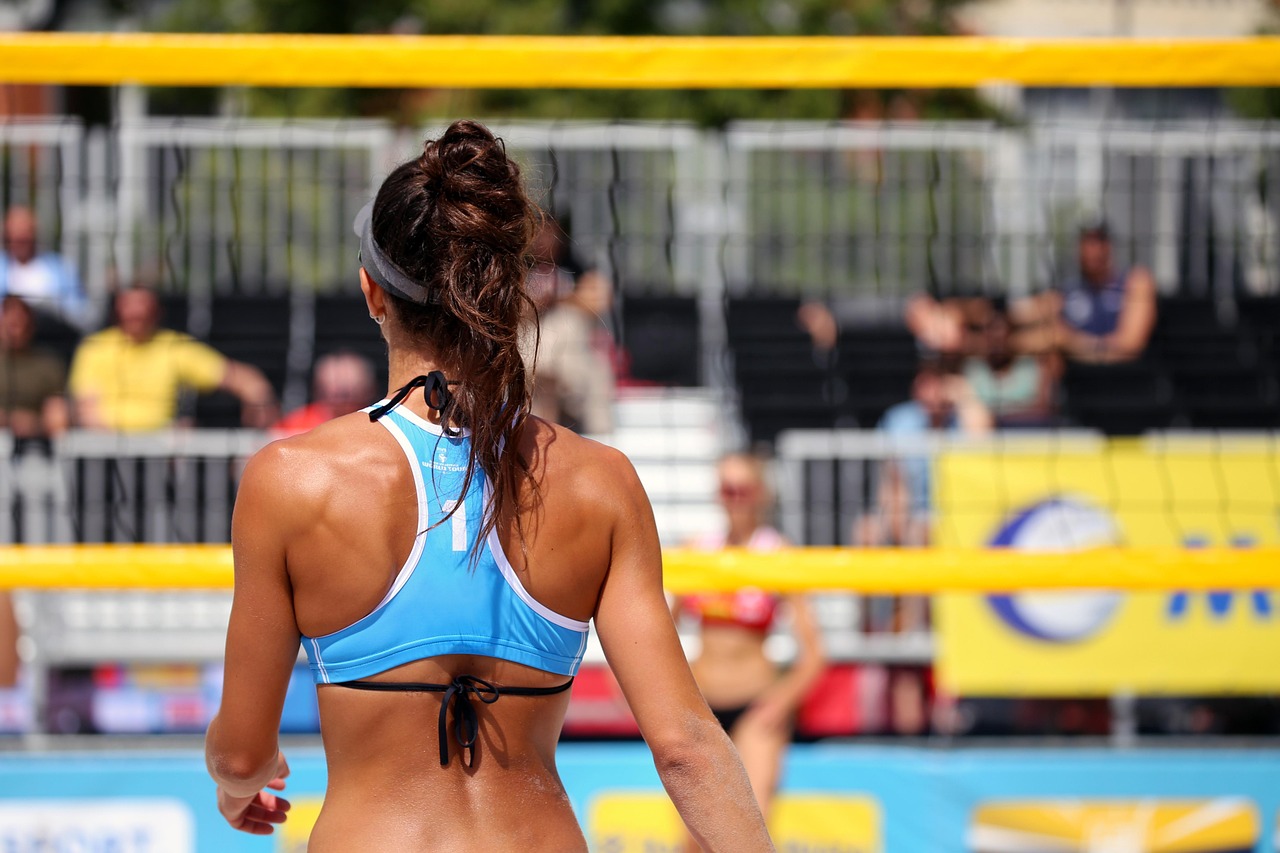
New York is not California, Hawaii, or Florida, but beach volleyball has a serious place in the state’s volleyball profile. In New York City, sand courts along the waterfront have helped make beach volleyball part of the city’s summer sports identity. Manhattan and Brooklyn courts give players a chance to move from indoor systems into a more open, read-based version of the sport. Long Island adds another outdoor layer, with beaches and summer communities that make volleyball a natural part of warm-weather athletic life.
The importance of beach volleyball in New York is not just aesthetic. Beach volleyball develops different instincts. Players have to serve with purpose, defend more space, communicate constantly, and score without relying on a full six-player system. For indoor athletes, beach training can sharpen vision, footwork, shot-making, and conditioning. For adult players, it offers a competitive format that fits the city’s social and seasonal rhythm.
New York’s beach scene is also unusual because it exists inside one of the densest urban environments in the world. Courts near the skyline or along the harbor give the sport a different feel from traditional beach towns. The game is still about passing, setting, attacking, blocking, and defending, but the setting changes the culture. It makes volleyball visible in public space and turns the waterfront into one of the state’s most recognizable volleyball stages.
College Volleyball and the Recruiting Landscape
New York’s college volleyball landscape is broad rather than dominated by one flagship power. The state has Division I programs, strong academic institutions, private universities, public colleges, and smaller programs that give athletes different routes into the college game. For recruits, that range matters. Not every player is headed to a top-25 national program. Many are looking for the right competitive, academic, geographic, and financial fit.
Programs such as St. John’s, Hofstra, Columbia, Syracuse, and others help connect New York volleyball to the NCAA map. They also create local points of reference for club and high school players. A young athlete in New York can see the sport played at different levels without leaving the state: Big East volleyball, Ivy League volleyball, ACC volleyball, mid-major competition, Division II, Division III, junior college, and club college volleyball.
That range gives New York a practical advantage. Players can develop at different speeds and still find meaningful opportunities. A late-blooming libero, a setter who needs another year of physical development, or a middle who is still learning footwork may not fit the same recruiting timeline as a nationally ranked club prospect. New York’s college depth allows the state to support a broader volleyball population.
Clubs, Schools, and the Development Pipeline
Club volleyball is central to New York’s higher-level development. The school season gives players team identity and local competition, but club volleyball expands the map. It gives athletes more reps, stronger opponents, recruiting exposure, position-specific coaching, and tournament experience. For players from Long Island, Westchester, New York City, the Hudson Valley, western New York, and the Capital Region, club volleyball can determine how far they go in the sport.
The strongest New York players often emerge from the combination of school competition and club refinement. In high school, they learn how to lead, compete in rivalry matches, and play for community pride. In club, they learn how to handle faster offenses, tougher servers, more physical blockers, and the pressure of being evaluated in tournament settings. That combination is especially important for setters and liberos, whose development depends on thousands of clean, purposeful contacts.
New York’s challenge is not interest. It is coordination. The state is large, expensive, and regionally fragmented. Travel can be demanding. Gym access can be difficult, especially in the city. Club costs can limit who gets year-round training. But the player pool is large, and the competitive appetite is real. When the development structure works, New York can produce skilled, tested athletes who are comfortable in pressure environments.
The Competitive Personality of New York Volleyball
New York volleyball carries some of the traits of the state itself: pace, density, variety, and edge. The best teams are usually not just athletic. They are organized. They serve aggressively, defend with purpose, and understand how to win long rallies. In a state with so many different volleyball environments, adaptability becomes a major strength.
A New York player might come from a polished suburban club, a city public school gym, a Long Island beach background, an upstate high school powerhouse, or a small college town. Those different routes create a broad volleyball culture rather than a single style. That is why New York’s volleyball identity is best viewed as a network: schools, clubs, colleges, beaches, parks, adult leagues, and tournaments all feeding the sport in different ways.
Where New York Volleyball Goes Next
The future of volleyball in New York is tied to access and visibility. The state already has the population, competitive structure, college programs, and outdoor culture to support a strong volleyball ecosystem. The next level depends on expanding quality coaching, improving gym access, strengthening boys volleyball, keeping beach volleyball visible, and making sure talented athletes from every region can enter the development pipeline.
New York does not need to become a replica of California, Texas, or the Midwest’s volleyball hotbeds. Its strength is its range. It can be a school volleyball state, a college volleyball state, a beach volleyball state, and an adult volleyball state at the same time. Few places can make that claim credibly.
That is what gives New York volleyball its real identity. The sport lives in high school gyms, college arenas, waterfront sand courts, suburban clubs, city leagues, and upstate communities. It is competitive, fragmented, ambitious, and constantly moving. In a volleyball landscape where development can come from many different directions, New York’s complexity is not a weakness. It is the thing that makes the state one of the more interesting volleyball markets in the country.