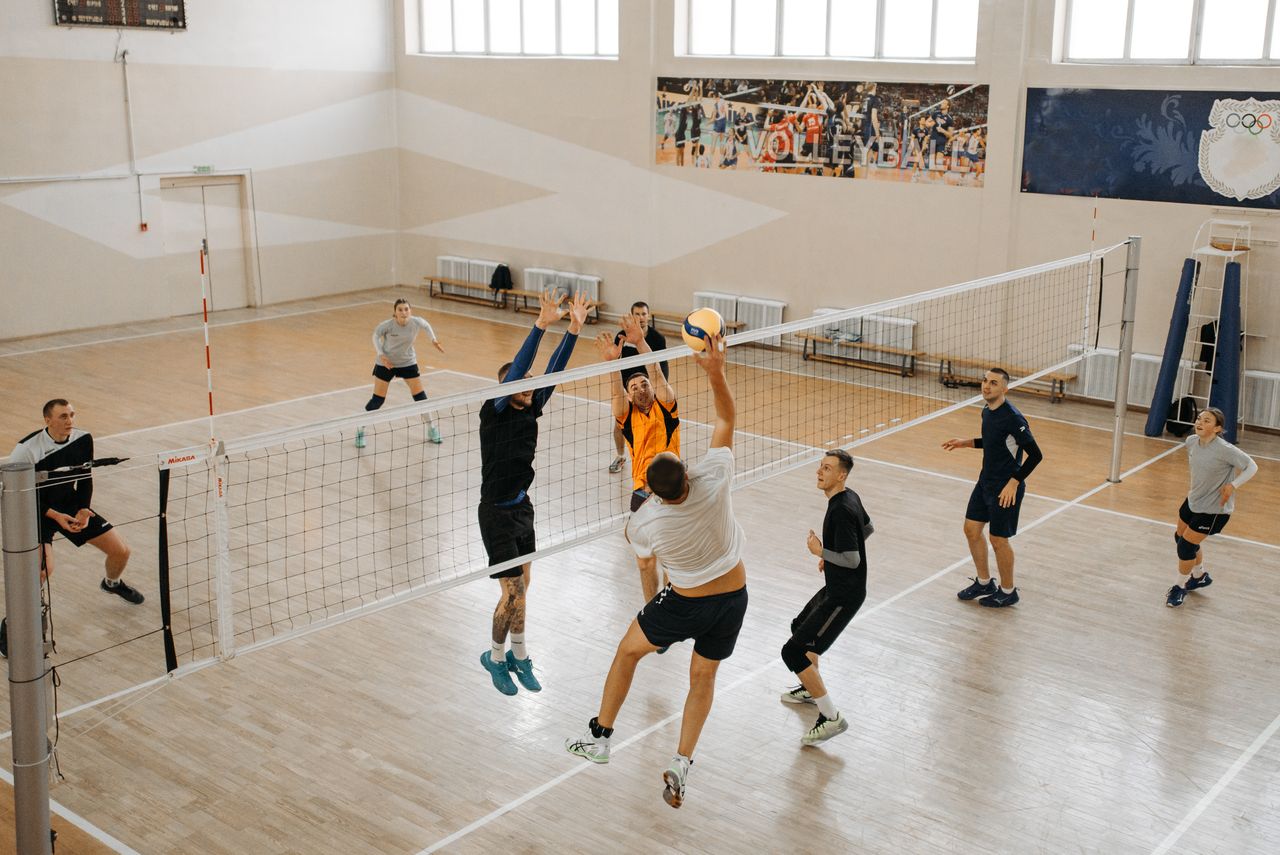
Raleigh’s volleyball identity is tied to the larger Triangle sports ecosystem: school gyms, junior clubs, college athletics, adult leagues, and a steady pipeline of athletes moving through one of the most active education-driven regions in the Southeast. It is not a city defined by one professional volleyball club or a beach volleyball image. Raleigh is a structured indoor volleyball market where the sport grows through institutions: high schools, colleges, regional club tournaments, community recreation, and the athletic culture surrounding Wake County and the Research Triangle.
That gives Raleigh a different profile from many American volleyball cities. The scene is not built around a single arena or one famous outdoor destination. It is built through repetition: weekday practices, weekend tournaments, school-season rivalries, recruiting events, and college programs that keep volleyball visible across the region. The result is a volleyball market that feels practical, competitive, and developmental. Players in Raleigh are usually part of a broader sports calendar, but volleyball has carved out a clear place inside that landscape.
A Triangle Volleyball Market With Indoor Roots
Raleigh’s strongest volleyball identity comes from the indoor game. The city sits in a region where school-based athletics, club competition, and college sports overlap heavily. Wake County’s size gives volleyball a large participation base, and the surrounding Triangle communities of Durham, Chapel Hill, Cary, Apex, Morrisville, Garner, and Wake Forest help expand the playing pool beyond the city limits.
That matters because volleyball development rarely happens in isolation. A strong local scene needs gyms, coaches, recurring competitions, and enough athletes to create meaningful age-group depth. Raleigh benefits from all of those conditions. The area’s schools provide the first competitive stage for many players, while junior clubs and regional tournaments give more serious athletes the chance to sharpen their serve receive, blocking, setting, transition offense, and defensive systems against stronger opponents.
The Triangle’s broader sports culture also helps. Raleigh is used to college competition, youth sports travel, and weekend tournament traffic. Families understand the rhythm of club athletics. Coaches have access to a deep student-athlete population. Players who develop in Raleigh are not operating in a volleyball vacuum; they are part of a region where organized sports are a normal part of student life.
College Volleyball and the Triangle Effect
College athletics give Raleigh volleyball a level of visibility that many mid-sized markets do not have. NC State anchors the city’s Division I presence, while the broader Triangle adds nearby college volleyball influences from surrounding campuses. Raleigh also has smaller college programs that contribute to the sport’s local depth, including institutions such as Meredith, Shaw, William Peace, and Saint Augustine’s.
The significance is not only game attendance or school spirit. College volleyball gives younger players a visible competitive ladder. A middle school or high school athlete in the Raleigh area can see volleyball played at different levels without leaving the region. That helps normalize the sport as something more than a fall school activity. It becomes a pathway with technical standards, recruiting possibilities, and recognizable benchmarks.
The college presence also shapes the local coaching pool. Former players, graduate assistants, club coaches, and high school coaches often circulate through the region’s volleyball network. That movement strengthens technical teaching. Players learn not only how to hit harder, but how to read blockers, serve seams, run tempo, defend cross-court swings, and manage rotations. In an area like Raleigh, volleyball education is one of the scene’s greatest strengths.
The School and Club Pipeline
Raleigh’s player-development model is heavily tied to the school-to-club pipeline. High school volleyball introduces many athletes to structured competition, but club volleyball is where the more serious development usually accelerates. The area’s club scene gives athletes more touches, more position-specific training, and a longer competitive calendar.
For girls’ volleyball, this structure is especially important. Raleigh sits in a state where high school volleyball has strong participation, and the club season allows athletes to compete beyond the school schedule. The best players often move between school teams, club tournaments, showcases, camps, and recruiting events. That creates a rhythm familiar to serious volleyball families: fall school season, winter and spring club competition, summer training, then back into the school season again.
Boys’ volleyball has a different profile. Like much of the Southeast, Raleigh has historically been stronger on the girls’ side, but boys’ participation has room to grow as more schools, clubs, and recreational programs make space for the sport. That gives Raleigh an important future-development angle. The infrastructure already exists. Gyms, coaches, and club systems are in place. The question is how fully the boys’ game can use that structure over time.
Adult Volleyball and the Recreational Layer
Raleigh is also a strong adult recreational volleyball market. This part of the scene is different from the school and club pathway, but it helps keep volleyball visible among people who are no longer playing competitively for a team. Adult indoor leagues, sand leagues, grass tournaments, church gyms, community recreation programs, and social sports organizations all contribute to the sport’s local footprint.
This matters because volleyball has a rare ability to move between competitive and recreational settings. A former high school outside hitter can join an adult league. A beginner can learn in a social sand format. A serious indoor player can find open gyms or higher-level competition. Raleigh’s adult scene gives volleyball life beyond graduation, which is one reason the sport remains durable in the city.
The recreational layer also reflects Raleigh’s broader growth. As the city has added new residents from other parts of the country, volleyball has benefited from transplants who played in other states, college towns, military communities, or beach markets. These players bring different expectations and styles, adding to the area’s hybrid identity.
Beach and Grass Volleyball in an Inland City
Raleigh is not a beach volleyball city in the way San Diego, Los Angeles, Miami, or Honolulu are. Its outdoor volleyball identity is more seasonal and facility-dependent. Sand courts, park play, and grass tournaments can still matter, but they do not define the city’s volleyball reputation the way indoor volleyball does.
That said, outdoor volleyball plays an important supporting role. It gives athletes a different training environment, especially for ball control, court vision, communication, and all-around skill. Beach and grass formats force players to pass, set, hit, defend, and read the game without the same level of specialization found indoors. For indoor players, that can be valuable. For adult players, it can be the most accessible and social version of the sport.
Raleigh’s climate also allows outdoor volleyball to occupy a longer seasonal window than colder northern markets. Spring, summer, and fall all create opportunities for sand or grass play, even if the city’s core competitive identity remains indoors.
Raleigh’s Volleyball Future
The future of volleyball in Raleigh looks tied to three forces: population growth, club depth, and broader recognition of volleyball as a year-round sport. The city has the right conditions for continued expansion. It has a large youth population, strong schools, a sports-aware family base, college programs, and a regional identity connected to education and athletics.
The next stage is likely to come from deeper specialization. As more athletes train earlier, more coaches gain experience, and more clubs refine their systems, Raleigh can continue developing players who compete regionally and nationally. Boys’ volleyball is another growth opportunity, especially if school and club access expands.
Raleigh’s volleyball identity may never be built around a single iconic beach or one famous professional team. Its strength is more grounded than that. It is a gym-based, school-driven, club-supported volleyball market with enough structure to keep producing players and enough recreational energy to keep adults involved. In the Triangle, volleyball has become part of the larger rhythm of competitive youth sports, college athletics, and active community life.