San Marino’s volleyball identity is shaped by scale. The country is too small to operate like a major European volleyball nation, but it is also too close to one of the world’s strongest volleyball cultures to exist in isolation. Its volleyball scene sits between national representation, local development, and constant influence from Italy’s deeper club structure. That gives San Marino a distinctive profile: not a volleyball powerhouse, but a compact European microstate where the sport survives through federation organization, school participation, local clubs, and cross-border competitive habits.
The Federazione Sammarinese Pallavolo was founded in 1980 by San Marino physical education teachers, and its stated role includes promoting both volleyball and beach volleyball while coordinating competitive activity in the republic. That origin matters because San Marino volleyball has always depended on institutional commitment as much as population depth. In a country where every sport has a limited player pool, volleyball has to build continuity through schools, coaches, and federation-level organization rather than sheer numbers.
Indoor Volleyball and the Reality of Scale
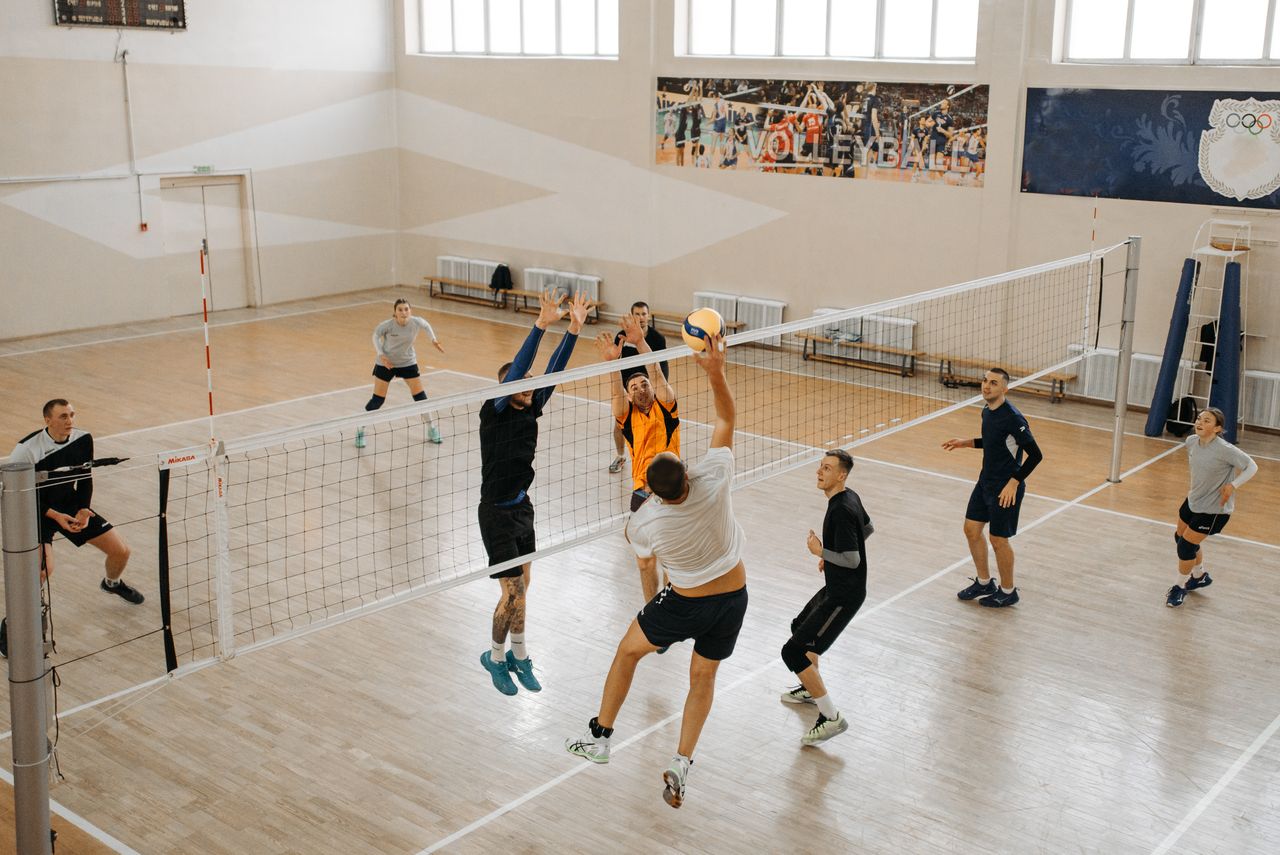
Indoor volleyball in San Marino is best understood as a development-centered scene. The country does not have the domestic depth to produce large professional leagues or a broad national championship ecosystem comparable with Italy, France, Poland, or Serbia. Instead, its volleyball identity is tied to keeping enough athletes in the sport to sustain clubs, youth training, and national representation.
For players, the Italian connection is unavoidable. Italy offers a much larger competitive pyramid, stronger coaching networks, deeper youth competition, and a club culture where volleyball is treated as a serious year-round sport. San Marino benefits from that proximity because its best players can measure themselves against a higher standard without leaving the region entirely. At the same time, it creates a structural challenge: San Marino must develop its own volleyball culture while living next to a country whose club system can absorb attention, athletes, and competitive ambition.
The result is a volleyball scene that rewards versatility. Players in small systems often grow up covering multiple roles before specializing. A setter may have to become a leader earlier. Outside hitters often carry large serve-receive loads. Middles may be developed through repetition and timing rather than constant elite-level match exposure. In a microstate, the technical education of each player matters because there are fewer replacements behind them.
Beach Volleyball and Multi-Sport Visibility
Beach volleyball gives San Marino another useful lane. The country is not a coastal beach volleyball destination, but beach volleyball does not require the same roster depth as six-player indoor volleyball. A committed pair can represent the country in international or small-nation competition with a clearer pathway than a full indoor team. That makes beach volleyball valuable for visibility, especially in European small-state settings where two-athlete teams can carry national colors into events that would otherwise be difficult to access.
For San Marino, beach volleyball is less about lifestyle culture and more about strategic participation. It gives athletes a different competitive format, rewards ball control and court IQ, and allows the federation to keep volleyball visible beyond the indoor season. Because the country’s federation explicitly includes beach volleyball within its promotional role, the discipline fits naturally into San Marino’s broader volleyball structure.
Development, Identity, and Future Direction
San Marino volleyball’s long-term ceiling depends on retention. The challenge is not whether the country can suddenly become a major European volleyball force; it is whether it can keep young athletes in the sport long enough to build reliable teams, coaching continuity, and meaningful international participation. In that sense, the federation’s role is central. It has to connect schools, clubs, national teams, and beach volleyball into one coherent pathway.
The most realistic future for San Marino is as a serious small-nation volleyball program: technically organized, connected to Italian competition, active in beach volleyball, and capable of producing disciplined athletes who can compete credibly in the right regional settings. Its volleyball story is not about mass scale. It is about making the sport durable in one of Europe’s smallest national markets.