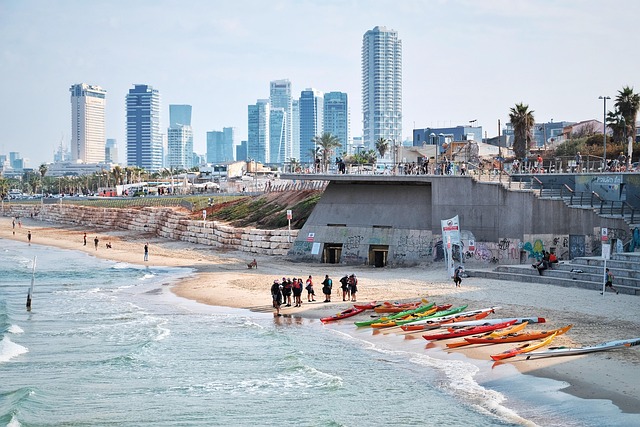
Volleyball in Israel is shaped by two different environments: the organized indoor game built through clubs, schools, and national competition, and the outdoor volleyball culture that naturally grows from the country’s Mediterranean coastline. It is not one of Israel’s dominant spectator sports in the way football or basketball are, but it has a steady place in the country’s athletic landscape because it works at several levels at once. It can be a serious club sport, a school sport, a beach sport, a military and university recreation activity, and an accessible game for adults who want structured competition without needing a professional pathway.
That mix gives volleyball in Israel a practical identity. The sport is visible in gyms, sports halls, beach courts, community programs, and local clubs, with the strongest activity often concentrated around population centers and coastal areas. Tel Aviv, Haifa, Netanya, Hadera, Jerusalem, and other urban areas help anchor the volleyball scene, while beach volleyball gives the country a second version of the sport that is easier for casual players, visitors, and outdoor athletes to recognize immediately.
A Volleyball Scene Built Around Clubs, Courts, and Coastline
Israel’s indoor volleyball structure depends heavily on clubs and organized competition. The Israeli Volleyball Association is the sport’s national governing body, and Israeli teams compete within the European volleyball structure through CEV, the European Volleyball Confederation. That matters because Israel’s volleyball calendar, national-team pathway, and international context are tied more closely to European competition than to the Middle East geographically.
The indoor game is most visible through club volleyball, national cup competitions, youth programs, and adult leagues. For players who want a serious environment, clubs are usually the center of the experience. They provide coaching, team structure, regular practices, and competitive matches. Youth players often enter through local sports programs or school exposure before moving into club systems if they want stronger training and competition.
The country’s compact geography also affects volleyball access. Israel does not have the sprawling regional separation that shapes volleyball in larger countries. A committed player can often move between school competition, club training, regional tournaments, and beach play within a relatively small physical area. That makes the volleyball scene feel concentrated rather than expansive. For serious players, the challenge is less about distance across the country and more about finding the right level of coaching, training intensity, and competitive fit.
Indoor Volleyball in Israel
Indoor volleyball in Israel is strongest where there are established clubs, sports halls, and municipal athletic programs. The sport has a club-based feel, with men’s and women’s teams providing the competitive backbone. Players who want structured volleyball generally look for clubs first, especially if they are interested in youth development, regular practices, coaching, and league play.
The indoor game is also important because it gives volleyball a year-round base. Beach volleyball may be more visible to casual observers, especially along the Mediterranean, but indoor volleyball is where much of the organized development happens. The technical side of the sport — serving systems, serve receive, blocking schemes, setter development, defensive organization, and team tactics — is easier to teach consistently in club and gym settings.
For young players, indoor volleyball can be a good fit because it rewards coordination, timing, jumping ability, court awareness, and disciplined team play. Israeli youth athletes often have multiple sports competing for their attention, but volleyball offers a clear route for players who prefer a fast, tactical, team-based sport that does not require the same physical contact as basketball or football.
Adult indoor volleyball also has a place in the country’s recreation scene. Competitive former players can look for club or league opportunities, while more casual adults may find volleyball through municipal programs, workplace sports, university groups, or recreational teams. The sport’s flexibility is part of its appeal: a player can treat it as serious competition or as a weekly social game, depending on the level of the group.
Beach Volleyball and the Mediterranean Advantage
Israel’s strongest natural volleyball asset is its coastline. Beach volleyball fits the country’s climate, geography, and outdoor culture, especially in cities and towns along the Mediterranean. Tel Aviv is the most obvious example, with beaches that support an active outdoor sports culture, but beach volleyball can also be part of the broader coastal recreation scene in places such as Netanya, Herzliya, Haifa, Ashdod, and Eilat.
Beach volleyball gives Israel a more visible public-facing volleyball identity than indoor volleyball alone. A person walking along the beach can see the sport being played casually, while indoor volleyball is usually hidden inside clubs, gyms, and sports halls. That visibility helps beach volleyball attract beginners, tourists, adults, and multi-sport athletes who may not be looking for a formal team commitment.
The beach game also changes the type of volleyball experience available. Two-player beach volleyball puts more responsibility on every athlete. Players have to pass, set, attack, serve, read the wind, defend space, and communicate constantly. There are fewer hiding places than indoor sixes, which makes the beach game demanding but also very rewarding for players who want a complete skill set.
For visitors, beach volleyball is often the easiest version of the sport to access. Public courts, informal games, hotel or resort activity, and coastal recreation areas can provide opportunities without needing to join a club. For serious players, beach volleyball can be a competitive discipline of its own, with tournament play and training environments that differ from indoor volleyball.
Youth Volleyball, Training, and Player Development
The youth volleyball pathway in Israel is most effective when it connects schools, clubs, coaches, and local sports authorities. Volleyball is a technical sport, and young players benefit from early instruction in movement, passing platform, footwork, serving mechanics, hitting approach, and defensive positioning. Clubs are especially important because they give players repeated touches, organized practice, and competition against athletes outside their immediate school environment.
For parents, the main question is usually whether a child is looking for recreation or serious development. Recreational volleyball can begin through school, community programs, or casual play. Competitive volleyball usually requires a club setting with regular practices and matches. Players who show stronger interest may need to seek out clubs with better coaching depth, older age-group teams, and a track record of moving athletes into higher levels of competition.
Because Israel is a relatively small country, the strongest volleyball environments are often connected through local networks. Coaches, clubs, and players tend to know where the serious training groups are. That makes it important for families to evaluate not only location and cost, but also practice quality, coaching style, player development history, and the level of competition.
The best youth volleyball environments usually combine technical instruction with game understanding. Players need more than repetitions. They need to learn how to read blockers, serve zones, cover hitters, transition from defense to offense, and communicate under pressure. Good coaching can make volleyball especially attractive to athletes who enjoy both physical movement and tactical problem-solving.
Leagues, Competition, and National-Team Context
Israel’s competitive volleyball scene includes domestic club competition, national cup events, youth tournaments, and national-team activity. The national teams give the sport its international reference point, while domestic competitions provide the structure that keeps athletes, coaches, and clubs engaged throughout the season.
Israel is not usually discussed as one of Europe’s volleyball powers, but competing in the European structure gives Israeli volleyball meaningful tests. European volleyball is deep, technical, and highly competitive, with established powers across both men’s and women’s competitions. For Israeli players and teams, that environment creates a demanding standard. Even when Israel is not among the favorites, the exposure to European competition matters for player development and for measuring progress.
Domestic competition is also important for the sport’s identity. Local clubs give fans, families, and players something to follow. Cup finals and league matches help create focal points during the season, especially for communities with established volleyball traditions. The spectator culture may be smaller than in Israel’s larger sports, but volleyball has a committed base that understands the rhythm of the game and the importance of club continuity.
For adults who want to compete, the Israeli volleyball scene offers different levels depending on location and experience. Former club players may seek stronger leagues or competitive teams, while casual players may prefer mixed recreational groups, workplace teams, or community-level indoor play. Beach volleyball adds another competitive lane, especially for players who want tournaments or regular outdoor matches.
Who Volleyball in Israel Is Best For
Israel is a strong volleyball fit for several types of players. Young athletes can use the sport to develop coordination, jumping ability, teamwork, and tactical awareness. Club players can find structured training and competition. Adults can use volleyball as a social and athletic outlet. Beach players have access to a climate and coastline that make outdoor volleyball a natural part of the sports culture.
The country is especially appealing for players who like variety. A volleyball player in Israel can move between indoor sixes, beach doubles, casual coastal games, club practices, and recreational leagues. That range gives the sport more staying power than it would have if it existed only as a school activity or only as a beach pastime.
Volleyball in Israel is ultimately defined by its balance. It has enough organization to support serious players, enough coastline to support beach volleyball, enough community access to serve recreational athletes, and enough international connection to keep the competitive game tied to a larger volleyball world. For players, parents, visitors, and adult athletes, Israel offers a volleyball scene that is compact, active, and shaped by both indoor discipline and outdoor energy.