Somalia’s volleyball identity is that of an emerging and rebuilding volleyball country where the sport’s value comes from participation, community organization, youth development, and the possibility of stronger national structure over time. Volleyball does not occupy the same public space as football, and Somalia is not known internationally as a major volleyball power. But the sport has practical advantages that make it relevant: it can be played in schools, community courts, indoor halls, and outdoor spaces, and it offers both men and women a technical team sport with room for development.
The Somali volleyball landscape has to be understood through the broader realities of national sports rebuilding. In countries where infrastructure, facilities, and formal competition systems have faced disruption, sports development often depends on persistence at the local level. Volleyball survives and grows through schools, clubs, community leaders, coaches, and federation activity that keep the game organized enough for players to train and compete.
Indoor Volleyball as the Competitive Base
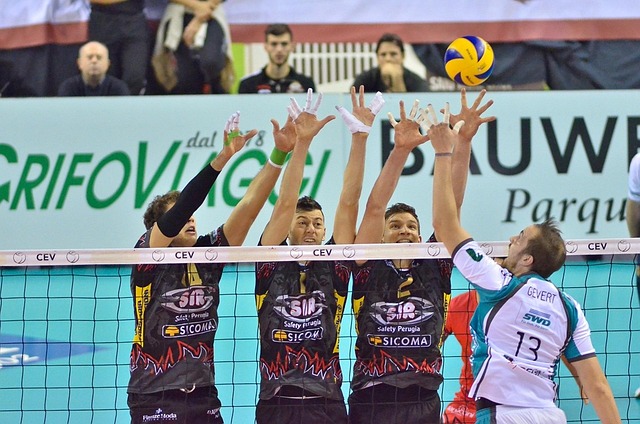
Indoor volleyball is the core version of the sport for Somalia’s competitive ambitions. It gives the national scene structure: teams, positions, rotations, coaching systems, and international rules. For any developing volleyball country, the indoor game is where technical standards are built. Players need to learn serve receive, setting tempo, attacking patterns, block timing, back-row defense, and transition play.
Somalia’s volleyball potential depends on turning athletic participation into volleyball-specific skill. A tall, quick, or explosive athlete can become a useful player, but only if the technical foundation is developed. Outside hitters must learn to pass under pressure. Middle blockers need timing and footwork. Setters need touch, leadership, and decision-making. Liberos need discipline, reading ability, and consistency. Those are coaching outcomes, not just athletic traits.
Because the sport is still developing, consistency is the key challenge. A national volleyball program cannot improve through occasional competition alone. It needs regular training, organized domestic matches, youth involvement, coach education, and a clear pathway from local play to higher-level teams. Without that structure, talented players can appear but struggle to reach their ceiling.
Schools, Clubs, and the Youth Question
The future of Somali volleyball depends heavily on young players. Schools are one of the most important entry points because they can introduce volleyball in an organized, repeatable environment. A school gym or outdoor court can become the place where players first learn the difference between casual play and competitive volleyball. Serving, passing, setting, and movement can be taught early, and that early technical base matters.
Clubs and community teams are the next layer. They create continuity after school participation and give players more serious competition. In emerging volleyball countries, clubs do more than field teams. They often serve as training centers, social anchors, and development engines. A committed local club can produce players, train coaches, organize matches, and keep the sport visible in its area.
Women’s volleyball is an important part of the country’s potential. Globally, volleyball has one of the strongest women’s team-sport traditions, and in developing systems, women’s volleyball can become a major area of growth when schools and federations provide support. A stronger women’s structure would give Somalia more depth, broader participation, and a clearer place in regional competition.
Regional Competition and the Road Ahead
Somalia’s most realistic competitive path begins regionally. African and Arab-region volleyball competition provides benchmarks that are more useful than comparisons with the sport’s world powers. The immediate goal for an emerging program is to become more organized, more technically consistent, and more competitive against neighboring or similarly developing countries.
That means reducing errors, improving ball control, building setters who can run a balanced offense, and developing teams that understand defensive systems. At the international level, volleyball punishes disorganization quickly. A team that cannot pass consistently will struggle to attack. A team that cannot serve with pressure will have difficulty disrupting opponents. A team without blocking discipline will give away too many clean swings.
Beach volleyball may also have long-term potential because Somalia has an extensive coastline and a climate suited to outdoor play. But beach volleyball requires its own structure, coaching, and competitive calendar. It should be treated as a potential growth area rather than a fully formed national identity.
Somalia volleyball is still a development story. Its future will depend on facilities, coaching, federation continuity, school participation, club organization, and the visibility of national teams. The sport has room to grow because it is adaptable, affordable, and technically rich. With sustained attention, volleyball can become a stronger part of Somalia’s athletic landscape and a meaningful platform for young athletes looking for a disciplined team sport.