Israel’s volleyball identity is built around a compact but serious indoor scene, a distinctive club culture, and the unusual competitive reality of a Middle Eastern country playing its international volleyball through Europe. It is not a mass-market volleyball power in the way Brazil, Poland, Italy, Turkey, or Japan are, but it has a clearer volleyball structure than many countries of similar size. The sport’s strongest profile comes from organized indoor volleyball: domestic league clubs, national cup finals, European club appearances, youth development, and a national-team program that competes within the CEV system. Israel’s men’s national team is governed by the Israel Volleyball Association and competes in European volleyball structures despite the country’s geography, a sporting arrangement that shapes the level of opposition Israel regularly faces.
The result is a volleyball culture defined less by casual visibility and more by institutions. In Israel, volleyball has had to find its place among larger national sports, especially football and basketball, while still maintaining competitive pockets that have produced strong domestic clubs and national-team participation. The sport’s center of gravity is the indoor game: school gyms, club halls, regional teams, and national competitions. Beach volleyball exists, especially along the Mediterranean coast, but Israel’s volleyball reputation is more closely tied to indoor clubs and federation competition than to the sand.
The Club Game and Israel’s Competitive Backbone
Israeli volleyball is best understood through its clubs. The country’s domestic men’s league has included familiar names such as Hapoel Mate-Asher Akko, Maccabi Tel Aviv, Hapoel Kfar Saba, and other programs that give the sport its week-to-week structure. Hapoel Mate-Asher Akko has been especially important. The club represents a northern regional identity, tied to a regional council, kibbutzim, villages, and the port city of Akko, and CEV reported in 2019 that the club won its 15th men’s national championship that year.
That matters because Israeli volleyball does not operate only as a city-spectator sport. Some of its strongest stories come from regional communities where clubs become local athletic anchors. Mate-Asher Akko’s success has helped make northern Israel a major reference point for the men’s game. Its rivalry and title contests with clubs such as Maccabi Tel Aviv and Hapoel Kfar Saba give Israeli volleyball a competitive map: the big urban brand, the established volleyball regions, and the clubs that can build continuity around coaching, imports, domestic players, and youth systems.
European club competition gives Israeli teams a higher ceiling and a tougher measuring stick. Hapoel Mate-Asher Akko has appeared in CEV competitions, including Challenge Cup, CEV Cup, and Champions League entries across different seasons. For a country outside Europe geographically, those fixtures are an important part of Israel’s volleyball identity. They expose domestic clubs to stronger blocking systems, faster tempo, deeper serving pressure, and the tactical discipline of continental volleyball. Even when Israeli clubs are not expected to win those competitions, participation itself helps define standards for domestic players and coaches.
National Teams and the European Context
Israel’s national volleyball history includes earlier World Championship appearances and a longer connection to international competition than many casual followers might assume. The men’s national team appeared at multiple FIVB World Championships in the mid-20th century, including 1952, 1956, 1962, and 1970, with a best listed finish of 10th in 1952. That older record gives Israeli volleyball some historical depth, even though the modern national team operates far below the top tier of European volleyball.
The European context is central. For Israel, playing in Europe means qualification groups and continental events can bring opponents from countries where volleyball is a front-rank national sport. The gap in scale is significant. A country with a smaller volleyball base has to face programs with deeper professional leagues, larger youth pools, and more established coaching pathways. That makes every stage of national-team development demanding: serve receive must hold up under heavier pressure, setters need to run offense against taller blocks, and attackers have to score against disciplined defensive systems.
The women’s national program has also remained connected to European competition. CEV records list Israel in women’s European League, European Silver League, and EuroVolley-related competition cycles across multiple years. The women’s game in Israel benefits from the same basic structure as the men’s game: domestic clubs, federation organization, and international exposure. The challenge is turning periodic participation into sustained competitiveness, particularly when European volleyball keeps raising the standard in physicality, speed, serving, and professional depth.
How Israel Develops Volleyball Players
Israel’s volleyball development pathway is not built around one massive pipeline. It is layered through clubs, schools, regional programs, and federation activity. The sport attracts athletes who often choose volleyball because of its combination of vertical athleticism, technical detail, and team structure. A good Israeli player typically has to learn the game through repetition in the gym rather than through overwhelming volume of national competition. That places extra importance on coaching quality.
For setters, the pathway demands tactical maturity early. In a smaller volleyball system, a setter has to become more than a ball distributor. They have to manage tempo, read blockers, stabilize out-of-system plays, and keep middles involved even when passing is not perfect. For outside hitters and opposites, development depends heavily on serve receive and transition attacking, because European-level opponents punish loose first contacts. Liberos and defensive specialists are equally important in a volleyball environment where undersized teams often need ball control to stay competitive.
The club system also creates room for imported players, which can raise domestic standards when managed well. Foreign athletes bring different training backgrounds and match experience, forcing local players to handle faster swings, heavier serves, and more physical net play. The best domestic environments use that mix to improve the Israeli player pool rather than simply leaning on imports to win league matches.
Beach Volleyball and the Mediterranean Edge
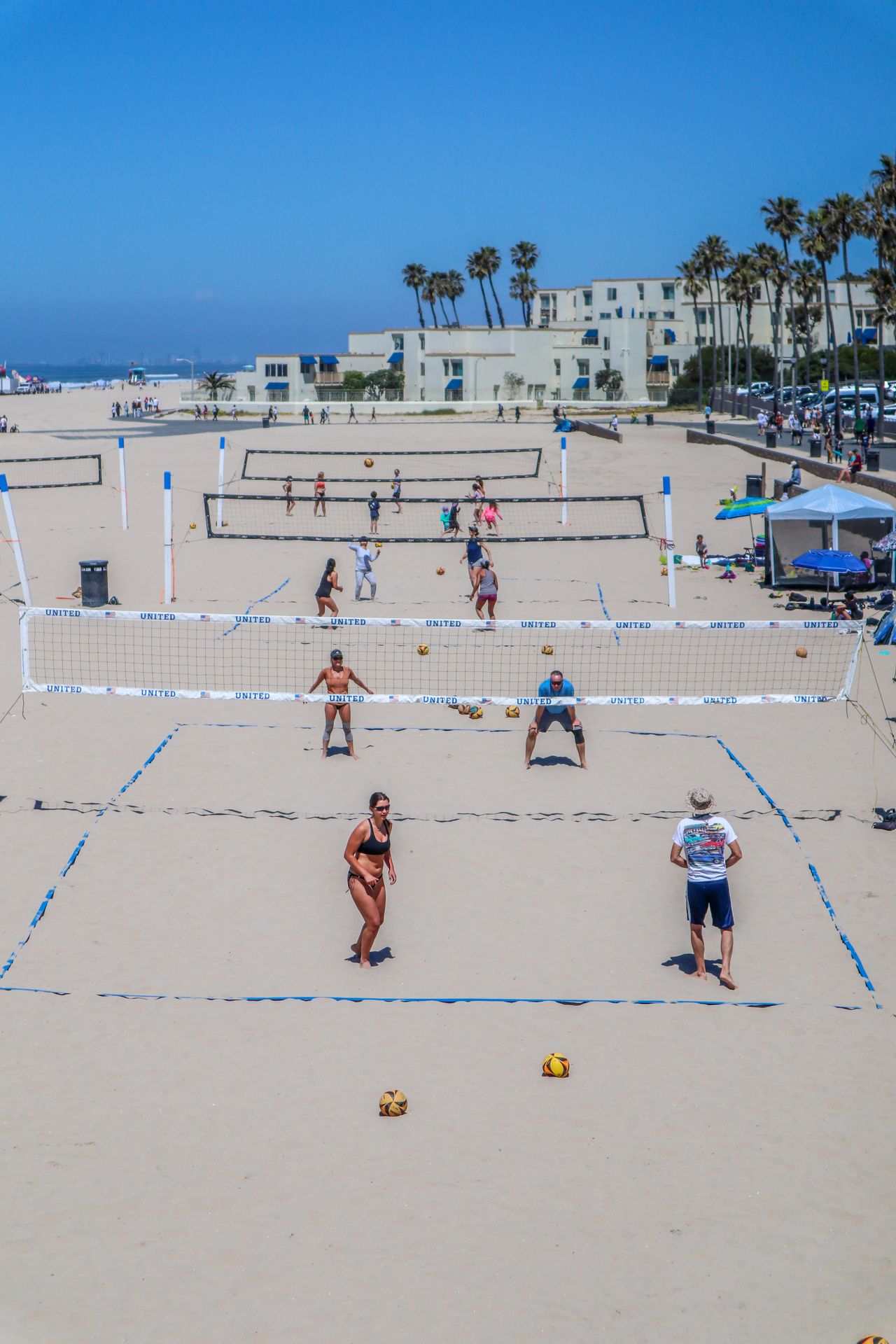
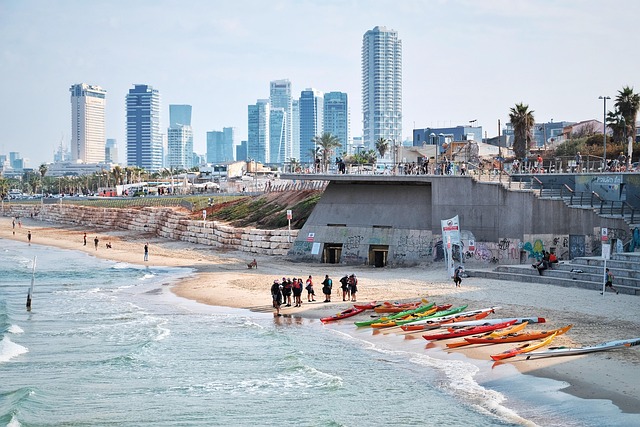
Israel has a natural beach-volleyball setting along the Mediterranean coast, especially around Tel Aviv and other coastal communities, but beach volleyball is not the defining core of the country’s volleyball identity. It functions more as a complementary scene: visible, accessible, and aligned with the country’s coastal lifestyle, but not as internationally prominent as Israel’s indoor club structure.
That does not mean sand volleyball is irrelevant. Beach volleyball gives Israel a different kind of volleyball culture, one built around ball control, conditioning, two-player decision-making, and outdoor participation. It also offers a wider entry point for recreational players who may never join a formal indoor club. In a country with a strong coastline and warm-weather windows, beach volleyball has room to grow as both a participation sport and a competitive discipline. Its long-term value may be in broadening volleyball’s base rather than replacing the indoor game as the country’s main competitive pathway.
Where Israeli Volleyball Is Headed
Israel’s volleyball future depends on turning its existing structure into a deeper player-development system. The country already has established clubs, national competitions, CEV access, and a recognizable domestic hierarchy. The next step is raising the floor: more youth athletes, better coaching continuity, stronger women’s and men’s pathways, and more players capable of handling European pace.
The strongest version of Israeli volleyball is likely to remain hybrid but indoor-first. Domestic clubs such as Hapoel Mate-Asher Akko, Maccabi Tel Aviv, and Hapoel Kfar Saba give the sport identity. European competition gives it standards. The national teams give it a representative goal. Beach volleyball gives it public visibility and a recreational bridge. Together, those pieces make Israel a serious small-market volleyball country: not a global power, but a place where the sport has enough institutional depth, regional character, and competitive ambition to keep developing.