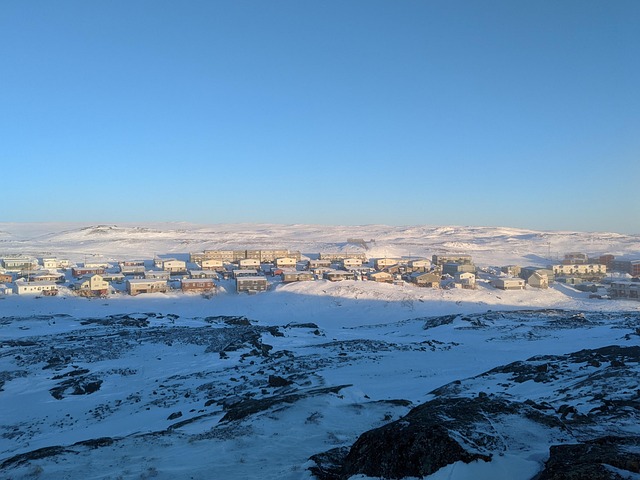
Volleyball in Nunavut is not defined by professional clubs, sprawling club circuits, or a large tournament calendar. Its identity is smaller, more territorial, and more closely tied to school sport, community recreation, and the opportunity to represent Nunavut at major northern and Canadian competitions. In a place where geography shapes almost every part of athletic development, volleyball carries a different meaning than it does in larger Canadian provinces. It is a gym sport, a team sport, and a pathway sport, giving young athletes a structured way to compete beyond their own communities.
That makes Nunavut an emerging volleyball territory rather than a traditional volleyball powerhouse. The sport’s strongest identity comes from participation, selection, travel, and representation. For many athletes, the meaningful step is not joining a large private club system. It is making a territorial team, training with a wider pool of players, and entering competitions such as the Arctic Winter Games or Canada Games pathway.
Territorial Teams and the Arctic Winter Games Pathway
Nunavut’s volleyball profile is closely connected to major games. Team Nunavut’s broader Major Games Program is designed to give athletes and coaches the opportunity to represent the territory through high-quality training and competition, including national and international settings. That framework matters because it gives volleyball a structure beyond isolated school seasons or local recreation.
The Arctic Winter Games are especially important to Nunavut’s volleyball identity. The Games bring together northern delegations from regions such as Nunavut, Yukon, Northwest Territories, Alaska, Kalaallit Nunaat/Greenland, Nunavik, Northern Alberta, and Sápmi-linked communities, creating a competitive setting that fits the realities of northern sport better than a purely southern Canadian model. Volleyball is part of that Arctic Winter Games environment, and Team Nunavut materials for the 2026 Games listed both female and male volleyball among the sports in the Team Nunavut information sheet.
That gives the sport a clear target. Players are not just training for a local season. They are training toward selection, travel, team identity, and competition against athletes from other northern regions. For a young outside hitter, setter, libero, or middle blocker in Nunavut, the major-games pathway can become the bridge between school volleyball and a larger athletic stage.
Indoor Volleyball as the Core Game
Nunavut’s volleyball scene is primarily indoor. Climate, distance, facilities, and community structure all push the sport into school gyms and organized indoor settings. Beach volleyball may exist recreationally in limited forms, but it is not the territory’s central volleyball identity. The sport’s competitive future depends much more on indoor training, coaching access, territorial camps, school participation, and the ability to gather athletes from different communities.
That creates a particular kind of volleyball challenge. Players need repetitions in serve receive, transition defense, attacking, blocking, and team systems, but Nunavut does not have the same density of opponents as Ontario, Alberta, or British Columbia. A strong athlete may dominate locally while still needing exposure to faster tempo, better blocking, and more advanced defensive organization. The territory’s volleyball development question is therefore not simply whether people want to play. It is whether athletes can receive enough quality contacts, coaching, and competitive matches to convert interest into higher-level performance.
Development Through Schools, Camps, and Selection
The development system in Nunavut is likely to remain school- and territory-driven. In larger provinces, volleyball players often move through years of club schedules, ranking events, private training, and provincial championships. Nunavut has to work differently. It needs school programs to introduce the sport, local coaches to keep athletes involved, and territorial selection systems to identify players who can handle higher-level competition.
The NU Sport Federation’s policy structure reflects that major-games pathway, with Volleyball Nunavut materials listed for athlete and coach selection policies connected to the 2025 Canada Games and 2026 Arctic Winter Games. Those policies matter because they turn volleyball from a casual school activity into a sport with standards, selection criteria, and representative goals.
For Nunavut, the future of volleyball will depend less on building a large commercial club economy and more on strengthening the links between community gyms, school teams, territorial tryouts, coaching education, and travel opportunities. Every stronger team begins with a wider base of young players who know the game well enough to pass, set, attack, defend, and communicate under pressure.
Where Nunavut Volleyball Goes Next
Nunavut volleyball’s ceiling will be shaped by access. More coaching, more tournaments, more consistent school seasons, and more chances to face outside competition would all raise the level. But the territory already has a meaningful identity: volleyball is a representative sport, a northern team sport, and a way for athletes to carry Nunavut into broader competition.
Its story is not about being a finished volleyball market. It is about building a serious pathway in a difficult geography. That gives Nunavut volleyball a clear and distinctive place in the Canadian game.