Houston’s volleyball identity is built on scale. It is a major metropolitan volleyball market with a deep junior club scene, a growing beach presence, strong school participation, and a regional talent base that feeds college programs across Texas and beyond. Unlike a smaller city where volleyball may revolve around one school, one beach, or one club, Houston has enough size to support multiple versions of the sport at once. Indoor volleyball, beach volleyball, youth training, adult competition, and college recruiting all exist inside the same sprawling ecosystem.
That makes Houston one of the more important volleyball markets in the southern United States. It is not just a city where people play volleyball. It is a development hub. Athletes can start young, progress through school and club systems, train year-round, compete indoors and on sand, and pursue college opportunities without leaving the broader region. The city’s volleyball story is not defined by a single team or arena. It is defined by volume, ambition, and the steady professionalization of youth sports.
A Club-Driven Volleyball Market
Houston volleyball begins with the junior club structure. In a city this large, school volleyball alone cannot carry the full competitive load. Clubs give serious athletes additional training, higher-level tournaments, position-specific instruction, and exposure to college recruiters. That club ecosystem is one of the reasons Houston has become such a significant volleyball producer.
The city’s club scene reflects the wider Texas model: early specialization, frequent competition, private training, and a strong emphasis on college pathways. Young players are not simply learning how to serve overhand or rotate correctly. The serious players are learning systems. Setters are trained to manage tempo. Liberos are built around serve receive and defensive range. Outsides learn to handle heavy passing responsibility while still carrying the attack. Middles are developed around blocking footwork, transition speed, and quick offense. Opposites are trained to terminate from the right side and provide blocking balance.
Houston’s size also means that athletes can find different levels of competition. Some players enter volleyball through school or community programs. Others join elite clubs with tournament travel and recruiting goals. Some move between indoor and beach training. That layered structure gives the city depth. It also makes Houston a place where volleyball can serve both ambitious athletes and recreational players without collapsing into one narrow identity.
Indoor Volleyball and the Texas Standard
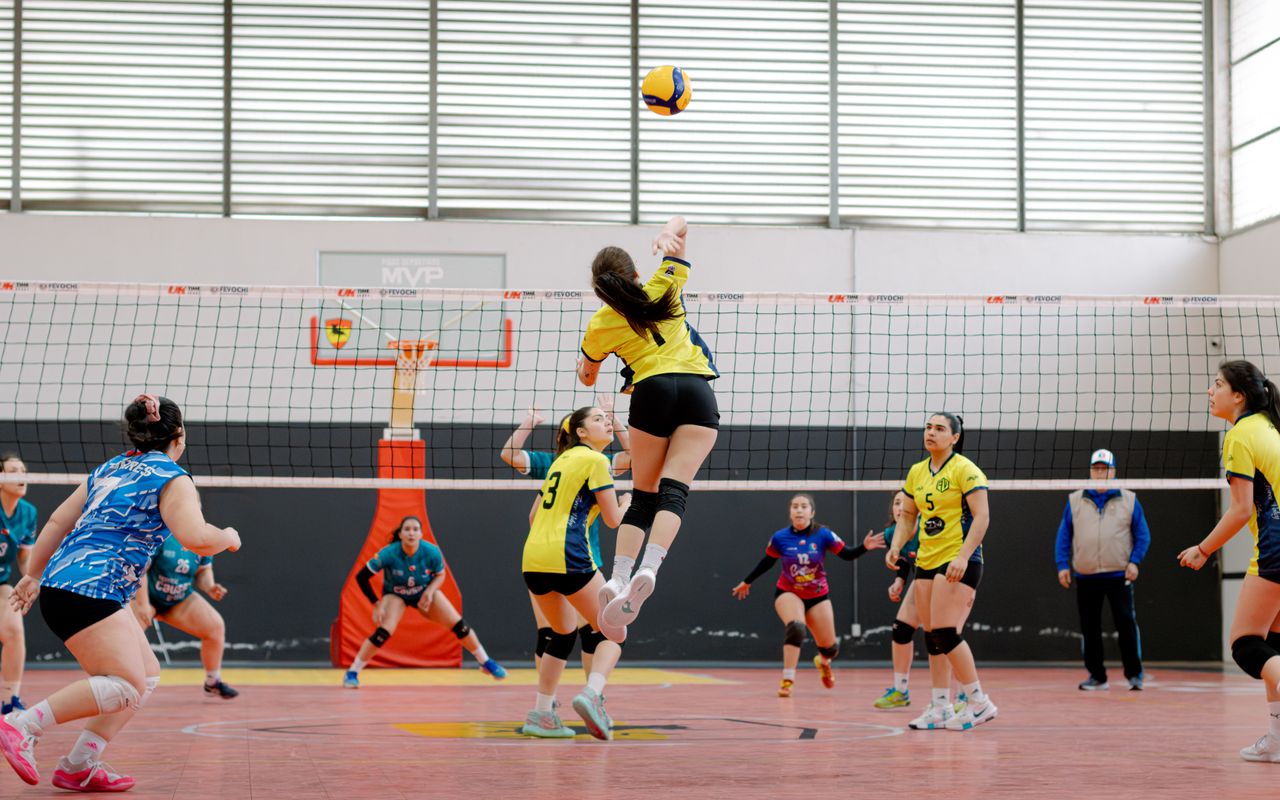
Indoor volleyball in Houston benefits from Texas’ broader volleyball culture. The state has become one of the country’s most important volleyball regions, especially in girls’ and women’s volleyball. High school gyms are competitive. Club tournaments are serious. College recruiters pay attention. Families understand the pathway. That matters because volleyball development depends heavily on repetition, coaching, and competition density.
Houston’s indoor style is shaped by athleticism and pace. In a large metro with a deep talent pool, teams can produce physical outside hitters, long middle blockers, quick defenders, and setters who are used to running offenses under pressure. The best players are often exposed to high-speed volleyball early, which helps prepare them for college systems.
The city’s volleyball identity is also strengthened by proximity to college programs across Texas and the surrounding region. Houston-area athletes do not grow up in isolation. They see college volleyball as a realistic target, not a distant dream. The presence of strong programs across the state creates a recruiting environment where club performance, tournament results, and positional development all matter. For many players, Houston volleyball is a launchpad.
Beach Volleyball in a Gulf Coast City
Houston is not a classic beach volleyball city in the same way as Southern California or Honolulu, but its outdoor scene is more important than outsiders might assume. The city’s climate, Gulf Coast location, and sand training facilities give beach volleyball a real role in the local ecosystem. For some players, beach volleyball is a separate competitive pathway. For others, it is a way to improve indoor skills.
Sand volleyball asks different questions of an athlete. Can a player pass without a perfect platform? Can they read the hitter without a large block in front of them? Can they create offense from an imperfect set? Can they serve strategically rather than simply aggressively? Houston’s beach scene gives athletes a chance to develop those instincts.
The outdoor game also widens the volleyball community. Adults who are no longer playing club or school volleyball can stay in the sport. Former indoor players can transition into doubles or fours. Younger athletes can train in the sand to sharpen their ball control and conditioning. In Houston, beach volleyball does not replace indoor volleyball. It adds another layer to an already deep market.
The School, Club, and College Pipeline
Houston’s volleyball pipeline is one of its defining features. The city has the population, facilities, coaching base, and competitive culture needed to produce college-level athletes. That does not mean every player is on an elite track, but it does mean the path is visible. A young player can begin in recreational volleyball, move into school competition, join a club, attend position-specific training, play in regional and national tournaments, and draw recruiting attention.
This pathway is especially important for girls’ volleyball, where Texas has become a national force. Houston’s best athletes compete in a crowded field, and that competition raises the level. A setter who faces strong blockers every weekend develops faster. A libero who passes against tough servers becomes more reliable. An outside hitter who has to score against organized defenses learns to mix power, roll shots, tips, and high hands.
The city’s size also creates internal competition. Clubs compete for athletes. Athletes compete for roster spots. Schools compete for district and playoff success. That pressure can be demanding, but it also creates a volleyball environment with real standards. Houston is not a place where serious players can coast for long.
A Metropolitan Volleyball Culture
Houston’s volleyball culture reflects the city itself: large, spread out, diverse, and competitive. There is no single volleyball neighborhood or one dominant court that explains the whole scene. Instead, volleyball is distributed across suburbs, schools, clubs, gyms, sand facilities, and adult leagues. The sport lives in weekend tournaments, early-morning practices, packed club schedules, high school rivalries, and families driving across the metro for training.
That geography shapes the culture. Houston volleyball often requires commitment. The distances are real, the schedules can be full, and the competition is broad. Players who emerge from this environment tend to understand the demands of the sport early. They know what it means to train, travel, specialize, and compete for opportunities.
The city’s diversity also gives volleyball a wide base. Volleyball is a global sport, and Houston’s international character helps the game feel familiar to many communities. Indoor volleyball, beach volleyball, recreational play, and youth training all benefit from a metro area where different sports traditions coexist.
The Future of Volleyball in Houston
Houston volleyball appears positioned for continued growth because the foundation is already strong. The city has scale, weather, athletes, clubs, schools, and access to college recruiting. The next stage is likely to involve even more specialization: stronger beach pathways, more boys’ volleyball growth, deeper positional training, and more visibility for elite local athletes.
Houston’s challenge is not whether volleyball belongs. It clearly does. The challenge is managing growth while keeping the sport accessible. A strong club ecosystem can produce excellent players, but it can also become expensive and demanding. The healthiest version of Houston volleyball will need both elite pathways and broad participation.
At its best, Houston is a volleyball engine. It takes athletic kids, gives them competition, surrounds them with coaching, and sends many of them into larger volleyball opportunities. The city’s identity is not built around one championship or one famous court. It is built around the depth of the system. Houston volleyball is big, competitive, and still expanding.