Bangladesh’s volleyball identity is that of an emerging South Asian volleyball country: large population, growing federation activity, regional competition, school and services participation, and a national-team system still trying to climb into a stronger Asian tier. Volleyball does not sit at the center of Bangladesh’s sports culture in the way cricket does, but it has a real institutional base and a long enough domestic history to be more than a fringe activity. The Bangladesh Volleyball Federation oversees the sport nationally, including training programs, national competitions, and international representation.
That combination gives Bangladesh a different volleyball profile from Bahrain. Bahrain’s story is compact and club-centered; Bangladesh’s story is broad, developmental, and still uneven. The country has the population base to support volleyball growth, but the challenge is turning participation into a deeper competitive system. For Bangladesh, volleyball’s future depends less on one elite club league and more on whether schools, districts, national competitions, women’s programs, youth teams, and federation planning can connect into a stronger pathway.
A Sport With Space to Grow
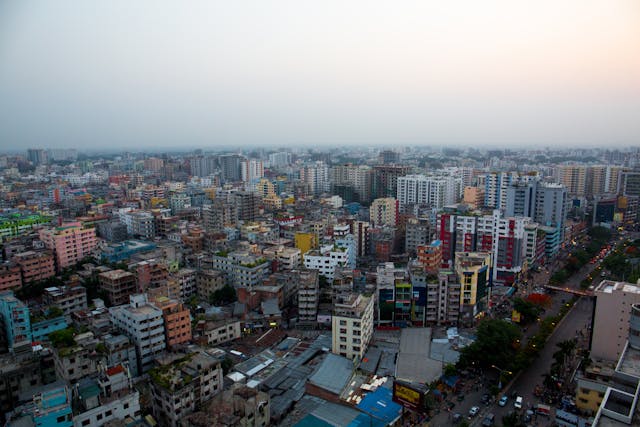
Bangladesh is one of the world’s most densely populated countries, and that reality shapes every sport that tries to grow there. Space, facilities, funding, and visibility matter. Volleyball has one natural advantage: it does not require the same land footprint as cricket or football. A court can be placed in a school yard, gym, military facility, community venue, or indoor hall. That makes volleyball adaptable in a country where sporting infrastructure must work hard.
The sport’s development is tied to institutions. Schools, colleges, services teams, district-level competitions, and federation events all play roles in introducing players to the game. In many emerging volleyball countries, the sport grows not because every neighborhood has a polished club system but because the game is simple to organize, inexpensive to start, and suitable for both structured and semi-structured competition. Bangladesh fits that pattern.
Still, moving from participation to performance is the hard step. Volleyball at the international level demands more than athletic enthusiasm. It requires setters who can run tempo, passers who can survive pressure, middles who understand blocking lanes, opposites who can terminate out-of-system balls, and liberos trained to read attacks early. Bangladesh’s long-term ceiling depends on how consistently it can develop those specialized skills.
National Teams and Regional Competition
Bangladesh participates within the Asian volleyball structure and is part of the South and Central Asian competitive environment. That regional context is important because Bangladesh’s most realistic benchmarks are not the biggest volleyball powers in the world. They are nearby opponents such as India, Nepal, Sri Lanka, Maldives, Pakistan, and other CAVA-linked countries. Regional tournaments give Bangladesh meaningful matches, manageable travel, and competitive pressure that can reveal where the program is improving.
The women’s side has become especially important to the country’s volleyball profile. Bangladesh was listed among the teams in the 2026 CAVA Women’s Volleyball Championship in Kathmandu, alongside countries including India, Iran, Kazakhstan, Kyrgyzstan, Maldives, Nepal, and Sri Lanka. That kind of regional participation is valuable because women’s volleyball can become a major growth lane when federations invest in training, visibility, and consistent competition.
Bangladesh’s men’s national team has also appeared in Asian-level competition, though the results show the gap between participation and higher continental performance. At the 2023 Asian Men’s Championship, Bangladesh was beaten by Korea and Pakistan in pool play, a reminder of how difficult the Asian ladder becomes once a team faces more developed volleyball systems.
Those results should be read in context. For an emerging volleyball nation, early Asian Championship appearances are part of the education process. Teams learn the pace of the game, the serving pressure, the blocking height, and the speed of transition offense. The value is not only in wins and losses; it is in exposing players and coaches to the standards they must eventually meet.
The Development Pathway Bangladesh Needs
The most important question for Bangladesh volleyball is not whether people can play the sport. It is whether the country can develop a repeatable player pathway. That means identifying young athletes earlier, training them with position-specific instruction, and giving them enough matches to become tactically mature.
The setter position is one of the clearest examples. Emerging volleyball programs often produce athletic outside hitters before they produce elite setters because setting requires thousands of repetitions, tactical vision, and a strong coaching environment. Bangladesh needs setters who can stabilize imperfect passes, run the middle attack when possible, and create hittable balls under pressure. Without that, even strong attackers become predictable.
The same applies to serve receive. At lower levels, teams can survive with effort and athleticism. At regional and Asian levels, poor passing breaks the entire offense. Bangladesh’s progress will depend on whether its junior and senior teams can build a stronger first-contact culture: platform discipline, communication, libero development, and outside hitters who can pass without losing attacking value.
Women’s volleyball presents another major growth opportunity. If Bangladesh can build more consistent girls’ and women’s competitions, the national program can improve quickly relative to regional peers. The country does not need to become an Asian power overnight. It needs consistent training environments, domestic events that matter, and national-team camps that connect to a larger talent-identification system.
Domestic Competitions and Volleyball Culture
Bangladesh’s volleyball culture is likely to grow through national competitions, institutional teams, and regional tournaments rather than through a commercial professional league in the short term. That is normal for a developing volleyball country. Before a sport can support a major professional structure, it needs reliable courts, coaches, referees, youth tournaments, media coverage, and enough competitive clubs or institutions to make the national calendar meaningful.
The Bangladesh Volleyball Federation’s stated role in national competitions and training programs gives the sport an organizing center. From there, the key is continuity. One-off tournaments can raise interest, but a stronger volleyball nation is built through repeated competition. Players need seasons, not only events. Coaches need development programs, not only match assignments. Referees and administrators need a regular calendar that makes the sport easier to follow.
Volleyball’s fit in Bangladesh is also helped by its accessibility. A basic version of the game can be played almost anywhere, but the elite version rewards structure. That dual nature is useful. It allows broad participation at school and community levels while still leaving room for serious athletes to move toward national competition.
Beach Volleyball and the Bangladesh Context
Bangladesh has coastline, rivers, and outdoor sporting culture, but beach volleyball is not yet the defining identity of the country’s volleyball scene. It has potential, especially around coastal areas and international development events, but indoor volleyball remains the more natural base for national growth. Indoor courts provide a more controlled environment for technical training, school competition, and federation-led programs.
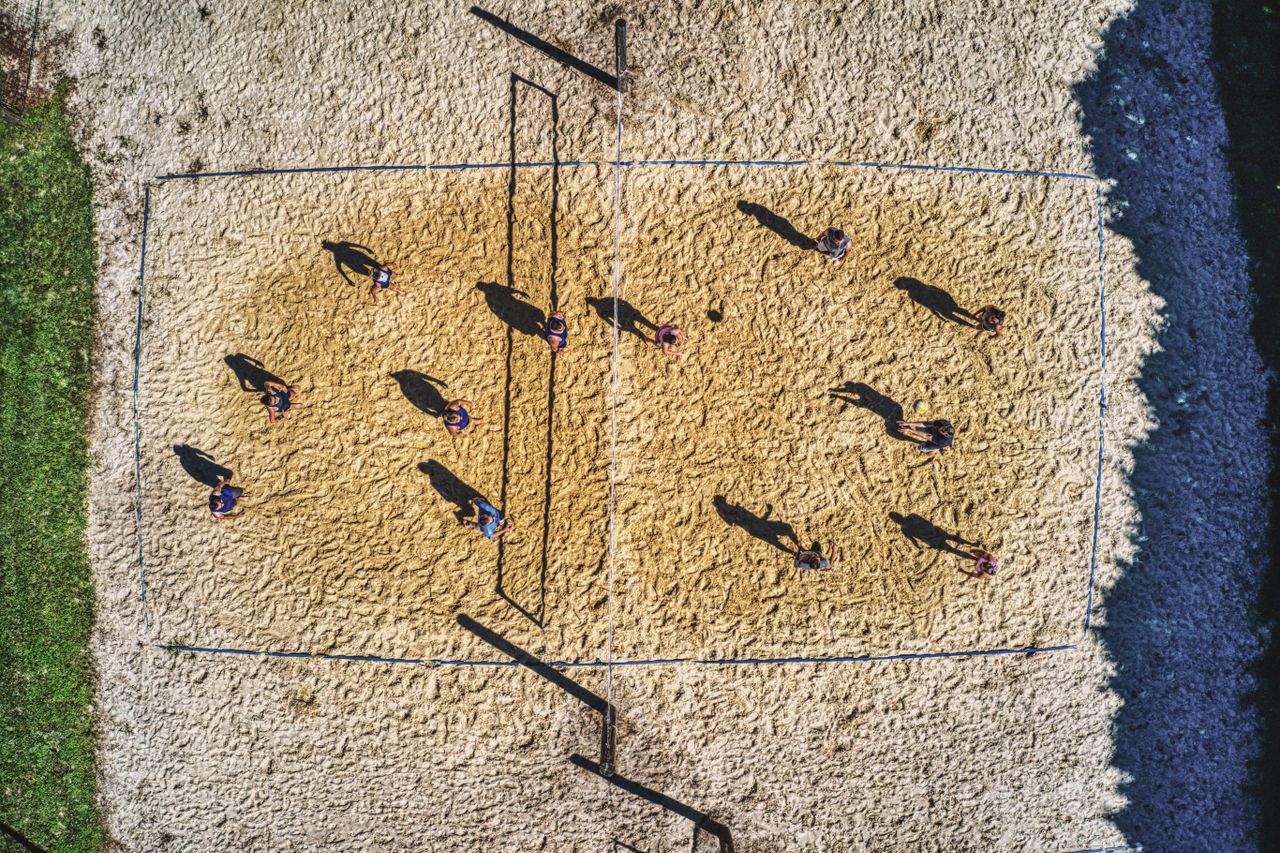
Beach volleyball can still play a useful role. It develops all-around players because every athlete must serve, pass, set, attack, block, and defend. For Bangladesh, where building complete technical players is essential, sand training could support broader development. But the sport’s future will likely depend first on indoor volleyball infrastructure, school and federation competition, and the ability to produce stronger national teams.
Bangladesh’s Volleyball Outlook
Bangladesh volleyball is still in a building phase, but it has enough structure to move forward. The country has a federation, regional competition opportunities, men’s and women’s national-team activity, and a population base that gives the sport room to expand. The central challenge is converting those ingredients into a deeper competitive system.
The most realistic growth path is regional first. Bangladesh does not need to measure itself immediately against Japan, Iran, China, or other Asian powers. It needs to become more consistent in South Asian and CAVA competition, develop stronger youth teams, build women’s volleyball, and improve technical standards across passing, setting, blocking, and transition play.
If Bangladesh can strengthen its domestic calendar and connect school, district, institutional, and national-team volleyball into one pathway, the sport can become a more visible part of the country’s athletic landscape. Its volleyball future is not defined by immediate medals. It is defined by whether the country can turn participation into organized development, and organized development into teams that can compete with more confidence across South Asia.