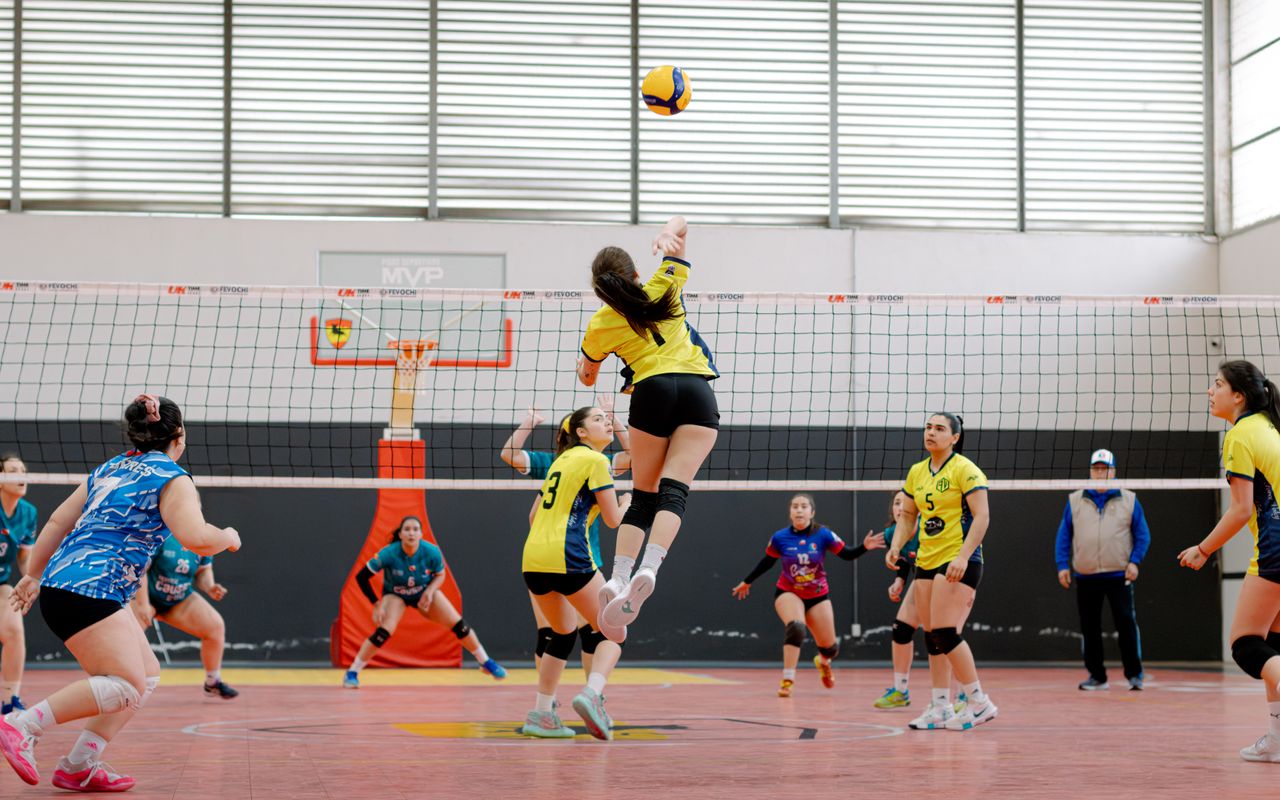
The pokey shot matters because beach volleyball often rewards control more than power. In a two-player game, attackers do not always have the approach, angle, or space to swing hard through the block. The pokey shot gives them another answer: a compact, knuckle-based touch that can lift the ball over a defender, drop it into open sand, or redirect a broken play without giving away an easy counterattack. It looks simple from the outside, but it belongs to the deeper language of beach volleyball. The shot reflects what makes the beach game different from indoor volleyball: fewer players, more open court, more weather, and more pressure on every small decision.
Why The Pokey Shot Fits Beach Volleyball So Well
Beach volleyball creates problems that indoor volleyball does not. With only two defenders covering the court, every attack is a reading contest. One player blocks or fakes a block at the net, while the defender behind has to cover deep line, deep angle, short shots, and anything chipped into open space. That structure makes soft attacks more valuable than they might seem.
The pokey shot developed as a practical response to that environment. Instead of contacting the ball with an open-hand tip, which is restricted in beach volleyball, players use the knuckles or a firm closed-hand contact to guide the ball legally and cleanly. The result is a controlled touch that can travel higher, softer, or sharper than a full swing.
It is especially useful when the attacker is off balance, too close to the net, late to the ball, or facing a well-formed block. A hard swing might go straight into the blocker’s hands. A roll shot might sit up too long. A pokey shot can change the tempo of the point at the exact moment the defense expects power.
The Shot That Turns Small Spaces Into Scoring Chances
The value of the pokey shot is not just that it slows the ball down. Its value comes from where and when it is used. A good beach attacker can poke the ball over a blocker’s shoulder, into the front of the court, deep over the defender, or into the seam between responsibilities. That makes the shot less about force and more about timing.
At high levels, the pokey shot often appears when the point has already become imperfect. A pass drifts. A set pulls the hitter inside. The wind changes the ball’s path. The blocker takes away the obvious swing. In those moments, the attacker has to make a fast decision without forcing a low-percentage play.
That is where the pokey shot becomes more than a bailout. It can be an intentional scoring tool. Because the contact is firm but compact, the attacker can disguise the direction until late. The defender has to hold position long enough to respect the hard swing, but once the ball is poked into open sand, there may not be enough time to recover.
The best players use it with patience. They do not poke every awkward ball. They mix it with swings, roll shots, cut shots, high lines, and deep corners. The pokey shot works because it belongs to a larger attacking menu. It punishes defenders who overcommit, but it also gives attackers a legal, reliable way to survive broken plays.
What The Pokey Shot Reveals About Beach Volleyball
The pokey shot shows why beach volleyball cannot be reduced to jumping, diving, and hitting hard. Power matters, but the sport is built around problem-solving. Every rally asks players to read space, manage risk, adjust to conditions, and communicate without the safety net of a full six-player lineup.
That is why small shots carry so much weight. In indoor volleyball, a soft touch may be one detail inside a larger offensive system. On the beach, it can decide the entire point. A well-placed pokey shot can beat a bigger blocker, neutralize a defender’s positioning, or turn a difficult set into a controlled attack.
It also reflects the sport’s technical discipline. Beach volleyball has strict rules around open-hand attacking contacts, so players have had to develop legal alternatives that still allow creativity. The pokey shot is one of those solutions: simple enough for beginners to recognize, but subtle enough for elite players to use as a tactical weapon.
The pokey shot remains one of beach volleyball’s clearest examples of intelligence over force. It gives attackers a way to score without swinging through every problem. In a sport where two players must cover an entire court, that kind of touch can be just as valuable as power.