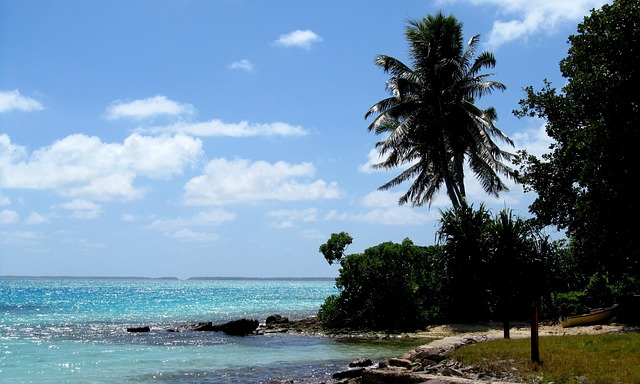
Kiribati’s volleyball identity is shaped by geography, community sport, and beach volleyball potential. As a Pacific island nation spread across remote atolls, Kiribati does not have the infrastructure profile of a major indoor volleyball country. Its volleyball story is instead tied to accessibility, outdoor play, coaching development, and the possibility of using beach volleyball as a natural fit for the country’s environment. Volleyball in Kiribati should be understood less as a large professional pathway and more as a community-centered sport with room to grow through education, federation support, and regional Pacific competition.
The country’s geography gives volleyball both advantages and limits. On one hand, volleyball is a relatively accessible sport. It does not require a large stadium, expensive personal equipment, or a full professional setup to begin. A net, a ball, open space, and committed organizers can create a playable environment. On the other hand, high-level development requires coaching, travel, competition, facilities, and consistent athlete identification. For an island nation with scattered communities, those logistical challenges are central to the sport’s growth.
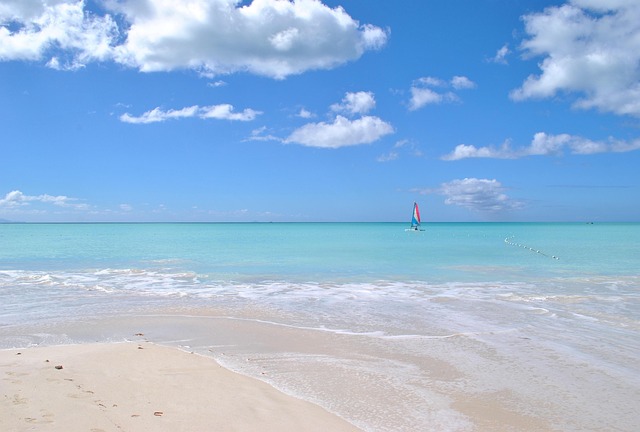
Beach volleyball is the most natural volleyball identity for Kiribati. The country’s climate and coastal setting make sand volleyball a logical fit, and beach volleyball’s two-player format can be useful for smaller player pools. It allows athletes to develop all-around skills: serving, passing, setting, attacking, blocking, reading wind, and defending open space. In smaller volleyball nations, that can be especially valuable because beach players cannot hide in narrow roles. They must become complete volleyball athletes.
Recent coaching development is one of the most important signs for Kiribati volleyball. The FIVB listed Kiribati among countries hosting volleyball and beach volleyball coaching courses in May, with a Beach Volleyball Coaches Course scheduled from May 19 to May 23, 2026. That kind of investment is significant for a developing volleyball country. Coaching is often the difference between casual participation and real player development. Better coaches can teach serving mechanics, defensive positioning, approach footwork, blocking discipline, and match strategy in ways that multiply across schools and communities.
Indoor volleyball still has a role in Kiribati, especially as a school and community sport. Indoor or hard-court volleyball can help introduce younger players to team structure, rotations, communication, and basic tactical concepts. But Kiribati’s highest-upside identity is likely hybrid: indoor volleyball for participation and basic development, beach volleyball for competitive focus and regional visibility. That split makes sense for a country where facilities may be limited but outdoor conditions can support regular play.
The player pathway in Kiribati will likely depend on schools, community organizers, local competitions, and federation-linked coaching more than professional clubs. The most important step is creating enough repetition. Players need regular touches, not occasional festivals. Setters and passers need daily ball control. Beach pairs need enough matches to learn spacing, serve targeting, transition scoring, and the mental rhythm of side-out volleyball. Coaches need resources and continuity so knowledge does not disappear after one course or one tournament.
The future of Kiribati volleyball should be measured by participation depth, coaching quality, and regional competitiveness rather than global rankings. If the country can build a stronger coaching base, organize consistent local events, and give beach volleyball a defined place in national sports development, it can create a volleyball culture suited to its own geography. Kiribati’s volleyball opportunity is not to imitate large indoor powers. It is to build a Pacific island model where community participation, beach skills, and coaching education form the core of the sport.