Munich’s volleyball identity is changing in real time. For years, the city’s volleyball story sat in the shadow of larger German sports brands and nearby Bavarian volleyball communities. It had participation, clubs, and access to Germany’s organized sports infrastructure, but it did not always feel like a central Bundesliga volleyball city. That profile is now shifting, especially with the move toward a combined professional project built around WWK Volleys München.
The clearest recent development is the cooperation between Herrsching and Haching, two Bavarian volleyball names with different strengths. Reports in 2026 described the Bundesliga teams WWK Volleys Herrsching and TSV Haching München joining forces to compete as WWK Volleys München, with matches planned across Haching, Herrsching, and Munich’s BMW Park. The official Haching platform also described the new WWK Volleys München project as preparing for the 2026/27 season, including the appointment of Tomasz Wasilkowski as head coach.
That matters because Munich has the ingredients for a stronger volleyball market: population, corporate base, sports culture, facilities, universities, and regional access. What it has needed is a clearer elite identity. In German volleyball, professional visibility can be difficult to build outside the strongest club environments. Football dominates the national conversation, and even in Bavaria, volleyball has to compete with soccer, basketball, winter sports, handball, and tennis. A Munich-branded Bundesliga project gives the sport a sharper platform.
Munich’s volleyball culture is best understood as a hybrid between organized club sport and emerging professional ambition. Germany’s sports system gives volleyball a foundation through clubs, youth teams, amateur leagues, and regional competition. Players can enter the sport through local clubs and progress into more serious training environments. That club-based structure is different from the American school-first model. In Munich, volleyball identity is not centered on high school gyms or college recruiting. It is built through Vereinsport: membership, coaching, age-group teams, and long-term club participation.
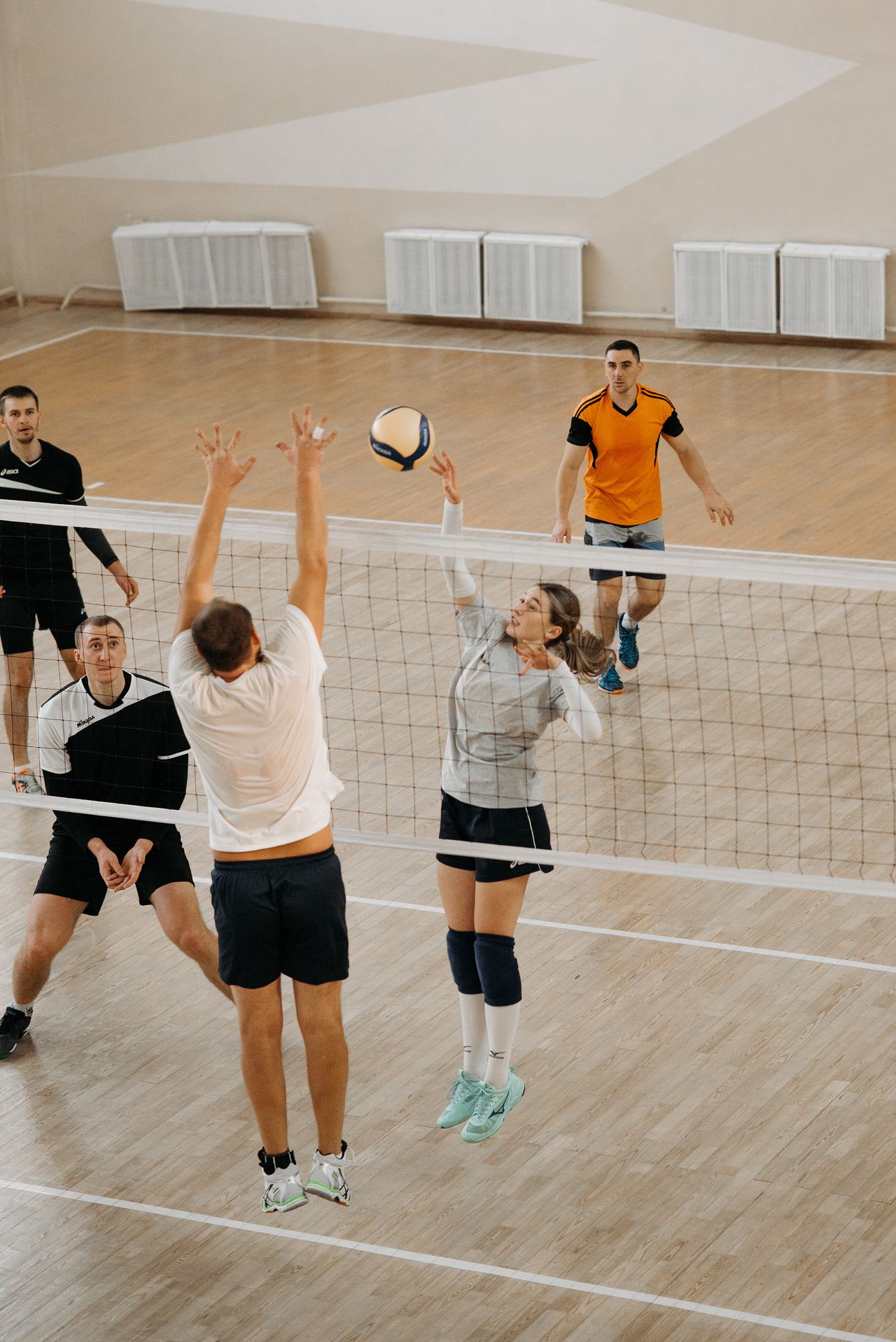
The indoor game defines Munich volleyball far more than beach volleyball. The city has outdoor and recreational volleyball, especially in parks and summer settings, but its competitive identity is indoor. That means the technical backbone of the sport matters: blocking systems, disciplined serve pressure, setters controlling tempo, and outside hitters handling both reception and transition. German volleyball has traditionally valued structure, physicality, and tactical organization, and Munich’s strongest future volleyball identity will likely follow that pattern.
The Herrsching-Haching connection gives the new Munich project a meaningful story. Haching brings tradition and a history of ambitious volleyball projects. Herrsching brings a recognizable club personality and a reputation for atmosphere. Combining those pieces under a Munich-facing identity is an attempt to create something larger than either market could sustain alone. It is a strategic move: use Munich’s scale while retaining the roots of two existing volleyball communities.
For young players in the region, that matters. A stronger professional presence can make the pathway more visible. It gives junior players a local team to follow, coaches a clearer high-performance reference point, and clubs a more obvious connection between youth volleyball and the Bundesliga. Even if most young players will never become professionals, the presence of elite volleyball raises standards. Players see the speed of the first contact. They see how quickly a setter has to make decisions. They see how middles close blocks, how liberos read attackers, and how serving can control an entire match.
Munich also sits in a useful regional volleyball geography. Bavaria has enough population and club infrastructure to support meaningful competition, while Germany’s national volleyball system gives ambitious players a broader ladder. Munich’s role may become less about being an isolated volleyball city and more about serving as a flagship market for southern German volleyball. If WWK Volleys München succeeds, it could give the region a stronger top-level identity.
The women’s side also belongs in the broader picture, even if the current professional spotlight is heavily tied to the men’s Bundesliga project. Munich has the demographics and club base to support girls’ and women’s volleyball development, and Bavaria’s volleyball culture includes serious women’s competition. A complete volleyball city cannot be built only around a men’s professional brand. It needs youth girls’ teams, women’s clubs, coaching depth, and visible competitive opportunities across levels.
Beach volleyball gives Munich a recreational layer, but not the main identity. Summer courts, parks, and social play add to the city’s athletic life, yet Munich is not a beach volleyball destination. Its volleyball future is more likely to be written indoors, through Bundesliga visibility, club development, and regional ambition.
Munich’s volleyball story is entering a more consequential phase. The city has always had the size and sporting sophistication to support volleyball. The question has been whether the sport could create a strong enough identity in a crowded market. With WWK Volleys München, the city has a more visible answer. Munich volleyball now has a chance to become not just a participant in German volleyball, but one of its defining urban projects.