Mauritania’s volleyball identity is that of an emerging African volleyball country where the sport exists behind larger national interests but has room to grow through schools, urban clubs, regional competition, and beach volleyball development. Unlike North African powers such as Egypt, Tunisia, Algeria, or Morocco, Mauritania does not have a deep record of continental volleyball success. Its volleyball story is more developmental: building participation, improving organization, and finding realistic competitive lanes in West and North African contexts.
Geography gives Mauritania a unique profile. The country sits on the Atlantic coast of Northwest Africa, with Nouakchott as its political and sporting center and a national landscape shaped heavily by desert, distance, and uneven access to sports infrastructure. Those conditions matter for volleyball. Indoor volleyball needs reliable halls, equipment, coaching, and transport. Beach volleyball needs sand-court organization and event structure. In Mauritania, the sport’s growth depends less on tradition and more on development choices.
Indoor Volleyball in a Developing Sports System
Indoor volleyball in Mauritania is not a mass-market spectacle. It is more likely to be found in school settings, local clubs, community sport, and federation-led activity than in a large professional structure. That does not make the sport unimportant. In emerging volleyball countries, indoor volleyball often works as a foundational discipline because it teaches team organization, spacing, communication, and technical skill across a full roster.
Mauritanian players who enter volleyball need the same core training as athletes anywhere else: passing platform discipline, serving consistency, setter decision-making, blocking footwork, defensive reading, and attacking rhythm. The issue is not the game itself; it is the system around the game. Without enough regular competition, athletes develop more slowly. Without trained coaches, setters and liberos may not receive the specialized instruction that raises a team’s level. Without strong youth pathways, promising players can drift away before reaching senior competition.
Mauritania’s position inside African volleyball gives it a framework for progress. The African Volleyball Confederation governs volleyball and its disciplines across the continent, including beach and park volleyball, through national federations and regional structures. FIVB development material also lists Mauritania among African national federations eligible within the international volleyball system. For a country at Mauritania’s stage, access to continental structures matters because coaching courses, referee development, youth events, and beach initiatives can all raise the sport’s baseline.
Beach Volleyball and the Atlantic Coast
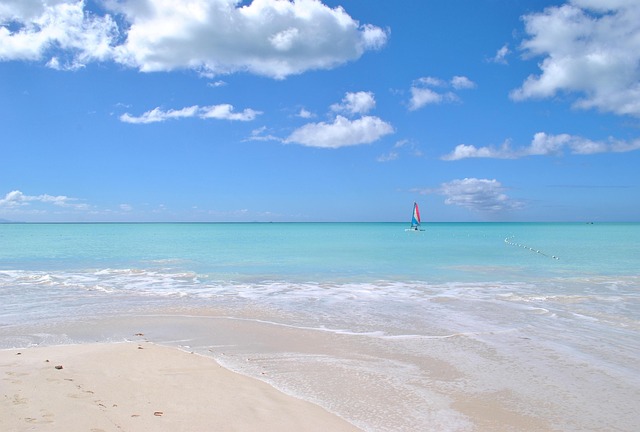
Beach volleyball may be Mauritania’s most interesting long-term opportunity. The country has an Atlantic coastline, and beach volleyball requires fewer players than the indoor game. A serious beach program still needs coaching, equipment, and competition, but it can be developed with smaller squads and targeted training.
The sport also fits the broader direction of African volleyball, where CAVB has continued to emphasize beach volleyball development through training, qualification tournaments, and coaching programs. In 2026, for example, CAVB listed beach volleyball coaching and referee initiatives in Dakar and regional beach volleyball qualification activity as part of its continental calendar. For Mauritania, proximity to Senegal and the West African beach volleyball environment could become useful if regional collaboration grows.
The sand game would require a different athlete profile from indoor volleyball. Beach players must be complete: comfortable receiving serve, setting in difficult conditions, attacking with range, blocking or peeling defensively, and managing long rallies in heat and wind. Mauritania’s climate would make conditioning and tactical patience essential.
Development Priorities
Mauritania’s volleyball future depends on structure more than star power. The country needs more young players touching the ball regularly, more coaches teaching the same fundamentals, and more domestic events that give teams reasons to train. Women’s volleyball, school volleyball, and beach volleyball could all become important growth channels if they receive consistent attention.
The realistic goal is not immediate continental prominence. It is visibility, participation, and technical improvement. Mauritania can build a more stable volleyball identity by connecting schools in Nouakchott and other population centers, supporting club competition, and using African development pathways to train coaches and officials.
For Mauritania, volleyball is still a sport of possibility. Its future will be built one layer at a time: better coaching, more organized play, clearer youth pathways, and eventually national teams that can compete more regularly in regional African events. If beach volleyball receives serious attention, the Atlantic coast could become the country’s most distinctive volleyball asset.