Canada has become one of the more balanced volleyball countries in the world: not simply an indoor program, not simply a beach volleyball nation, and not simply a participation market built around schools and clubs. Its volleyball identity sits at the intersection of all three. The country has produced Olympic indoor teams, international beach medalists, major university programs, deep provincial club systems, and a national structure that has steadily pushed Canadian volleyball from a domestic participation sport into a more credible global competitor.
That balance is what makes volleyball in Canada different from the sport in countries where one version dominates the national image. Brazil is tied strongly to both elite indoor volleyball and iconic beach culture. Poland and Italy are defined by professional indoor environments and intense fan bases. The United States has a massive school, college, club, and beach ecosystem. Canada’s profile is more layered. It has the size, facilities, and youth-sport structure to develop serious indoor players, the coastline and summer culture to support beach volleyball, and the international ambition to compete beyond North America.
The result is a volleyball scene that feels both established and still climbing. Canadian volleyball has history, but it is not only a nostalgia sport. Its best modern story is momentum: stronger men’s indoor performances, a women’s program trying to close the gap internationally, beach teams with Olympic credibility, and a development system that stretches from school gyms to university championships to professional careers overseas.
A Country Built Through Gyms, Provinces, and Patience
Volleyball in Canada has always had to compete for space in a crowded sports culture. Hockey dominates the national imagination. Basketball, soccer, baseball, lacrosse, curling, football, and winter Olympic sports all claim major pockets of attention. Volleyball does not usually sit at the top of the Canadian sports conversation, but it has long had a sturdy base because it fits the country’s athletic infrastructure so well.
It is a gym sport that can grow through schools, universities, community clubs, and provincial competition. That matters in a country with long winters, spread-out population centers, and a strong tradition of organized youth sport. Indoor volleyball does not need perfect weather or coastal access. It needs coaching, gym time, competition, and a player pathway. Canada has developed those pieces unevenly, but effectively enough to produce national-team athletes from across the country.
The sport’s Canadian geography matters. Ontario supplies population, club depth, and major training environments. British Columbia has a strong indoor tradition and a natural connection to beach volleyball. Alberta has been one of the country’s most important university volleyball provinces, with a history of elite men’s and women’s programs. Quebec brings another deep school and club culture, with its own competitive circuits and coaching identity. The Prairies have also mattered, particularly through university volleyball and smaller communities where school sport can carry real local significance.
That provincial structure gives Canadian volleyball a broad base rather than one narrow center of gravity. The country is not dependent on a single city or region. Toronto, Vancouver, Calgary, Edmonton, Montreal, Ottawa, Winnipeg, and smaller volleyball communities all contribute in different ways. Some places are stronger in junior clubs. Some are tied more closely to university volleyball. Some have better beach scenes. Others produce athletes through school systems and regional competition. Together, they form a national volleyball map that is wide, competitive, and increasingly connected.
The Men’s Indoor Program and Canada’s Elite Standard
The Canadian men’s indoor team has long been the program most associated with the country’s highest international ceiling. Its strongest historical marker remains the 1984 Los Angeles Olympics, where Canada finished fourth. That result still matters because it established what Canadian men’s volleyball could look like at its best: physical, disciplined, capable of playing with major volleyball countries, and not merely participating on the Olympic stage.
Modern Canadian men’s volleyball has been shaped by the effort to return to that level of relevance. After years outside the Olympic tournament, Canada returned at Rio 2016 and finished fifth, a result that helped reposition the program internationally. Tokyo 2020 followed with another Olympic appearance, and Paris 2024 continued the program’s run of modern Olympic qualification. That kind of continuity is important. In global volleyball, credibility comes from repeated appearances against elite opponents, not one isolated breakthrough.
Canada’s men’s teams have typically been built around size, serving pressure, and physical attacking. The country has produced outside hitters, opposites, middles, setters, and liberos who have gone on to compete professionally abroad, often in Europe or other strong international leagues. Because Canada does not have a domestic professional indoor league on the same scale as Italy, Poland, Turkey, Brazil, or Japan, many of its top athletes develop at home and then sharpen their games overseas.
That creates a distinct national-team rhythm. Canadian players often come through university or club systems, earn international opportunities, and then build professional careers outside the country. When they return to the national team, they bring experience from different leagues, coaching styles, and tactical environments. That can make Canada adaptable, but it also demands strong national-team cohesion because players are not all being developed within one domestic professional ecosystem.
The Hoag family is one of the clearest examples of Canadian volleyball continuity. Glenn Hoag was part of the 1984 Olympic generation and later became a major coaching figure. Nick Hoag became a central modern national-team player and Olympic captain. That kind of multigenerational presence gives Canadian volleyball a sense of lineage. The men’s program is not just a set of rosters; it is a long-running national project, with older breakthroughs still shaping the expectations placed on newer teams.
The Women’s Indoor Program and the Chase for a Higher Ceiling
The Canadian women’s indoor program has a different profile. Its history includes Olympic participation and World Championship appearances, but its modern challenge has been climbing into deeper relevance against the world’s strongest women’s volleyball countries. The gap at the top of women’s international volleyball is severe. Nations such as Brazil, Italy, Serbia, China, Turkey, the United States, Japan, and Poland have professional depth, heavy investment, and established high-performance systems. Canada’s task has been to build enough stability and experience to compete more consistently inside that group.
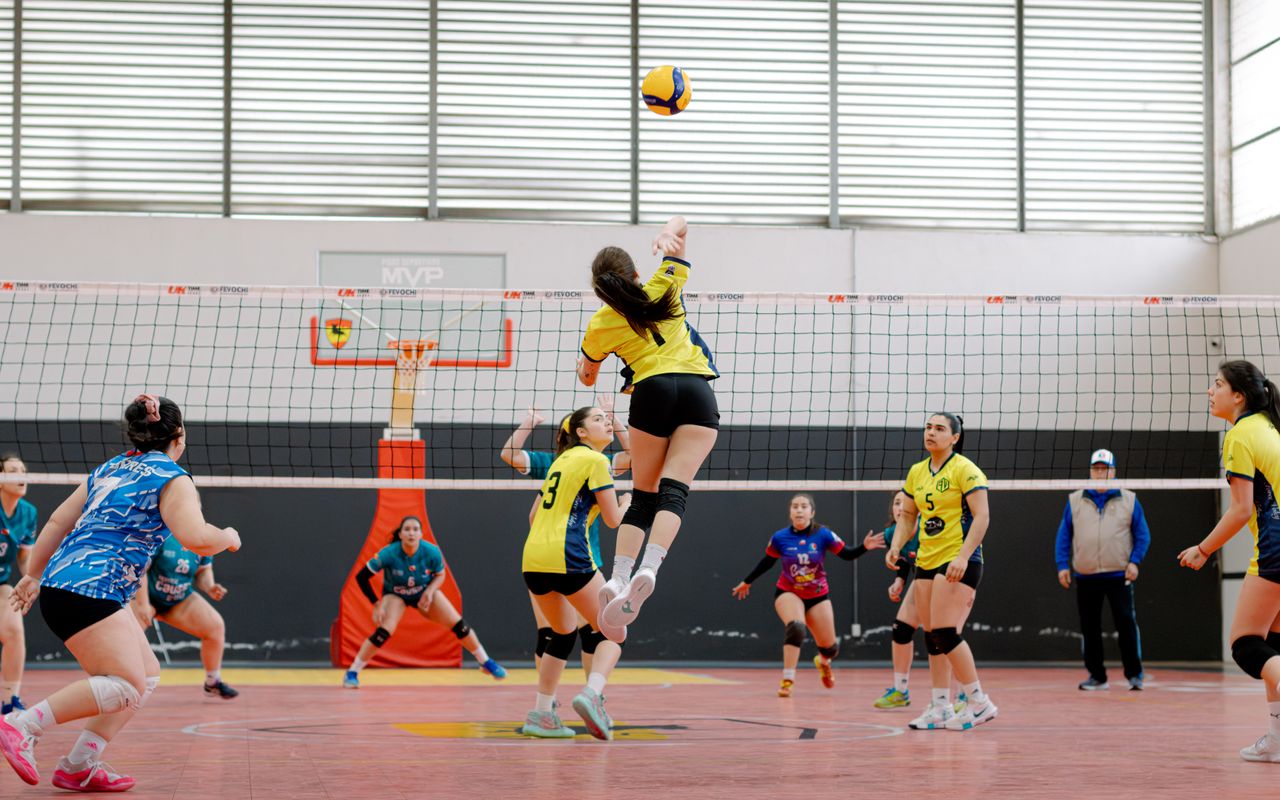
The women’s program has shown signs of that growth through participation in elite international competitions, including the Volleyball Nations League. That stage matters because it places Canada in repeated matches against high-level opponents. For a developing or rising national team, that experience is more than a schedule item. It is a test of serve receive under pressure, transition offense against elite blocks, setter decision-making at speed, and defensive discipline across long tournaments.
Canada’s women’s volleyball identity is also tied closely to the university and club pathway. Many athletes move through provincial clubs, school teams, and Canadian university volleyball before entering professional leagues abroad or national-team environments. The lack of a large domestic professional league makes development more complicated, but it also places extra importance on coaching quality at the youth, provincial, and university levels.
The women’s game has strong growth potential in Canada because volleyball fits well within the country’s school and club sport culture. It is accessible, team-oriented, technically demanding, and attractive to multi-sport athletes. The challenge is not whether Canada can produce talented players. It can. The question is whether enough of those players can be moved through a high-performance pathway that prepares them for the pace, physicality, and tactical complexity of top international volleyball.
That is where Canada’s women’s program has been trying to move from participation to pressure. The next step is not simply qualifying for events or producing occasional standout players. It is building a team that can repeatedly take sets and matches from stronger-ranked opponents, hold serve receive against elite servers, and develop enough offensive variety to avoid becoming predictable. For Canada, the women’s indoor story is still being written, and its future depends heavily on the connection between club volleyball, university competition, professional opportunities, and national-team investment.
Beach Volleyball and Canada’s Olympic Identity
Beach volleyball gives Canada one of its most visible international volleyball identities. That may seem surprising for a country better known for winter than sand, but Canadian beach volleyball has developed into a legitimate Olympic and world-tour presence. The sport’s Canadian base is not just casual summer play. It includes national-team training, international competition, and athletes capable of reaching the Olympic podium.
Canada’s first Olympic beach volleyball medal came in 1996, when John Child and Mark Heese won bronze at the Atlanta Games. That medal gave Canadian beach volleyball a permanent place in the country’s Olympic story. It also established the idea that Canada could compete in a version of volleyball often associated with warmer climates and beach-heavy cultures.
The women’s side added a major modern chapter at Paris 2024, when Melissa Humana-Paredes and Brandie Wilkerson won silver. That result was especially important because it gave Canada its first Olympic women’s beach volleyball medal and pushed Canadian beach volleyball back into wider public view. Humana-Paredes and Wilkerson also represented something larger than one tournament run. They showed that Canada could produce elite beach players with the skill, physicality, defensive range, and composure needed to beat top teams on the biggest stage.
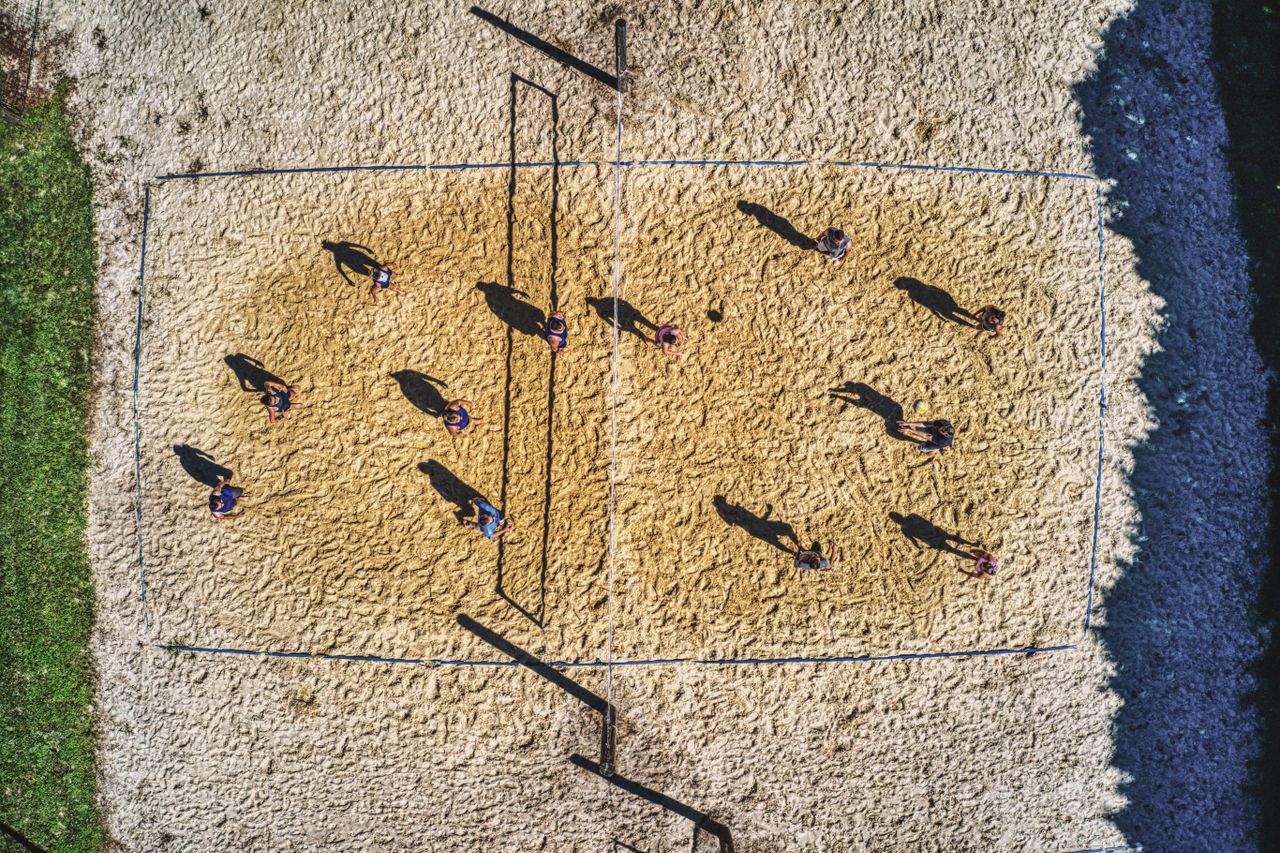
Canadian beach volleyball has a distinct character. It is not built on year-round natural beach access in the same way as Southern California, Brazil, or Australia. Instead, it combines summer outdoor culture, targeted training environments, indoor athletic backgrounds, and international travel. Many Canadian beach athletes have roots in indoor volleyball, which can produce strong jumping, ball control, blocking instincts, and competitive discipline. The transition to beach then requires a different skill package: two-player court coverage, wind management, shot selection, partner communication, and the stamina to handle long rallies in changing outdoor conditions.
Toronto has become especially important because of the training environment around Ashbridges Bay, one of the country’s central beach volleyball locations. British Columbia also carries natural beach volleyball relevance, particularly around Vancouver and the West Coast. Across the country, summer beach and grass volleyball create a broader participation culture, but the elite beach pathway is more specialized. It demands international exposure, technical precision, and the ability to adapt quickly from Canadian training conditions to global events in far different climates.
Canada’s beach volleyball reputation now has real weight. It is not only a recreational extension of indoor volleyball. It is an Olympic medal pathway and a visible part of the country’s volleyball identity.
University Volleyball and the Canadian Development Engine
University volleyball is one of the most important pillars of the Canadian game. U SPORTS competition gives the country a national collegiate structure that develops athletes, coaches, rivalries, and regional identities. It does not function exactly like NCAA volleyball in the United States, but it fills a similar role in giving high-level players a competitive bridge between junior volleyball and adult elite competition.
Programs in Canada West, Ontario, Quebec, and Atlantic Canada all contribute to the national picture, but Canada West has often carried particular weight, especially through programs such as Alberta, Trinity Western, UBC, Manitoba, Calgary, and others. These universities have produced national champions, professional players, and national-team contributors. Their matches can be highly technical and physically serious, with athletes who are already training at a level beyond ordinary student recreation.
The importance of university volleyball in Canada is partly structural. Without a major domestic professional league serving as the center of the sport, university programs become more than campus teams. They are talent concentrators. They provide coaching, strength training, competitive schedules, video work, and a serious volleyball environment during critical development years. For many Canadian players, university volleyball is where they learn whether they can move from being good provincial or club athletes to players with national or professional potential.
The university game also helps preserve volleyball culture across the country. It gives alumni, local fans, high school players, and club coaches a set of programs to follow. It creates championship moments that matter inside the Canadian volleyball community. It gives the sport continuity. Even when national teams are out of season or top professionals are overseas, university volleyball keeps the domestic competitive calendar alive.
The best Canadian university programs are also tactically important. They train setters to run faster offenses, middles to read and close blocks, liberos to organize back-row defense, and pins to handle heavy serve-receive responsibility. This technical environment matters because international volleyball punishes gaps quickly. A player who wants to move beyond the Canadian system needs more than athleticism. They need repeatable skills under pressure.
Club Volleyball, Schools, and the Provincial Pathway
The foundation of Canadian volleyball is still built through schools, clubs, and provincial competition. This is where most athletes first encounter the sport seriously. School volleyball introduces players to team systems, rotations, positions, and competition. Club volleyball then raises the level, adding travel, specialized coaching, stronger opponents, and exposure to provincial and national events.
Canada’s club ecosystem is especially important because it identifies athletes early and gives them a structured environment outside the school season. In a large country, provincial volleyball organizations help create order: age groups, championships, coaching education, selection programs, and pathways toward national age-group opportunities. That structure is not identical from province to province, but it gives Canadian volleyball a recognizable ladder.
The best clubs do more than teach players how to hit hard. They develop serve receive, blocking footwork, transition patterns, setter-hitter timing, defensive reading, and game management. They also expose young athletes to the reality of volleyball specialization. A tall middle must learn how to attack fast tempo and close blocks laterally. An outside hitter must pass under pressure and still score out of system. A libero must control first contact and lead the back row. A setter must run an offense, manage hitters, and make decisions while moving.
Canada’s school and club system also feeds both indoor and beach volleyball. Some athletes move cleanly through indoor pathways. Others cross over to beach in the summer, where they sharpen ball control and court awareness. That crossover can be valuable. Beach volleyball forces players to touch the ball constantly, read the whole court, and solve problems without hiding inside a six-player system.
The challenge is access and consistency. Gym time can be limited. Travel costs can be high. Coaching depth varies by region. In smaller communities, talented athletes may have to travel long distances for better competition. These are not unique Canadian problems, but they are amplified by geography. Canada’s volleyball future depends partly on how well the sport can keep widening access while still raising elite standards.
The Style of Canadian Volleyball
Canadian volleyball often reflects the country’s athletic profile: physical, organized, and increasingly technical. On the men’s side, Canada has frequently leaned into size, blocking, serving, and wing attacking. At its best, the Canadian men’s game can put real pressure on opponents from the service line and at the net. The challenge is maintaining offensive speed, reception quality, and late-set execution against the deepest teams in the world.
On the women’s side, the national style is still evolving. Canada’s strongest path forward likely depends on becoming more efficient in first contact, faster in transition, and more varied offensively. International women’s volleyball is unforgiving when teams become predictable. The best programs can score through multiple pins, run middles in transition, defend with discipline, and turn imperfect digs into attacking chances. Canada has been working toward that standard.
Beach volleyball adds another layer. Canadian beach teams have often needed to be adaptable because they compete globally in conditions that can vary dramatically from event to event. The best Canadian beach pairs combine indoor-influenced athleticism with patient rally construction. They must win with blocking and defense, but also with touch: roll shots, pokes, cut shots, high-line swings, and serving strategy.
That mixture gives Canada a volleyball identity that is not one-note. It can produce big indoor attackers, skilled beach defenders, university-trained setters, club-developed liberos, and physically imposing middles. The task is connecting those pieces into sustained international success.
Canadian Volleyball Culture
Volleyball culture in Canada is serious without always being loud. It does not have the week-to-week mass spectator environment of hockey or the professional visibility of the country’s largest sports. But inside the volleyball community, the sport has depth. Club tournaments draw families, coaches, recruiters, and athletes into long weekends of competition. University championships carry real prestige. National-team matches hosted in Canadian cities can bring together a community that is used to following many of its best players from a distance.
There is also a bilingual and regional character to the sport. Quebec volleyball has its own rhythms, terminology, institutions, and rivalries. Western Canadian university volleyball has a distinct competitive reputation. Ontario’s scale gives it a major role in club and athlete development. British Columbia connects indoor systems with outdoor and beach culture. The Atlantic provinces may not have the same population base, but they remain part of the national university and provincial structure.
Volleyball in Canada also benefits from being a sport with strong appeal across genders. Men’s and women’s volleyball both have meaningful histories, and beach volleyball gives both men and women visible international pathways. That matters for the sport’s long-term health. A country with credible men’s indoor, women’s indoor, men’s beach, and women’s beach programs has more ways to attract athletes, coaches, fans, and investment.
Where Canadian Volleyball Goes Next
The next stage for volleyball in Canada is about converting breadth into sustained elite performance. The participation base is there. The university system is there. The beach pathway has Olympic proof. The men’s indoor team has reestablished itself as a serious Olympic program. The women’s indoor team has a clear growth track. The question is how much higher Canada can climb.
For indoor volleyball, the biggest issue is professionalization. Canadian players will continue to need strong international club opportunities, but the domestic system must prepare them better before they leave. That means more high-level coaching, more competitive youth environments, better strength and conditioning, more technical specialization, and stronger bridges between junior clubs, universities, and national teams.
For beach volleyball, Canada has a chance to build on Olympic visibility. Medals create attention, but systems create repetition. If the country can keep developing young beach athletes while also allowing indoor players to cross over effectively, Canada can remain a serious beach volleyball nation rather than an occasional medal threat.
For women’s indoor volleyball, the opportunity is significant. The sport has room to grow in visibility, and the player base is strong enough to support a more ambitious national program. If Canada can keep more athletes in the high-performance pipeline and expose them to elite international volleyball earlier, the women’s team can become more competitive against top-tier opponents.
For men’s indoor volleyball, the goal is consistency at the highest level. Canada has already shown it can qualify, compete, and produce elite players. The next jump is turning Olympic qualification and strong single-tournament performances into deeper medal contention.
Canada’s volleyball story is ultimately one of steady construction. It is not a country built around one famous gym, one beach, one dynasty, or one golden generation. It is a broad volleyball nation with multiple engines: school sport, club development, university competition, national teams, beach volleyball, and athletes playing professionally around the world. That makes Canada one of the more interesting volleyball countries to follow. Its identity is already established, but its ceiling still feels unfinished.