Lagos gives Nigerian volleyball one of its most important urban stages. In a country where football dominates the national sports conversation, volleyball in Lagos has developed through schools, clubs, institutions, and organized competition rather than mass-media visibility. Its identity is not built around one famous arena or one single professional dynasty. It is built around the city’s role as a gateway: a place where Nigerian volleyball moved from school participation into formal organization, where club activity found an early base, and where the sport continues to sit inside a dense, competitive, multi-sport environment.
That makes Lagos different from a beach-first volleyball city or a university-centered American market. Its volleyball culture is more institutional and developmental. The city matters because it has long supplied the sport with schools, organizers, players, coaches, and competitive energy. Lagos is one of the places where Nigerian volleyball’s modern structure began taking shape, including the formation of the Lagos Amateur Volleyball Association before the national association and federation structure became more formalized. Historical accounts of Nigerian volleyball frequently point back to Lagos schools and early Lagos-based organization as part of the sport’s foundation in the country.
Volleyball’s Lagos Roots
The Lagos story begins with schools, teachers, and organized sport. Volleyball in Nigeria did not emerge first as a commercial spectator product. It grew through educational institutions, physical education programs, and early amateur associations that gave the game competitive shape. Lagos was central to that process because it already had the population density, school networks, and administrative importance needed to turn a gym-class sport into an organized competitive activity.
The Lagos Amateur Volleyball Association was an early landmark because it gave the sport a local structure. That mattered. Volleyball needs organization more than casual visibility. It needs courts, officials, coaches, school competitions, player registration, and a reliable competitive calendar. Lagos supplied that kind of environment earlier than many other Nigerian cities. When Nigerian volleyball later moved toward national federation oversight, Lagos already had history as one of the sport’s organizing centers.
That school-based foundation still shapes the way Lagos volleyball is understood. The city is not only a place where elite athletes appear at the end of the process. It is one of the places where players first encounter the game. In a city with constant competition for athletic attention, volleyball has survived by being accessible, structured, and adaptable. It can be played in schools, community spaces, institutional compounds, and club environments. That flexibility has helped the sport maintain a presence even without the constant public spotlight enjoyed by football.
Indoor Volleyball and the Nigerian Competitive System
Lagos volleyball is primarily an indoor volleyball story. The city’s competitive identity is tied more to six-player volleyball, school gyms, institutional teams, and club competition than to beach volleyball, despite Lagos’s coastal location. In practical terms, the city’s volleyball reputation is shaped by setters learning tempo, outside hitters carrying heavy attacking loads, middle blockers developing timing, and liberos handling serve receive in crowded, fast-moving indoor settings.
Nigeria’s national volleyball ambitions give Lagos added importance. The Nigeria Volleyball Federation has stated a goal of making Nigeria a stronger force in African and global volleyball, which places pressure on the country’s major urban centers to keep producing athletes, coaches, referees, and administrators. Lagos is one of the obvious cities in that larger plan because of its size, youth population, and sports infrastructure.
The city’s role is not limited to elite national-team production. Lagos is also important because it offers volume. Volleyball development depends on how many young players get meaningful repetitions before the elite level. A player who learns to pass, serve, block, and read the game in a Lagos school or club environment can move into higher competition with a stronger technical base. The same is true for coaches, who often develop through school teams, local competitions, and club assignments before contributing at state or national levels.
The challenge is consistency. Nigerian volleyball has talent, athleticism, and a history of formal organization, but it does not always have the same level of facilities, funding, media coverage, or professional pathways available in stronger volleyball countries. Lagos can help solve part of that problem because it concentrates population, sponsors, schools, and sports administrators in one place. When volleyball gains traction in Lagos, it has a better chance of being noticed nationally.
Player Pathways in a Crowded Sports City
Lagos athletes grow up in one of Africa’s most competitive sports environments. That can be difficult for volleyball because football absorbs attention quickly. Basketball, athletics, combat sports, and other school sports also compete for athletes. But volleyball has a specific advantage: it rewards height, coordination, vertical explosiveness, anticipation, and team discipline in ways that can attract athletes who may not fit neatly into football’s pathway.
For young players, Lagos volleyball can offer several routes. Some enter through school physical education. Others find the sport through local clubs, institutional teams, university programs, or state-level competition. From there, the stronger players may move into national competitions, federation programs, or club systems that connect them with the broader Nigerian volleyball landscape.
The city’s best volleyball development depends on repetition and coaching. It is not enough to identify tall, explosive athletes. Volleyball requires ball control, reading, spacing, communication, and tactical discipline. A powerful outside hitter still needs serve receive. A middle blocker needs footwork and timing. A setter needs decision-making, touch, and trust. Lagos has the raw athletic environment to produce players, but the continued growth of the sport depends on how consistently those players receive specialized volleyball instruction.
That is where schools and clubs become central. Volleyball in Lagos is most powerful when it links school participation with serious training and competitive opportunities. The city’s future as a volleyball hub depends on whether that pathway becomes more visible, more organized, and more aspirational for young athletes.
Lagos, Beach Volleyball, and the Untapped Coastal Question
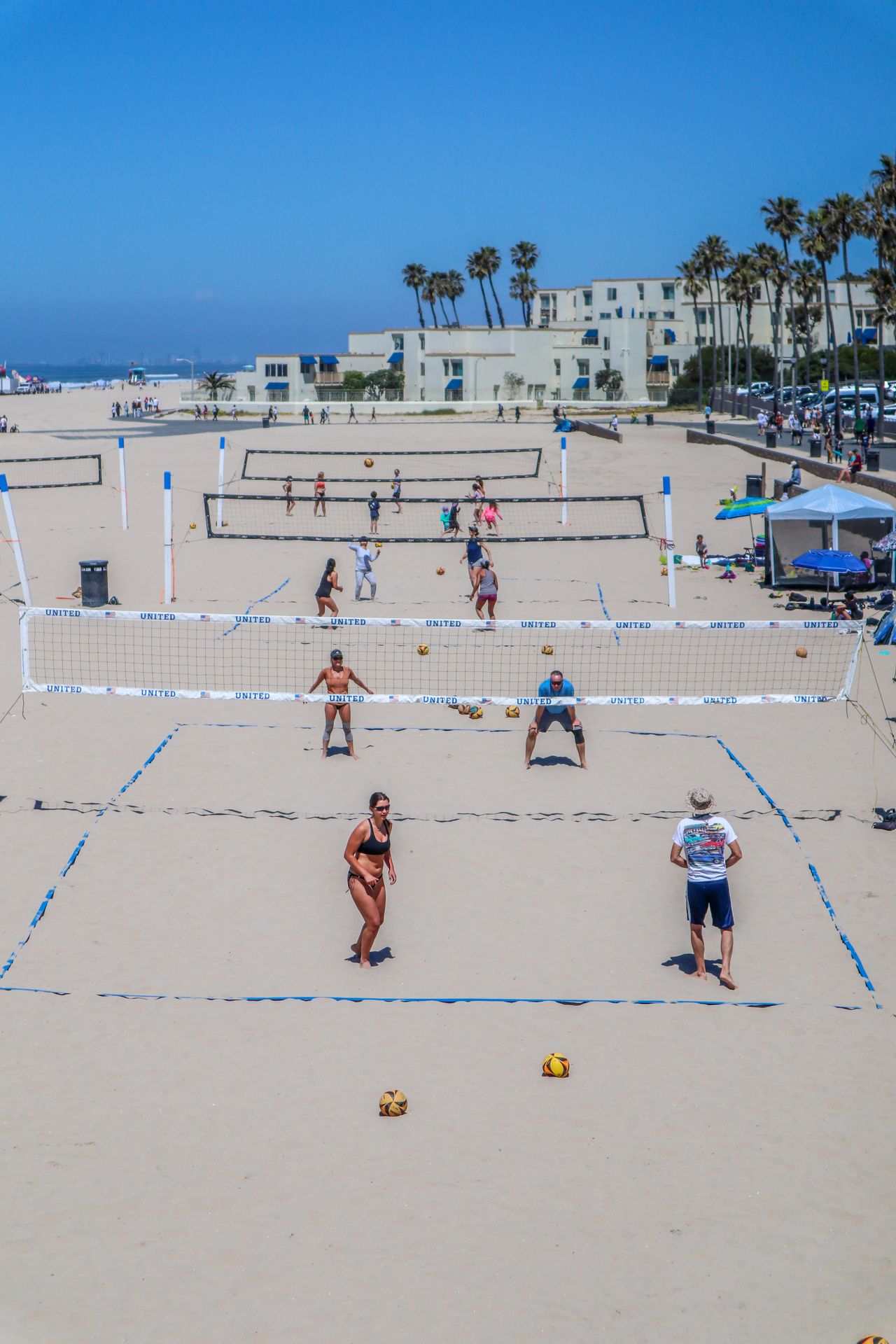
Lagos has coastline, heat, and a youth-heavy population, but its volleyball identity is not yet defined by beach volleyball in the way Los Angeles, Rio de Janeiro, or parts of Australia are. That gap is important. On paper, Lagos has many qualities that could support a stronger beach volleyball culture: outdoor space, coastal communities, tourism, fitness culture, and a city population large enough to sustain events.
The question is whether beach volleyball becomes a serious development lane or remains secondary to the indoor game. Beach volleyball requires a different ecosystem. It needs maintained sand courts, specialized coaching, tournament culture, and athletes who are comfortable with the two-player format. It also needs visibility. In cities where beach volleyball thrives, the sport is not only played; it is seen.
For Lagos, beach volleyball represents opportunity more than established identity. A stronger beach scene could give the city another way to connect recreation, youth development, and elite competition. It could also help volleyball reach athletes who are drawn to outdoor, fitness-driven sport rather than traditional indoor team structures. But for now, Lagos remains more important as an indoor and institutional volleyball city.
The Future of Volleyball in Lagos
The future of volleyball in Lagos depends on whether the city can turn its scale into structure. It already has the history, population, and sports energy to matter. The next step is deeper technical development, stronger youth competitions, more visible local clubs, and better bridges between schools, state programs, and national volleyball ambitions.
Lagos does not need to become a replica of European club volleyball or American college volleyball to have a clear identity. Its strength is different. It is a Nigerian volleyball engine: dense, energetic, school-rooted, and capable of producing athletes if the systems around them keep improving. The city’s volleyball story is about organization as much as performance. It is about turning participation into pathways and pathways into competitive standards.
In that sense, Lagos remains one of the most important volleyball cities in Nigeria. It carries part of the sport’s history, but it also carries part of its unfinished potential.