Kenya is one of Africa’s defining volleyball nations, and the clearest expression of that status comes through the women’s national team. The Malkia Strikers have given the country a volleyball identity that is competitive, recognizable, and continental in scale. In a sports landscape often associated globally with distance running, football, rugby sevens, and athletics, volleyball has carved out its own lane: structured, disciplined, club-driven, and anchored by a women’s program that has repeatedly carried Kenyan sport onto African, Olympic, and world stages.
Kenyan volleyball is not built around casual beach imagery or a broad professional entertainment industry. Its real identity is indoor, institutional, and competitive. The backbone of the sport runs through national teams, corporate-backed clubs, security-service teams, schools, federation leagues, and regional African competition. Nairobi, Mombasa, and other competitive centers matter, but the sport’s reputation is less about one city than about the systems that have sustained elite teams over decades.
The result is a volleyball culture with a clear hierarchy. At the top are the Malkia Strikers, the women’s national team whose African success has shaped how Kenya is viewed across the sport. Beneath that level are the club programs that supply national-team players, especially Kenya Pipeline, KCB, Kenya Prisons, and other established sides. On the men’s side, clubs such as General Service Unit, Kenya Prisons, Kenya Ports Authority, and other league contenders have created a competitive domestic structure even though the men’s national profile has not matched the women’s continental dominance.
That distinction matters. Kenya is a volleyball country because of the women’s game first, but it is not only a women’s volleyball country. The men’s league, beach circuit, school pipeline, and club infrastructure all contribute to a broader volleyball ecosystem. The country’s challenge is converting that ecosystem into deeper international consistency, stronger professional opportunities, and a wider base of elite development.
The Malkia Strikers and Kenya’s Continental Volleyball Identity
The Malkia Strikers are the center of Kenyan volleyball. Their success has made Kenya one of the benchmark nations in African women’s volleyball, especially from the 1990s onward. The team’s identity has usually been built around athleticism, defensive persistence, strong service pressure, and the ability to compete through cohesive systems rather than relying on only one or two stars.
Kenya’s women have won African titles across multiple eras, and that longevity is what separates the program from a short competitive cycle. The national team has not merely had one golden generation; it has repeatedly regenerated around new setters, outside hitters, middles, opposites, and liberos while maintaining continental relevance. That is one of the strongest signs of a mature volleyball culture. A country can produce one good team through coincidence, but it takes institutions, coaching, and club continuity to remain a regular African champion.
The Malkia Strikers’ continental reputation is tied to both dominance and pressure. Kenya expects its women’s team to compete for African championships, qualify for major international events, and represent the country beyond the continent. That expectation creates a different standard from what exists in emerging volleyball nations. A strong Kenyan team is not considered a surprise within Africa; it is treated as a continuation of a long-running competitive identity.
Internationally, the Olympics and World Championship have exposed the gap between African dominance and the highest global tier. Against countries such as Brazil, Japan, Poland, Serbia, Turkey, Italy, China, and the United States, the game becomes faster, taller, and more technically punishing. Serve receive has to hold up against heavier serving. Middles have to close blocks at a speed rarely seen in domestic play. Setters have to run clean tempo under pressure. Outside hitters have to score against better-organized double blocks and deeper floor defense.
For Kenya, those matches are demanding but valuable. They show where the country stands and where the next stage of development has to go. The Malkia Strikers have already proven that Kenya can dominate within Africa. The harder task is turning African strength into regular global competitiveness, not simply participation.
Clubs That Carry the National Standard
Kenya’s volleyball reputation is inseparable from its clubs. The domestic game has long depended on well-known institutional sides with the resources, organization, and continuity to train elite players. Kenya Pipeline, KCB, Kenya Prisons, General Service Unit, Kenya Ports Authority, DCI, KDF, and other programs have all played roles in shaping the competitive landscape.
Kenya Pipeline is one of the most important names in the women’s game. The club has been a major supplier of Malkia Strikers players and has built a reputation through domestic competition and African club tournaments. Its importance is not just in winning matches; it has served as a stabilizing institution for high-level women’s volleyball in Kenya. A player who develops through a program like Pipeline enters an environment where national-team standards are visible every day.
KCB has also become a major pillar of the women’s scene. The club’s rivalry with Kenya Pipeline and Kenya Prisons gives the domestic league much of its competitive edge. These matches are not just club fixtures; they often function as national-team auditions. Setters are measured against blockers who know their tendencies. Opposites and outside hitters face disciplined defensive systems. Libero play is tested by aggressive serving. Coaches can see which players are ready for continental and international volleyball because the domestic league places them under pressure before they reach the national team.
Kenya Prisons has a distinctive place in both men’s and women’s volleyball. Like other service-linked teams in African sport, Prisons has benefited from institutional structure, consistent training environments, and an emphasis on discipline. In volleyball terms, that often translates into organized blocking, controlled systems, and experienced squads that understand how to manage long league campaigns.
On the men’s side, General Service Unit is one of the country’s most recognized clubs. GSU’s reputation is built around sustained domestic success and a strong institutional identity. Kenya Ports Authority, Kenya Prisons, KDF, Equity, Trailblazers, and other clubs add depth to the league, creating a men’s scene that is highly competitive locally even if it has not produced the same international recognition as the women’s national team.
The club structure gives Kenyan volleyball one of its most important advantages: continuity. Players do not develop in isolation. They move through schools, local teams, and institutional clubs where the sport is taken seriously. The best players eventually enter a national-team environment that draws from programs already familiar with high-performance expectations.
The Style of Kenyan Volleyball
Kenyan volleyball has traditionally been associated with athletic energy, work rate, and resilience. The national teams and top clubs often play with a strong physical baseline: explosive approaches, active floor defense, and a willingness to extend rallies. That athletic base gives Kenya a natural advantage within African competition, particularly when paired with experienced setters and organized defensive systems.
At the same time, the modern international game demands more than athleticism. The global standard has moved toward faster offensive tempo, heavier serving, sharper serve receive, taller and more mobile blocking units, and more specialized positional play. For Kenya, the technical question is how to build on its athletic identity without being limited by it.
Serve receive is one of the biggest separators. Against African opponents, Kenya can often survive imperfect passing through athletic attacking and strong transition play. Against top global teams, a pass that drifts too far off the net can remove the middle attack, make the offense predictable, and leave outside hitters facing set blocks. International volleyball punishes small technical gaps quickly.
Setter development is another decisive area. Kenya has produced respected setters, including figures such as Janet Wanja, whose career became part of the national team’s competitive memory. At elite level, setters are not only distributors; they are tactical managers. They have to hold blockers, create rhythm for hitters, recognize matchups, and stabilize the team when passing breaks down. Kenyan volleyball’s next jump depends partly on producing setters who can run fast, deceptive offenses against world-class blocking schemes.
The middle-blocker position also illustrates Kenya’s development challenge. African competition can be won with strong blocking instincts and quick attacks, but the global game requires middles who can transition from block to attack at high speed, close space against fast pins, and contribute from the service line. Kenya has athletes with the physical tools for that role. The question is how consistently the development system can refine timing, footwork, reading, and offensive range.
Player Legacy and the Faces of Kenyan Volleyball
Kenya’s volleyball story is carried through its players as much as its teams. The country’s strongest eras have featured athletes who became reference points for the next generation.
Janet Wanja stands among the most important figures in Kenyan volleyball history. A setter with a long national-team career, she represented Kenya at major international competitions and became closely associated with the Malkia Strikers’ competitive identity. Her role extended beyond playing, as she later moved into the team environment as part of the staff. For Kenyan volleyball, Wanja represented continuity: a player shaped by the earlier years of national-team competition who remained connected to the program as it moved into a new era.
Dorcas Ndasaba is another key name in the country’s volleyball legacy. She was part of the generation that helped establish Kenya’s women as an African force. Players from that era gave the country more than results; they created a standard. Once a nation begins to see itself as a champion in a sport, younger athletes inherit a different set of expectations. They are no longer trying simply to participate. They are trying to defend a reputation.
Brackcides Agala, Jane Wacu, Mercy Moim, Sharon Chepchumba, Pamela Adhiambo, Emmaculate Nekesa, and other national-team players have continued that line in different roles and eras. Some became known for leadership, some for attacking, some for setting, some for defensive reliability, and some for their ability to compete internationally despite the structural challenges that often face African volleyball programs.
The club-to-national-team relationship is central to this player legacy. Many of Kenya’s recognizable players are strongly associated with clubs such as Kenya Pipeline, KCB, or Kenya Prisons. That gives fans a layered understanding of the sport. A player can be a club rival one month and a national teammate the next. The domestic rivalries sharpen the national pool rather than weakening it.
Men’s Volleyball and the Domestic Competitive Base
Kenyan men’s volleyball does not carry the same continental status as the Malkia Strikers, but it remains an important part of the country’s volleyball identity. The men’s league has strong institutional clubs, serious rivalries, and a competitive rhythm that keeps the sport visible beyond the women’s national team.
General Service Unit is the leading reference point for many followers of the men’s game. GSU’s success has made it one of the most respected names in Kenyan men’s volleyball, especially within the domestic league. Kenya Prisons and Kenya Ports Authority have also played major roles, and their matches often define the upper end of the men’s competition.
The men’s game in Kenya has a different problem from the women’s side. It has domestic structure but less international breakthrough. African men’s volleyball has often been strongly contested by countries with deeper professional pathways, larger player pools, or stronger club links abroad. For Kenya to rise further, the men’s pathway needs more exposure to high-level continental and international matches, better professional continuity, and stronger youth development for boys.
Still, the existence of a serious men’s league matters. It keeps volleyball from becoming one-dimensional in the national sports landscape. It provides coaching opportunities, referee development, administrative experience, and a broader base of athletes. A country with competitive men’s and women’s leagues has more volleyball knowledge circulating through gyms, schools, and clubs.
Schools, Youth Development, and the Next Generation
Kenyan volleyball has benefited from school competition and youth development, especially in the women’s game. Schools help introduce athletes to structured volleyball before they reach the club level. For many players, this is where positional identity begins: a tall athlete is introduced to middle blocking, a strong jumper becomes an outside or opposite, a quick decision-maker becomes a setter, and a smaller but disciplined player may develop into a libero or defensive specialist.
The school pathway is especially important because volleyball rewards repetition. Passing platforms, footwork, arm swing mechanics, blocking steps, defensive posture, and setter-hitter timing all require thousands of reps. A player who begins late can still succeed athletically, but technical polish is harder to build without early training. Strong school volleyball gives Kenya a better chance of producing complete players rather than simply athletic ones.
Junior national-team development is another important piece of the future. Kenya’s senior women have long carried the flag, but sustained global progress depends on younger players getting international experience before they reach the senior level. Age-group competition exposes players to different tempos and styles earlier. It also helps federations identify whether the next generation is developing in the right positions.
For Kenya, the next stage of youth development should not only be about finding tall attackers. It should also prioritize setters, liberos, serve-receive specialists, and technically advanced middles. At global level, weak links are targeted immediately. If a team has one passer who struggles, opponents serve that zone repeatedly. If the setter cannot run the middle under pressure, blockers wait on the pins. If the libero cannot control first contact, the offense loses its shape. Kenya’s physical talent gives it a foundation, but its youth system has to produce more complete volleyball players.
Beach Volleyball and the Coastal Opportunity
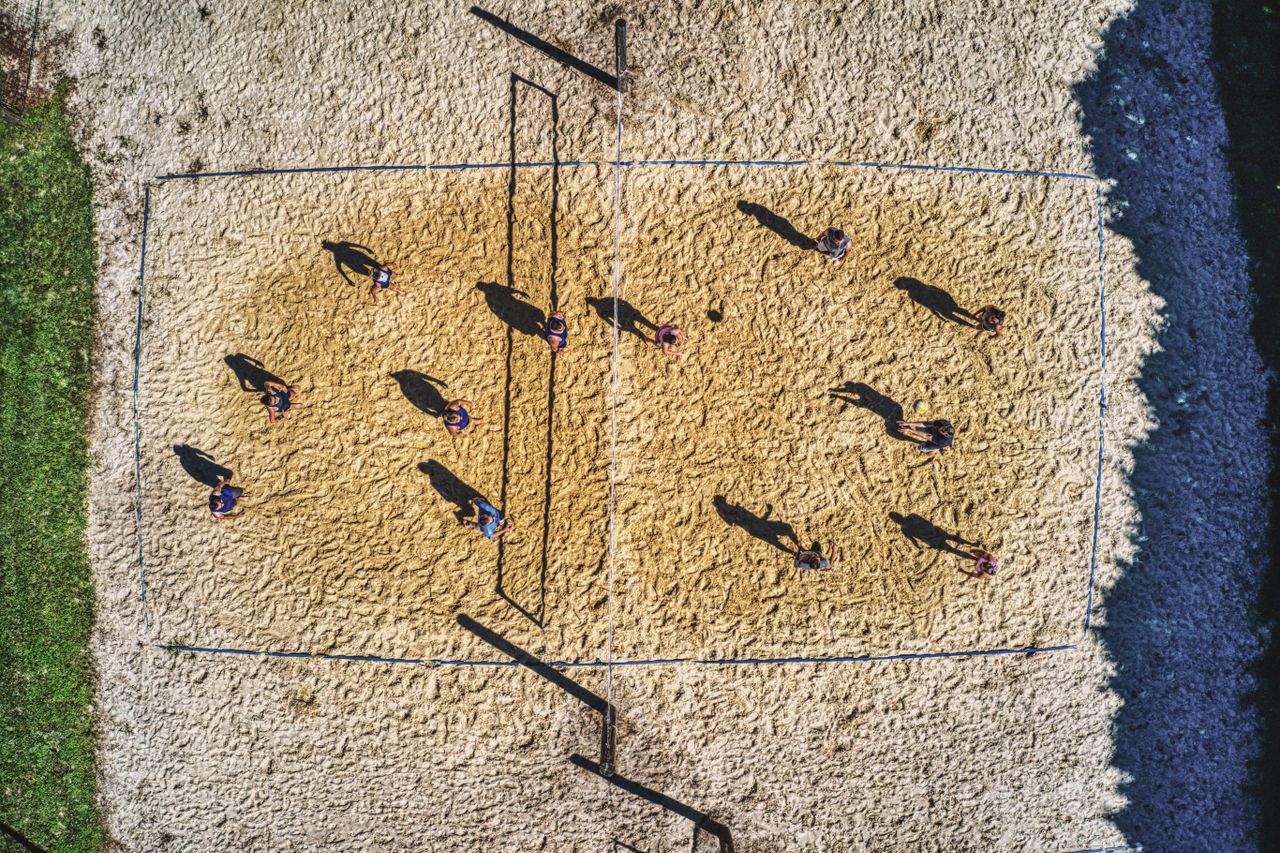
Kenya is not primarily known as a beach volleyball nation, but the country has a real outdoor opportunity because of its Indian Ocean coastline and growing beach circuit. Mombasa is the natural reference point. The city gives Kenya a setting where beach volleyball can develop as both a competitive discipline and a public-facing version of the sport.
Beach volleyball requires a different player profile from the indoor game. Two-player volleyball demands all-around skill: serving, passing, setting, attacking, blocking, defending, reading wind, managing fatigue, and making tactical choices without the safety net of five teammates behind the play. For countries trying to expand their volleyball identity, beach volleyball can create new pathways for athletes who may not fit the indoor game perfectly.
Kenya’s beach scene has shown signs of organization through national circuits and zonal qualifiers. The sport still sits behind indoor volleyball in terms of prestige, infrastructure, and national attention, but it gives Kenya another route into continental competition. It also offers a way to connect volleyball with coastal sports culture, tourism environments, and youth participation outside traditional indoor gyms.
The key is whether beach volleyball becomes a serious development track rather than an occasional event. Strong beach nations do not simply set up sand courts; they build coaching knowledge, regular competition, athlete pairs, ranking opportunities, and international exposure. Kenya has the geography and athletic base to make beach volleyball meaningful. The next step is consistency.
Fan Culture, National Pride, and the Volleyball Public
Kenyan volleyball has a fan culture shaped by national pride more than commercial spectacle. The Malkia Strikers matter because they represent Kenya in a sport where the country has proven it can win African titles. Their matches carry the weight of expectation. When they play in continental championships, the public conversation is not only about participation; it is about whether Kenya can maintain its place at the top of African women’s volleyball.
Domestic volleyball has a more specialized following. Club matches do not command the same mass attention as football or athletics, but they matter deeply within the volleyball community. Coaches, players, former players, school athletes, federation officials, and dedicated fans understand the significance of Pipeline against KCB, Prisons against GSU, or playoff matches that decide league titles. These games shape selection debates and signal which clubs are producing the next national-team core.
Volleyball also has institutional pride. Clubs attached to corporations, banks, ports, police, prisons, or defense forces carry identities beyond the court. Their teams represent organizations with resources, histories, and internal cultures. That gives Kenyan volleyball a particular texture. It is not a purely private-club ecosystem, and it is not a fully commercial professional league. It is an institutional sports structure with strong teams, recognizable rivalries, and a national-team purpose.
Where Kenyan Volleyball Goes Next
The future of volleyball in Kenya depends on whether the country can turn continental excellence into deeper global competitiveness. The women’s program has already done the hardest thing within Africa: it has created a winning tradition. The next step is more difficult because it requires technical refinement, stronger international exposure, better professional pathways, and sustained investment in youth development.
For the Malkia Strikers, the goal is not simply to qualify for major events. Kenya has done that. The next level is winning more often against teams outside Africa, pushing stronger opponents into longer matches, and becoming more difficult to break down in serve receive and transition. That requires more players competing in high-level environments, more advanced scouting, and more consistent match experience against faster teams.
For the domestic league, the priority is maintaining the strength of institutional clubs while expanding the competitive base. Kenya Pipeline, KCB, Kenya Prisons, GSU, KPA, and other established teams give the sport stability, but a healthier ecosystem needs depth beyond the usual contenders. More competitive clubs mean more match pressure, more roster opportunities, and more players ready for national-team consideration.
For beach volleyball, Kenya has a chance to build a secondary identity that complements the indoor game. The coastline gives the country a natural advantage, but the discipline needs regular competition, dedicated coaching, and a clear player pathway. If beach volleyball becomes more organized, Kenya could become more visible in African beach events while also attracting new athletes to the sport.
Kenya’s volleyball identity is already strong. It is an African women’s volleyball power, an institutional club country, a developing men’s league market, and a potential beach volleyball growth nation. Its story is not about whether volleyball exists there. It is about how far a country with proven continental pedigree can push the sport’s next frontier. The foundation is real: national-team tradition, club infrastructure, school participation, and athletes who have carried Kenyan volleyball across Africa and onto the world stage. The next chapter will be measured by how consistently Kenya can convert that foundation into technical depth, global results, and a wider volleyball culture that reaches beyond its strongest institutions.