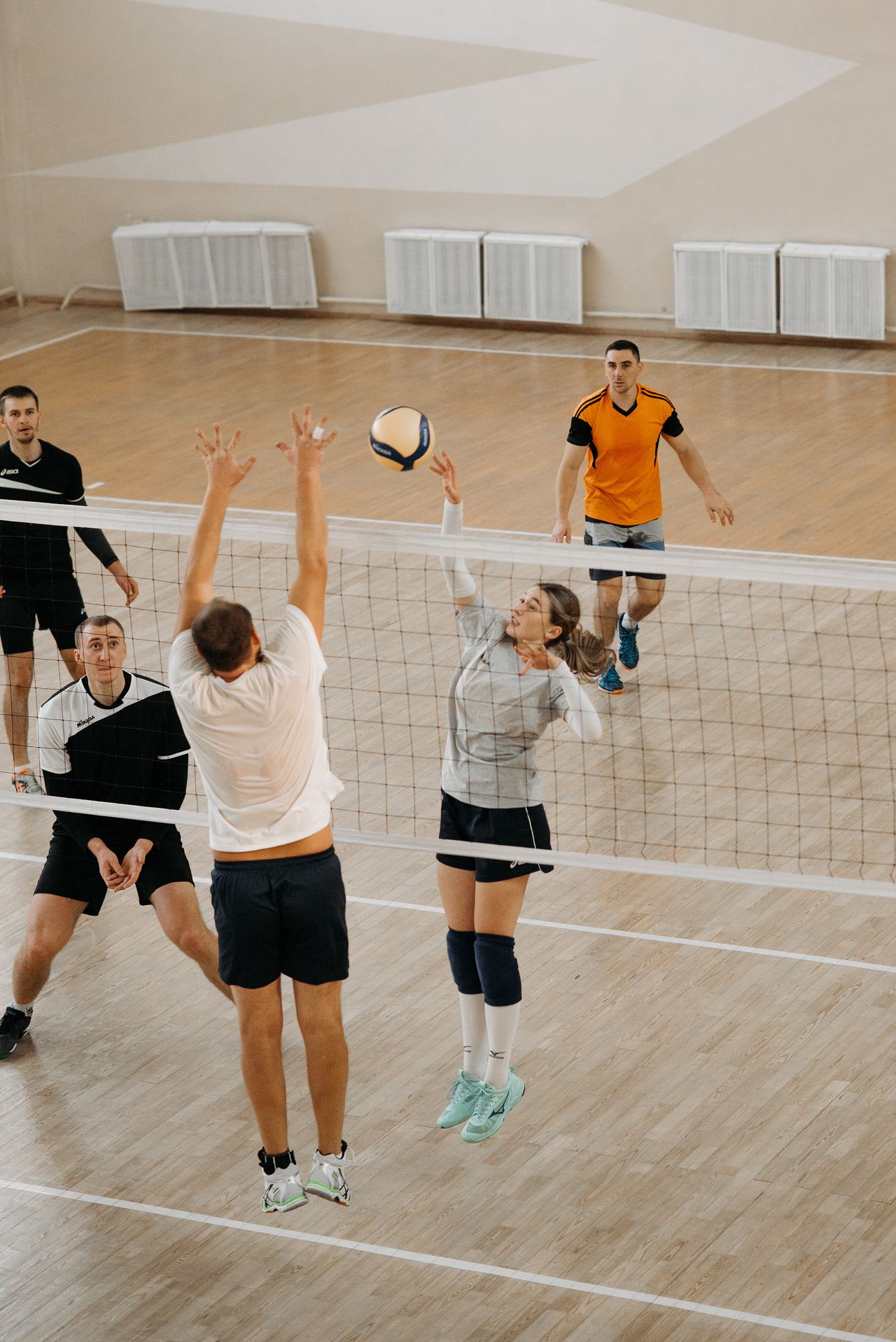
Volleyball in Brunei has the profile of a small but organized Southeast Asian volleyball country: modest in international results, stronger as a participation sport than as a medal-producing national program, and tied closely to schools, community gyms, and the country’s broader multi-sport structure. It is not a volleyball power in the way Thailand, Indonesia, Vietnam, or the Philippines are within the Southeast Asian region. Its identity is different. Brunei volleyball is more about maintaining a national structure, creating playing opportunities, and giving athletes a route into regional competition when resources and depth allow.
The sport has an institutional base through the Brunei Darussalam National Volleyball Association, listed by the Brunei Darussalam National Olympic Council among the country’s sports organizations, with its address at the Unit Kejurulatihan dan Pembangunan Sukan at Stadium Negara Hassanal Bolkiah in Berakas. That placement says a lot about volleyball’s role in Brunei. It exists within the national sports-development ecosystem rather than as a fully professionalized or commercially dominant sport.
A Gym-Based Volleyball Culture
Indoor volleyball is the heart of the Brunei game. The country’s size naturally shapes the sport’s ceiling: there is a limited player pool, limited depth by position, and fewer high-level competitive fixtures than in larger Southeast Asian volleyball nations. That makes the basic volleyball building blocks especially important. A country like Brunei needs setters who can stabilize tempo, liberos who can control first contact, and outside hitters who can carry long rallies against physically stronger opponents.
Because Brunei does not have the same volume of elite club volleyball as larger regional neighbors, school and community competition matter more. Volleyball’s accessibility helps. A court, a net, and a trained coach can turn the sport into a practical option for students, recreational athletes, and multi-sport players. The challenge is not interest alone. The challenge is creating enough repetition, coaching quality, and match exposure for players to move from casual participation into serious competitive volleyball.
The Southeast Asian Standard
Brunei’s volleyball future is measured most naturally against Southeast Asia. The region is demanding. Thailand has become one of Asia’s strongest volleyball brands, especially on the women’s side. Indonesia has a deep men’s indoor tradition. Vietnam and the Philippines have built wider fan and development systems. Cambodia has improved in men’s competition. Against that landscape, Brunei’s task is less about instant podium contention and more about steady technical growth.
For a small federation, regional events are valuable because they expose players to faster attacks, stronger blocking systems, better serve pressure, and more disciplined transition play. Even when results are difficult, the experience has developmental value. Brunei athletes can learn quickly where the gap sits: serve receive consistency, middle-blocker timing, offensive variation, and physical conditioning over long matches.
Beach and Outdoor Volleyball
Brunei has coastline, heat, and outdoor potential, but its volleyball identity remains more indoor and institutional than beach-driven. Beach volleyball could still be useful for development because it forces athletes to improve ball control, reading, serving accuracy, and all-around skill. In smaller countries, beach volleyball can also be a practical way to create international opportunities with fewer athletes than the six-player indoor game requires.
The question is whether beach volleyball becomes a serious competitive branch or remains a supplementary format. For Brunei, its best use may be as a development tool and regional participation pathway rather than the center of the country’s volleyball identity.
Where Brunei Volleyball Goes Next
The future of volleyball in Brunei depends on structure more than spectacle. The country does not need to imitate larger volleyball nations. It needs a clear pathway: school participation, regular domestic competition, coaching education, national-team selection, and targeted exposure against regional opponents. Better youth identification would help, especially for taller athletes who can become middle blockers and opposite hitters.
Brunei volleyball’s realistic strength is its ability to build a disciplined, compact national program inside a manageable sports system. It may never have the depth of Southeast Asia’s larger volleyball countries, but it can become more competitive if it treats volleyball as a long-term technical project. The next step is not a sudden leap into regional dominance. It is a stronger base, more matches, better coaching, and a clearer bridge between school gyms and national representation.