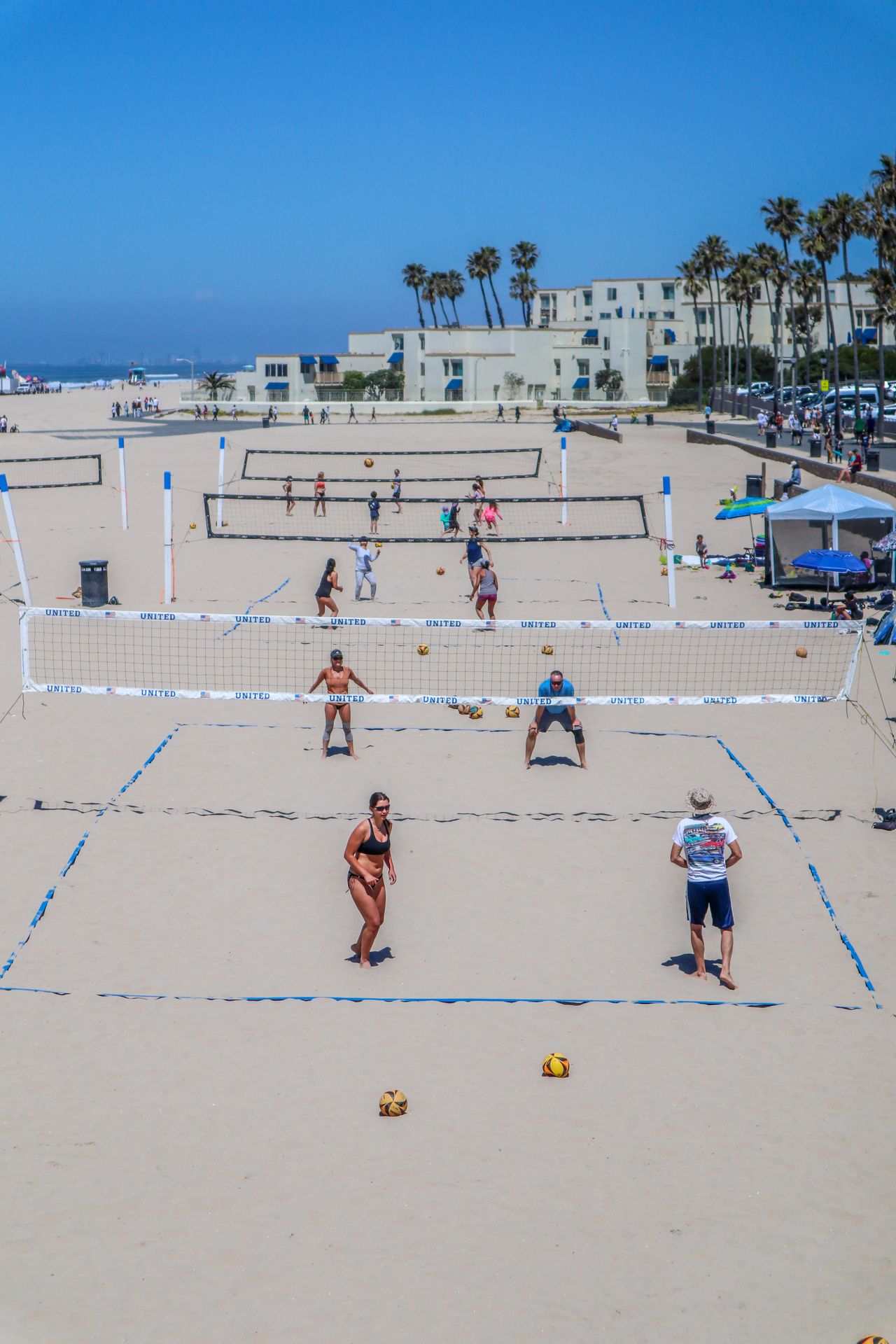
South Dakota volleyball is shaped by distance, school pride, and a competitive culture that gives the sport a serious place in towns across the state. It is not a beach volleyball market, and it is not a professional volleyball state. Its identity is built indoors, mostly through high school gyms, college programs, junior clubs, and community-supported teams that treat the fall volleyball season as one of the state’s most important athletic calendars.
That gives South Dakota volleyball a different personality than larger recruiting states. The state does not have the same density of club programs, private training facilities, or year-round tournament options found in major metro areas, but it has a strong scholastic foundation. Volleyball in South Dakota often feels local before it becomes elite. Players are developed through school programs, regional competition, multi-sport athleticism, and the kind of small-community support that can make a regular-season match feel bigger than the size of the gym.
A School-Gym Volleyball State
The heart of South Dakota volleyball is the high school game. In many communities, especially outside Sioux Falls and Rapid City, volleyball is one of the clearest athletic platforms for girls’ sports. The sport fits the state’s school-centered athletic culture well: it is technical, team-driven, and competitive without requiring massive facilities. A strong program can be built with committed coaching, a reliable youth pipeline, and players who understand rotations, serve receive, defensive positioning, and the value of consistency.
South Dakota’s high school volleyball structure gives the sport statewide visibility. The state tournament is not just a postseason event for a handful of large schools. It is a multi-class championship environment where smaller communities can build real volleyball identities. Schools from different parts of the state develop reputations for disciplined defense, strong serving, physical outside hitters, or clean system play. For many players, the state tournament is the most visible stage they will experience, and that makes the road through district, region, and state play central to the sport’s culture.
The best high school programs in South Dakota usually reflect continuity. They have coaches who know how to teach fundamentals early, setters who can manage imperfect passes, liberos who keep rallies alive, and hitters who understand how to score without always relying on power. In a state where athletes often play multiple sports, volleyball players may also bring basketball footwork, track explosiveness, softball arm strength, or general court awareness into the gym. That multi-sport background helps explain why South Dakota volleyball can be competitive even without the same year-round specialization seen elsewhere.
Sioux Falls, Rapid City, and the Regional Volleyball Map
South Dakota’s volleyball geography is anchored by its larger population centers, but the sport is not confined to them. Sioux Falls is the most important volleyball hub in the state because of its school density, club activity, access to facilities, and connection to regional competition. Players in and around Sioux Falls generally have more access to offseason training, competitive club schedules, and exposure events than athletes in more remote areas.
Rapid City gives West River volleyball its own center of gravity. The distance between eastern and western South Dakota matters in almost every sport, and volleyball is no exception. Programs in the Black Hills and western half of the state have to manage travel differently, build regional rivalries differently, and often operate with a more spread-out player pool. That makes strong western programs especially important, because they give players a competitive environment without requiring every serious volleyball opportunity to run through the eastern side of the state.
Between those larger hubs, smaller towns remain essential to South Dakota’s volleyball identity. The sport’s statewide character depends on schools where volleyball is part of the community calendar. In those places, a strong senior class can define a season, a talented setter can change an entire program’s ceiling, and a disciplined defensive team can become difficult to beat even without overwhelming size.
College Volleyball and the State’s Competitive Ceiling
South Dakota’s college volleyball scene gives the state a higher-level pathway and a visible standard for ambitious players. The University of South Dakota and South Dakota State University are the two most recognizable Division I programs in the state, and their presence matters beyond their own schedules. They give young players something local to measure themselves against. They also help normalize the idea that serious volleyball can be played at a high level without leaving the region.
The University of South Dakota in Vermillion has become an important symbol for the state’s volleyball ambitions. As a Division I program, South Dakota provides a stage where the sport looks faster, more physical, and more tactical than the high school game. The pace of the serve, the speed of the offense, the demands on first contact, and the defensive organization all show what elite volleyball requires. For younger players in the state, watching college volleyball is not just entertainment. It is an education in tempo, spacing, and decision-making.
South Dakota State in Brookings adds another major point on the map. The Jackrabbits’ presence helps keep the state connected to the broader upper Midwest volleyball landscape, where programs regularly recruit across state lines and compete against opponents from Minnesota, Nebraska, North Dakota, Iowa, and beyond. That regional context is important. South Dakota volleyball does not develop in isolation. It is influenced by neighboring states with deep volleyball cultures, especially Nebraska and Minnesota, and that raises the competitive expectations for players who want to move beyond high school.
The state also has smaller college programs that matter to the volleyball ecosystem. NAIA, Division II, Division III, and junior college opportunities give more athletes a chance to continue playing. That is especially important in a state where many strong high school players may not project as Division I recruits but still have the skill, discipline, and competitive drive to contribute at the next level.
Development Without Excess
South Dakota’s player development model is practical. The state does have club volleyball, camps, and private training, but the overall ecosystem is not built around endless specialization. That can be a limitation for elite recruiting, especially for players trying to compete against athletes from larger markets who spend nearly the entire year in club tournaments. But it can also create well-rounded athletes who understand team play and do not burn out before they reach college age.
The key developmental challenge is access. A player in Sioux Falls may have a much easier path to year-round competition than a player in a rural town several hours away. That affects reps, exposure, coaching variety, and recruiting visibility. For South Dakota volleyball to keep growing, the question is not whether interest exists. It does. The question is how consistently the state can connect motivated athletes with high-level coaching and competition, regardless of geography.
Because of that, the most important coaches in South Dakota volleyball are often not just elite tacticians. They are builders. They organize youth programs, teach middle school fundamentals, keep players engaged through the offseason, and help families understand what the next level requires. A strong volleyball community in South Dakota is rarely accidental. It usually comes from years of coaching continuity and local investment.
What South Dakota Volleyball Represents
South Dakota volleyball is not defined by glamour. It is defined by structure, community, and competitive seriousness inside school gyms. The state’s best volleyball has a disciplined quality: tough serving, steady passing, organized defense, and teams that understand the value of not giving away points. When South Dakota teams are good, they often reflect the fundamentals of the sport more than the spectacle of it.
The future of volleyball in South Dakota will likely depend on three forces: the continued strength of high school programs, the visibility of in-state college volleyball, and the expansion of quality club and training opportunities without losing the school-based culture that already gives the sport its foundation. Sioux Falls will remain the deepest hub, Rapid City will continue to matter as the western anchor, and smaller communities will keep producing teams that make the state tournament feel like a genuine statewide event.
South Dakota’s volleyball identity is clear. It is an indoor, school-driven volleyball state with a strong community base and a developing college pathway. Its story is not about beaches or professional leagues. It is about gym lights in November, long road trips, regional rivalries, setters learning to run an offense, liberos extending rallies, and high school programs that give the sport meaning across a wide and sparsely populated state.