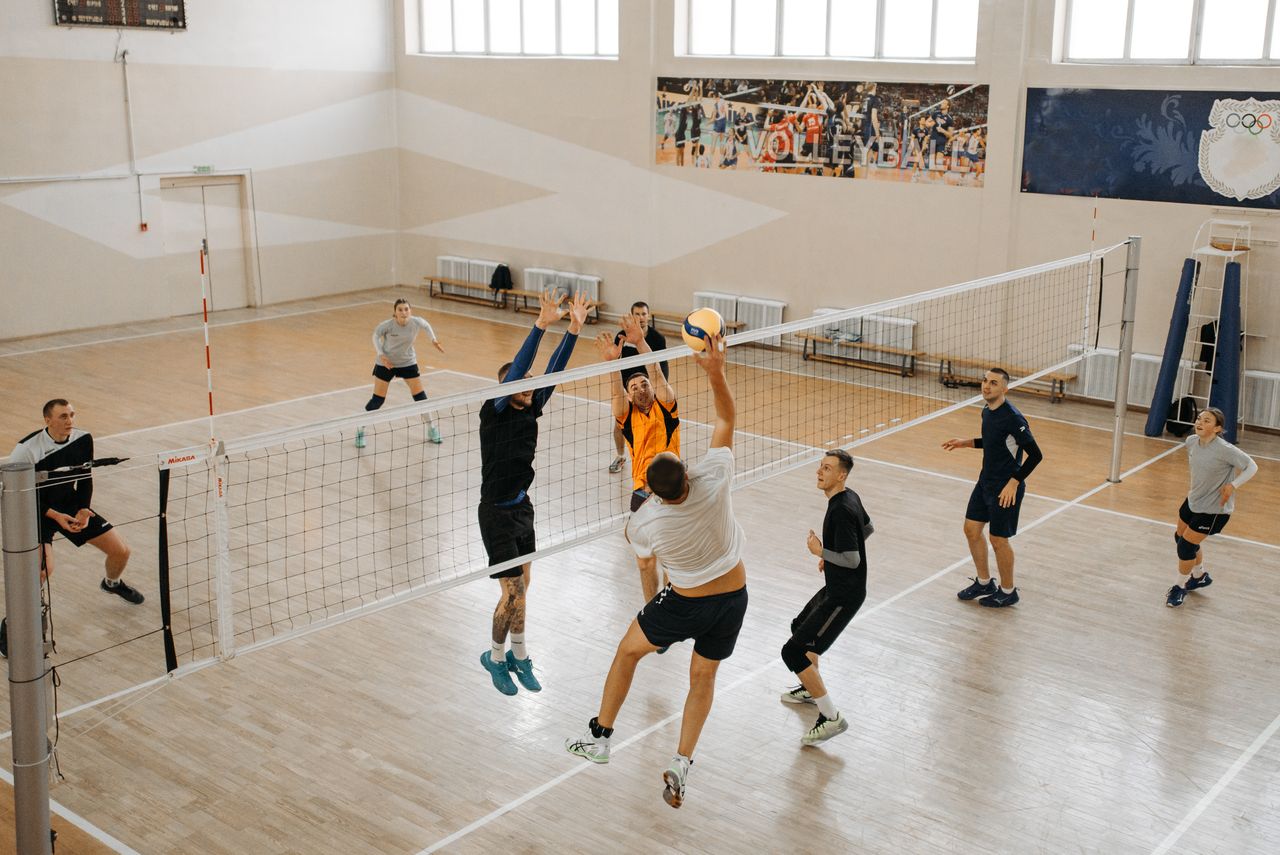
Arkansas volleyball is an indoor-first state with a growing competitive identity built around schools, college programs, and a stronger youth pipeline than many outsiders might assume. It is not a beach volleyball market, and it is not yet one of the traditional national volleyball hotbeds. Its identity is different: high school gyms, college arenas, regional clubs, SEC ambitions, Sun Belt success, and a player-development culture that has become more visible as the state’s top programs have improved.
The University of Arkansas is the clear flagship. Razorback volleyball gives the state its highest-profile connection to the national college game, and the program’s 2023 season remains a major reference point. Arkansas reached the Elite Eight of the NCAA Tournament that year, the best finish in program history, while going 28-6 and completing a third straight 20-win season under head coach Jason Watson. For a state trying to build a bigger volleyball reputation, that kind of postseason run matters. It gives the sport a high-water mark, creates local visibility, and shows that Arkansas can compete deep into the national bracket.
Jason Watson’s tenure has been central to the Razorbacks’ rise. Arkansas lists him as the third head coach in program history, hired in January 2016, and credits him with taking the program to new heights, including nine NCAA Tournament selections across his career and the 2023 postseason breakthrough at Arkansas. Under Watson, the Razorbacks have not been built as a loose, purely athletic team. Their identity has leaned toward organization, competitive balance, and the kind of SEC physicality required to survive against bigger blockers, faster tempo offenses, and deep outside-hitter rooms.
That SEC context is important. Arkansas volleyball has to recruit and compete in a league where athletic pins, high-contact middles, and elite liberos are standard. The conference demands serve pressure, first-contact discipline, and the ability to side out under stress. For Arkansas, the pathway to national relevance has depended on becoming more than a scrappy regional program. The Razorbacks have had to look like a real SEC volleyball team: physical at the net, disciplined in serve receive, and capable of winning long rallies against top-tier opponents.
The state’s broader college volleyball identity does not end in Fayetteville. Arkansas State has its own strong tradition in Jonesboro, and the Red Wolves gave the state another major volleyball moment by winning the 2025 Sun Belt Volleyball Tournament championship. Arkansas State defeated James Madison 3-1 to claim the program’s seventh Sun Belt tournament title and its first since 2015, earning the league’s automatic NCAA Tournament bid. That matters because it gives Arkansas two different Division I volleyball stories: an SEC program pushing for national relevance and a Sun Belt program with a real championship history.
The Razorbacks and Red Wolves create different models for volleyball in the state. Arkansas represents the highest-profile version: SEC facilities, national recruiting, Power Four scheduling, and NCAA Tournament expectations. Arkansas State represents the mid-major championship route: regional identity, conference tournament pressure, and the ability to build a winning culture outside the sport’s biggest media markets. Together, they make Arkansas more than a one-program state.
The high school game is the foundation underneath that college layer. Arkansas volleyball has a formal state championship structure through the Arkansas Activities Association, with classifications and regional tournament pathways that give the sport statewide competitive shape. The AHSAA volleyball page lists regional tournament locations and notes that 15 new schools were set to participate in volleyball for the 2026-28 classification cycle. That is one of the clearest signs of growth. More schools playing volleyball means more athletes getting early reps, more coaches building programs, and more communities treating the sport as part of the regular school calendar.
High school volleyball in Arkansas is especially important because the state does not have the same massive club density as Texas, California, Florida, or the Midwest’s biggest volleyball markets. School programs carry more of the developmental weight. A strong high school setter, libero, or outside hitter in Arkansas may have to dominate locally, travel regionally, and use club opportunities strategically to get seen. That creates a different kind of player: often multi-sport, often tough, often used to carrying a large role for her school team.
Club volleyball fills the gap between school competition and college recruiting. Little Rock Juniors describes itself as Central Arkansas’ longest-running youth volleyball club and serves athletes ages 6-18. Ozark Juniors, based in Fayetteville, identifies itself as a nonprofit club working to grow volleyball in Arkansas for athletes ages 5-18. Those clubs matter because they give young players more structured training, more tournament exposure, and more position-specific development than a school season alone can provide. They also connect the state’s volleyball geography: Northwest Arkansas, Central Arkansas, Jonesboro, and other pockets where the sport continues to expand.
Arkansas also produces individual players who can reach beyond the state. Recent recruiting coverage around Cabot setter Olivia Ambeau showed the type of profile Arkansas can develop: a six-foot setter with production as a hitter, passer, defender, and blocker, committed to Arizona’s 2028 class after a 31-3 high school season. That kind of athlete is important for the state’s reputation. When Arkansas players sign with out-of-state Power Four programs, it signals that the local development system can produce prospects who translate beyond regional competition.
The style of Arkansas volleyball is naturally shaped by its sports culture. The state values school loyalty, local rivalries, and college athletics with real emotional weight. Volleyball benefits when it plugs into that structure. A packed high school gym, a Razorback home match, a state tournament environment, or an Arkansas State conference championship run gives the sport a sense of place. It is not built around sand courts or resort play. It is built around teams, seasons, road trips, school colors, and postseason brackets.
The biggest challenge for Arkansas volleyball is depth. The top end has become more credible, especially through the Razorbacks’ Elite Eight run and Arkansas State’s Sun Belt success. The next step is expanding the middle: more strong high school programs, more boys volleyball opportunities, more clubs across the state, more trained coaches, and more athletes who can play year-round without leaving Arkansas for stronger competition. That is how a state moves from having good teams to having a durable volleyball culture.
Arkansas volleyball is still developing, but it has already moved beyond the placeholder stage. The state has an SEC program with a national breakthrough, a Sun Belt program with championship credibility, a high school structure that is adding schools, and junior clubs working to widen the player base. Its identity is not flashy, coastal, or beach-driven. It is competitive, school-centered, and increasingly serious. That makes Arkansas one of the more interesting indoor volleyball growth states in the South.