Savannah’s volleyball identity is different from that of a traditional powerhouse. It is not a national indoor volleyball capital, and it is not a major professional volleyball market. Its profile is more regional, coastal, school-based, recreational, and developmental. That does not make the city unimportant. It makes Savannah the kind of volleyball market where the sport grows through participation, local programs, school gyms, college athletics, adult play, and outdoor culture rather than through one dominant elite institution.
The city’s geography gives volleyball a natural opening. Savannah is a coastal metro with warm weather, parks, tourism, nearby beach communities, and a strong outdoor recreation rhythm. That environment gives volleyball more than one path into the local sports scene. Indoor volleyball exists through schools, clubs, colleges, and gyms. Outdoor volleyball fits the city’s coastal lifestyle. Adult recreational volleyball has room to thrive because Savannah attracts students, military families, young professionals, service-industry workers, and long-term residents who want accessible team sports.
Savannah is best understood as a hybrid volleyball scene. It blends school and club development with beach, grass, and adult recreational play. Its future depends less on becoming a national powerhouse overnight and more on building a deeper volleyball base across age groups.
School Gyms and the Development Base
For most young players in Savannah, the first serious volleyball experience comes through school competition. Girls’ volleyball has the clearest traditional pathway, with middle school and high school teams introducing athletes to organized training, rotations, serve receive, front-row and back-row responsibilities, and competitive match play. In a market like Savannah, school volleyball matters because it gives structure to a sport that might otherwise remain casual.
The school game also helps develop the basic volleyball vocabulary of the region. Players learn what it means to become a setter, libero, outside hitter, opposite, or middle blocker. They learn how much of volleyball is built before the attack ever happens. Passing, serving zones, defensive positioning, and communication become the foundation. Good school programs can change the level of the local scene because they create athletes who are ready for club play, college interest, or adult competition later.
Savannah’s broader region also benefits from Georgia’s growing volleyball landscape. The Atlanta area is the state’s largest club and recruiting hub, but coastal Georgia has its own role. Not every player needs to come from a massive metro club environment to become serious about the sport. Smaller volleyball markets can produce tough, adaptable athletes because players often have to take on more responsibility early. A strong athlete in Savannah may need to serve aggressively, pass in every rotation, attack from multiple zones, and lead vocally because the talent pool is thinner than in larger cities.
College and Local Competitive Identity
Savannah’s college presence gives the volleyball scene another layer. College programs help keep the sport visible beyond high school and provide a performance model for younger players. Even when a local college team is not nationally dominant, its presence matters. It gives the city matches, athletes, coaching, and a sense that volleyball can continue after the high school level.
In a city with multiple educational institutions and a steady student population, volleyball can also become a social and competitive bridge. Intramural leagues, campus recreation, club-level play, and informal gym volleyball all contribute to the city’s volleyball culture. Some players arrive in Savannah with high school or club experience from elsewhere. Others find volleyball through college recreation. That mix can strengthen adult leagues and local tournaments, especially when players stay in the area after graduation.
Savannah’s volleyball reputation is not built around one famous dynasty. It is built around a smaller-market pattern: school athletes, college players, recreational adults, beach-influenced players, and regional clubs all sharing the same limited but useful volleyball infrastructure. The best version of Savannah volleyball is connected, not fragmented. When high school players see college matches, when adult players support local events, and when outdoor volleyball pulls in new participants, the sport gains durability.
Outdoor Volleyball and the Coastal Advantage
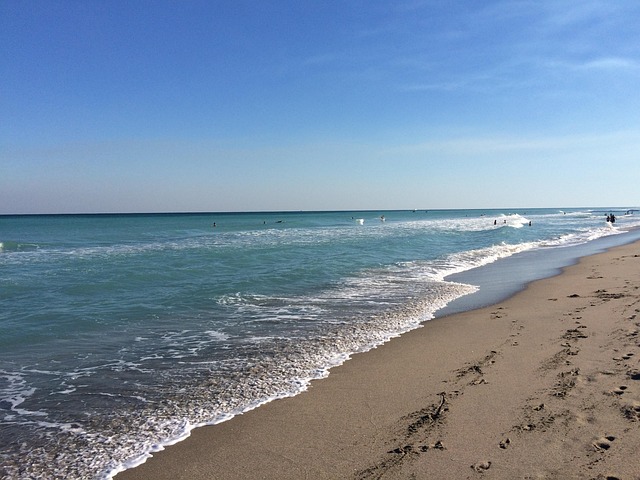
Savannah’s strongest differentiator is its outdoor potential. The city’s proximity to Tybee Island, its warm climate, and its park-oriented lifestyle give volleyball a natural place outside the gym. Beach volleyball may not define Savannah the way it defines Southern California, Hawaii, or parts of Florida, but the coastal setting makes sand and outdoor volleyball a meaningful part of the local identity.
Outdoor volleyball has a different energy from the school gym. It is less formal, more social, and often more accessible to adults who are not connected to a school or club. Beach and grass volleyball also reward complete skills. A player cannot hide as easily in doubles or smaller-sided outdoor formats. Passing, setting, attacking, defending, serving, and court awareness all become part of the same athletic package. For developing players, that can be valuable. For adults, it keeps the sport competitive without requiring a full indoor roster.
Savannah’s tourism and hospitality economy can also support volleyball culture indirectly. Cities with visitors, festivals, beaches, and active public spaces often have room for social sports to grow. Volleyball fits that environment because it can be competitive or casual depending on the setting. A beach court, a park net, or a local tournament can introduce the game to people who would never join a formal club team.
The Future of Volleyball in Savannah
Savannah’s volleyball future depends on depth. The city does not need to resemble Atlanta, Orlando, or Charlotte to build a stronger volleyball identity. It needs more consistent connections between youth development, school competition, college visibility, adult leagues, and outdoor play. That is how a mid-sized coastal market turns casual interest into a durable sports culture.
Girls’ volleyball will likely remain the clearest competitive pathway, especially through schools and clubs. Boys’ volleyball has room to grow if local programs, recreation departments, and regional organizers create more opportunities. Outdoor volleyball could become Savannah’s most distinctive volleyball lane because the climate and coastal setting are already aligned with the sport.
Savannah volleyball is still a developing scene, but it has the ingredients to become more recognizable: a coastal location, a steady student population, school-based participation, recreational demand, and access to regional competition across Georgia and the Southeast. Its identity is not elite dominance. It is growth, access, and the possibility of building a stronger volleyball community from the ground up.