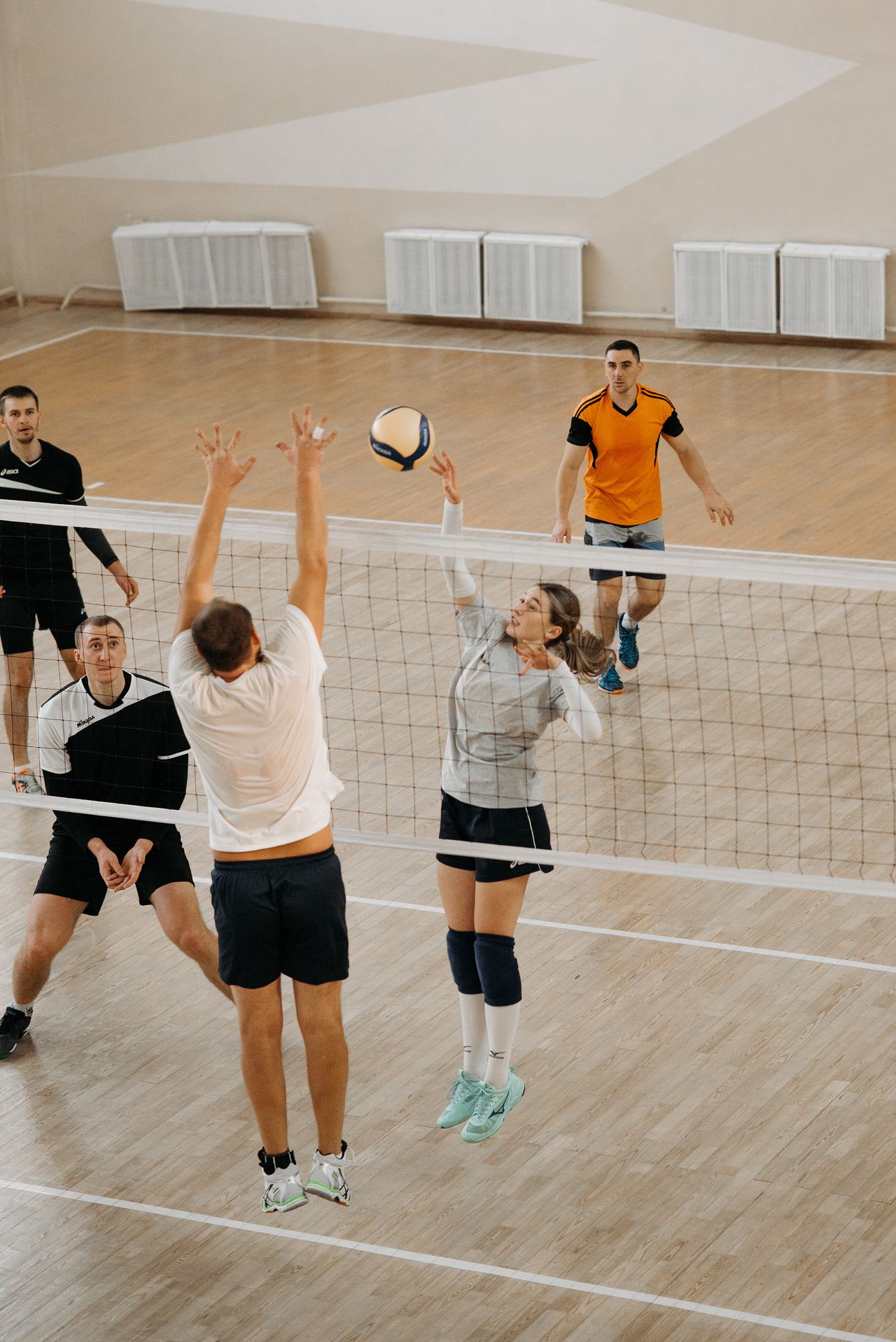
Switzerland’s volleyball identity is built around precision, structure, and a beach volleyball reputation that is stronger than many casual observers realize. It is not an indoor superpower in the mold of Italy, Poland, Serbia, or Turkey, and it does not have the same mass volleyball culture found in some larger European countries. But Switzerland has carved out a serious place in the sport through a combination of organized domestic competition, strong women’s clubs, and high-level beach volleyball.
The Swiss volleyball scene is best understood as a hybrid: modest but stable indoor infrastructure, a respectable club tradition, and a beach program capable of producing Olympic and European medalists. The result is a country whose volleyball profile is more competitive than its size might suggest.
A Swiss Volleyball System Built on Organization
Indoor volleyball in Switzerland has long depended on club structure. The sport does not dominate the national conversation, but it has a steady institutional base through Swiss Volley, domestic leagues, regional clubs, and youth development systems. In a country where football, skiing, ice hockey, tennis, and cycling take major attention, volleyball has had to build its identity through disciplined organization rather than mass spectacle.
The women’s indoor league has been especially important. Swiss women’s volleyball has produced recognizable clubs and competitive domestic rivalries, with teams such as Volero Zürich, Sm’Aesch Pfeffingen, NUC Volleyball, Viteos NUC, Düdingen, Lugano, and others playing roles across different eras. Volero Zürich, in particular, gave Switzerland a club name with international recognition. Its domestic dominance and Champions League presence helped raise the standard for what a Swiss club could look like.
That kind of club tradition matters because Switzerland’s national teams have not consistently been major medal contenders in European indoor volleyball. The club environment carries much of the sport’s competitive identity. It gives players a pathway, gives coaches a development platform, and gives Swiss volleyball a rhythm beyond national-team windows.
Indoor Volleyball and the Club Legacy
Swiss indoor volleyball is not defined by overwhelming physicality. The country’s best teams have often had to be organized, efficient, and tactically disciplined. In domestic play, that means strong serving patterns, clean first contact, and systems that reward controlled transition rather than pure power. In European competition, Swiss clubs face the challenge of matching teams from leagues with larger budgets and deeper rosters.
Volero Zürich’s history is central to that conversation. At its peak, Volero was not just a successful Swiss team; it was a club that gave the Swiss league a higher-profile anchor. Its long domestic winning streak and international ambition showed that a Swiss-based club could operate with a serious professional standard. Even as the Swiss indoor scene has shifted, that legacy remains part of how the country’s volleyball ceiling is understood.
Sm’Aesch Pfeffingen and NUC Volleyball have also become important names in the women’s game. Their presence reflects the competitive balance and regional spread of Swiss volleyball. The sport is not concentrated only in one city or one institution. It is carried by clubs that build local identity while trying to remain relevant in the national league and, where possible, in European play.
For men’s volleyball, Switzerland has a quieter profile internationally. The men’s club scene exists within the same organized framework, but it has not produced the same level of global recognition as the women’s beach program or the strongest women’s indoor clubs. That split is important: Switzerland’s volleyball reputation is not evenly distributed. Its clearest elite success has come on sand.
Beach Volleyball as Switzerland’s International Stage
Beach volleyball is where Switzerland has most clearly exceeded expectations. The country’s landscape is not the obvious profile of a beach volleyball nation. Switzerland is landlocked, alpine, and better known globally for winter sport than sand courts. Yet Swiss beach volleyball has repeatedly produced elite women’s teams capable of winning at European and Olympic level.
Tanja Hüberli and Nina Brunner are the defining modern pair. Their bronze medal at the Paris Olympics gave Swiss volleyball one of its most important international achievements. They combined size, defensive control, experience, and tactical steadiness, with Hüberli providing blocking presence and Brunner handling the defensive role. That pairing gave Switzerland a team that could handle high-pressure matches against the best in the world.
Their success fits a broader Swiss beach tradition. Switzerland has produced serious women’s beach teams for years, including players such as Joana Heidrich, Anouk Vergé-Dépré, and others who helped establish the country as a credible beach volleyball nation. The Swiss model is not based on endless beach access. It is based on technical training, strong partnerships, federation support, and the ability to compete in international tournament settings.
The Gstaad tournament also matters. Beach volleyball in Switzerland has one of the sport’s most distinctive stages in the Alps, where elite players compete in a setting far removed from the standard coastal image of the game. Gstaad has helped give Switzerland beach volleyball visibility and identity. It connects the sport to Swiss scenery, event culture, and international tourism without reducing it to a novelty. The competition itself is serious, and the setting makes it unmistakably Swiss.
Player Pathways and Swiss Development
Swiss volleyball development depends on clarity. The country does not have the player volume of larger European volleyball nations, so the system has to identify and support talent efficiently. Clubs, regional programs, and Swiss Volley’s performance structures all matter because missed development windows are harder to absorb in a smaller player pool.
For indoor players, the pathway usually begins in local clubs and moves through regional competition into the national league system. The strongest prospects may seek opportunities abroad or with clubs that can offer higher training loads and better competitive exposure. Switzerland’s advantage is organization; its limitation is scale. The challenge is producing enough high-level athletes at each position to make national teams and clubs consistently competitive against larger volleyball nations.
Beach volleyball offers a more direct elite pathway for certain athletes. Because beach teams require only two players, a smaller country can become internationally relevant with fewer total athletes if the training environment is strong. Switzerland has used that reality well. Its best beach pairs are not accidental success stories; they reflect a system that understands partnership development, international scheduling, and the technical demands of the discipline.
That is why Swiss beach volleyball has a clearer world-level identity than Swiss indoor volleyball. Indoor success requires depth across a full roster, substitutions, position specialization, and sustained league quality. Beach success can be built through a smaller number of exceptional partnerships, provided the athletes have the technical and tactical foundation to survive the international tour.
Volleyball Culture in a Multi-Sport Country
Volleyball in Switzerland operates inside a crowded sports landscape. It does not have the automatic attention of skiing, football, tennis, or ice hockey. That affects media visibility, sponsorship, and public awareness. But it also gives Swiss volleyball a certain stability. The sport’s base is not dependent on hype. It lives through clubs, schools, regional competition, and committed volleyball communities.
The fan culture is strongest around meaningful domestic matches, European club nights, beach tournaments, and national-team moments. Switzerland may not produce the constant volleyball noise of a major indoor powerhouse, but when Swiss teams reach international stages, the sport gains a wider audience. Olympic beach volleyball has been especially valuable in that sense because it gives the country a simple, high-profile story: Swiss athletes beating major volleyball nations on one of the sport’s biggest stages.
The women’s game has been especially important to that visibility. Swiss women’s beach teams have created international credibility, while women’s indoor clubs have provided much of the domestic structure and competitive identity. Together, they make women’s volleyball central to Switzerland’s overall volleyball profile.
The Future of Volleyball in Switzerland
Switzerland’s volleyball future depends on maintaining its beach volleyball strength while raising the ceiling of the indoor game. The beach side already has a recognizable international identity, supported by elite pairs, major events, and a record of Olympic relevance. The task there is continuity: developing the next generation of defenders, blockers, and partnerships capable of following the standard set by Hüberli, Brunner, and the Swiss pairs before them.
Indoor volleyball faces a different challenge. The domestic league must keep producing credible clubs, better training environments, and players who can handle European-level speed. Swiss clubs do not need to become Italian or Turkish giants to matter. They need to remain strong enough to develop players, sustain rivalries, and give the national volleyball structure a competitive base.
Switzerland’s volleyball identity is therefore not about volume. It is about efficiency. The country has shown that with the right structure, a smaller volleyball nation can build serious teams, stage major events, and win medals in a sport often dominated by larger programs. Its indoor scene gives the sport roots. Its beach program gives it international height. Together, they make Switzerland one of Europe’s most quietly effective volleyball countries.