Malaysia’s volleyball identity is different from the traditional power centers of Asia. It is not Japan, China, Thailand, Iran, or South Korea, where international volleyball has a larger elite footprint. Malaysia is better understood as an emerging Southeast Asian volleyball country with a broad participation base, school and state-level activity, national federation structure, and a beach volleyball environment that fits naturally with the country’s climate and geography.
The sport in Malaysia has enough history to be institutional rather than new, but its competitive ceiling is still developing. Volleyball sits in a crowded sports market shaped by badminton, football, sepak takraw, athletics, and school sports. Its strongest long-term case comes from participation, youth development, women’s volleyball progress, beach volleyball opportunity, and the regional benchmark of Southeast Asian competition.
A Long-Running Volleyball Structure
Malaysia’s volleyball story is rooted in organization. The Malaysia Volleyball Association, commonly known as MAVA, identifies 1959 as its founding year and describes itself as a nonprofit association focused on the development of the sport. That matters because it places volleyball in Malaysia within a long institutional timeline, not simply a recent recreational trend.
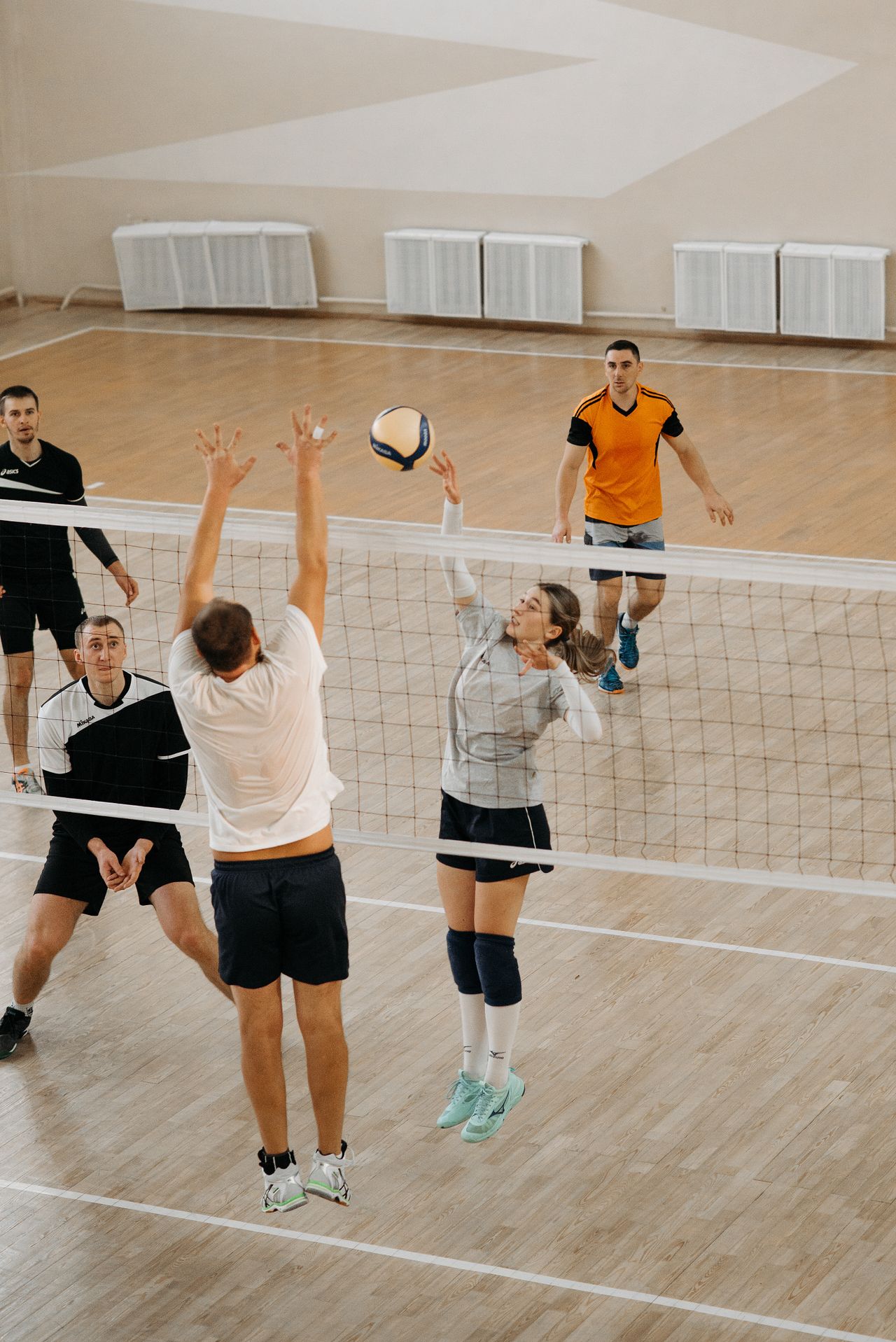
The sport has had decades to embed itself through schools, state associations, university competition, community clubs, and national-team activity. In Malaysia, volleyball is often strongest as a participation sport before it is a spectator sport. It is played in school halls, community facilities, university settings, state competitions, and recreational environments where the game’s accessibility matters. A ball, a net, and a group of players can create a competitive setting quickly, which has helped volleyball maintain a presence across different parts of the country.
That participation base does not automatically translate into elite international success. The challenge for Malaysia is converting school and community volleyball into higher-level technical development. At the top of Asian volleyball, teams are fast, tall, organized, and tactically mature. Serve pressure, first contact, block-defense systems, and transition offense decide matches. Malaysia’s long-term growth depends on improving those details across more age groups and more competitive environments.
Indoor Volleyball and the Southeast Asian Standard
Malaysia’s indoor volleyball identity is shaped heavily by Southeast Asia. The SEA Games, SEA V.League, Asian Volleyball Confederation events, and regional age-group tournaments give Malaysian teams realistic measuring sticks. Competing in this region means dealing with Thailand’s women’s volleyball tradition, Indonesia’s athleticism and depth, Vietnam’s growth, and the broader rise of Southeast Asian volleyball.
Malaysia’s women’s national team has some historical reference points, including a bronze medal at the 1983 Southeast Asian Games and a bronze at the 2022 Asian Women’s Volleyball Challenge Cup. The team also qualified for the 1987 Asian Women’s Volleyball Championship, which remains part of its competitive history. Those markers are important because they show that Malaysian volleyball has had moments of regional and continental relevance, even if consistency at the highest Asian level remains difficult.
The national-team challenge is technical and structural. Indoor volleyball punishes weak first contact. If serve receive breaks down, setters are forced away from tempo, middles disappear from the offense, and outside hitters face organized blocks. To close the gap with stronger regional teams, Malaysia needs more players who can pass under pressure, more setters who can run quick and balanced systems, and more attackers who can score against disciplined block-defense structures.
This is why youth development matters so much. Volleyball countries do not become competitive only by selecting senior athletes. They build thousands of repetitions earlier: platform control, footwork, approach mechanics, blocking discipline, reading hitters, and serving zones. Malaysia’s future indoor level depends on how well the sport can standardize those skills across schools, state programs, clubs, and national age-group teams.
Schools, States, and the Development Pipeline
Malaysia’s volleyball base is closely tied to education and state-level sport. Schools introduce many players to the game, and state competitions create the first meaningful competitive pathway. From there, stronger players may move into university volleyball, club settings, national youth teams, or specialized training environments.
That pathway gives Malaysia a broad foundation, but it also creates uneven development. A player’s progress can depend heavily on the quality of coaching, facilities, and competition available in a particular school or state. In stronger volleyball systems, promising players face high-level training and competition early. In emerging systems, talented athletes may dominate locally before encountering a sharp jump in speed and physicality at regional events.
The opportunity for Malaysia is to connect those layers more efficiently. If school volleyball, state associations, clubs, and national selectors operate as a clearer pipeline, more athletes can be identified earlier and trained with specific positional demands. Liberos need different work from middles. Setters need decision-making pressure, not just clean drills. Outside hitters need serve receive responsibility as well as attacking volume. Beach prospects need all-around skill because two-player volleyball exposes every technical weakness.
Malaysia’s volleyball future will depend less on whether the sport is known and more on whether the development system can become sharper. The raw participation environment exists. The next stage is turning participation into a repeatable competitive pathway.
Beach Volleyball Fits the Malaysian Landscape
Malaysia’s climate and geography give beach volleyball a natural role in the country’s volleyball identity. The sport can operate as recreation, tourism-adjacent activity, and serious competition. While Malaysia is not yet a beach volleyball power on the level of Australia, Brazil, the United States, or leading European teams, the format suits the country’s environment and gives athletes another route into international volleyball.
Beach volleyball is especially valuable for emerging volleyball countries because it requires fewer elite players to build a competitive unit. A strong pair can move a country’s profile faster than a full indoor program, where depth across 12 to 14 players is essential. Beach volleyball also develops complete athletes. Players must pass, set, hit, serve, defend, communicate, and manage wind, heat, and tactical variation with only one partner beside them.
Malaysia has been active in regional beach volleyball competition, including SEA Games beach events. At the 2025 SEA Games, Malaysia’s women completed their beach volleyball campaign in fifth place after defeating Singapore in a golden match, according to the Asian Volleyball Confederation. That type of result does not make Malaysia a regional beach leader yet, but it gives the program a competitive platform to build on.
The beach game may ultimately be one of Malaysia’s better opportunities for visibility. With targeted pair development, more domestic events, and stronger transition from indoor players to sand specialists, Malaysia could develop beach teams capable of regular Southeast Asian contention. The ingredients are plausible: climate, participation, athletic talent, and a regional competition structure.
Volleyball Culture in a Crowded Sports Country
Volleyball in Malaysia has to fight for attention. Badminton has global prestige. Football has mass popularity. Sepak takraw has cultural and regional importance. In that environment, volleyball’s strength is its accessibility and its ability to fit into schools, universities, and community life.
The sport’s culture is therefore less about massive professional crowds and more about competitive participation. School tournaments, state matches, university competitions, indoor halls, beach events, and community clubs form the core. Volleyball appeals because it rewards athleticism, coordination, communication, and tactical discipline without requiring the same equipment burden as some other sports.
Women’s volleyball is especially important to Malaysia’s broader volleyball future. Across Asia, women’s volleyball has often become a major driver of national-team visibility, youth participation, and school sport identity. If Malaysia can continue strengthening girls’ and women’s pathways, the sport’s competitive base will become deeper and more sustainable.
Men’s volleyball has its own development challenge. Physicality, blocking size, serving power, and transition speed are critical at higher levels. To compete regionally, Malaysia needs not only athletes but systems that develop volleyball-specific physical profiles: explosive middles, stable passers, aggressive servers, and setters who can control tempo against stronger blocking teams.
The Direction of Malaysian Volleyball
Malaysia volleyball is best described as an established participation sport still working toward a stronger elite identity. It has a long-running national association, national teams, school and state structures, regional competition, and a natural beach volleyball environment. What it needs is greater consistency in player development, coaching quality, domestic competition, and international exposure.
The next step is not simply more volleyball. It is better-connected volleyball. School players need clearer routes into clubs, state teams, universities, and national programs. Indoor athletes need more technical training earlier. Beach players need dedicated sand repetitions rather than occasional conversion from indoor volleyball. Coaches need access to modern systems and competitive feedback. National teams need more frequent matches that expose players to the tempo of Asia’s stronger programs.
Malaysia’s volleyball ceiling is not fixed. The country has the population, climate, and sporting infrastructure to support a stronger volleyball future. Its profile will likely continue as a hybrid: indoor volleyball anchored in schools and national competition, beach volleyball offering a visible growth lane, and regional tournaments providing the clearest benchmark.
In Southeast Asian volleyball, progress is measured in layers. First comes participation. Then better coaching. Then stronger youth teams. Then senior results. Malaysia has pieces of that structure already in place. The question for the coming years is whether those pieces can connect tightly enough to turn a familiar school and community sport into a more serious regional volleyball contender.