India’s volleyball identity is built around indoor tradition, regional strength, and a long-running gap between raw talent and national structure. In a country where cricket dominates the sports conversation and football, kabaddi, badminton, hockey, and wrestling all fight for visibility, volleyball has survived through schools, universities, state teams, public-sector employment, the armed forces, and pockets of intense local culture. It is not a fringe sport in the participation sense. In many parts of India, volleyball is a familiar game on school grounds, village courts, college campuses, police facilities, services teams, and district tournaments. Its challenge has been turning that participation base into a consistent international machine.
The strongest volleyball story in India is not about one single city or one single league. It is about scattered centers of seriousness. Kerala has long been one of the country’s great volleyball regions, producing players with national-team pedigree and a public memory of the sport that runs deeper than casual participation. Tamil Nadu, Karnataka, Punjab, Haryana, Uttar Pradesh, and other states have all contributed to the national pool through school systems, state championships, institutional teams, and university competition. The Indian game has often had athletes with size, spring, arm speed, and competitiveness. What it has not always had is the stable calendar, federation clarity, media platform, and professional structure needed to keep those athletes playing meaningful matches at the right level.
The Shadow and Standard of Jimmy George
No discussion of Indian volleyball can avoid Jimmy George. He remains the defining name in the country’s volleyball imagination: a Kerala-born attacker whose career stretched beyond Indian domestic competition and into international professional volleyball. His significance is not only that he was great by Indian standards. It is that he represented an Indian volleyball ceiling that felt global. He played abroad, including in Italy, and became a symbol of what Indian athletes could look like when exposed to elite professional volleyball environments.
George’s legacy matters because Indian volleyball has often been forced to argue for its own seriousness. In sports with bigger media footprints, national icons create the bridge between participation and aspiration. Volleyball had that in Jimmy George. He gave the sport a reference point: an Indian player with the vertical game, attacking quality, and competitive presence to be discussed beyond domestic courts. For younger players, coaches, and volleyball families, his name still functions as proof that Indian volleyball has produced more than local standouts. It has produced a player who could belong in a broader international conversation.
India’s men’s national team also carries memories of stronger continental relevance. The bronze medal at the 1986 Asian Games remains one of the sport’s most important markers in India, especially because that team competed in an Asian environment filled with technically sharper and more systemized volleyball nations. The achievement continues to matter because India has not consistently stayed at that level. Instead, the national team has lived between flashes of promise and periods of inactivity, with encouraging performances sometimes followed by administrative delays, limited exposure, or uneven preparation.
Indoor Volleyball as India’s Core Game
India is fundamentally an indoor volleyball country, even though many people first encounter the game outdoors on hard courts, open grounds, or improvised local spaces. The competitive version that defines Indian volleyball is six-on-six indoor play. The country’s stronger players are usually shaped by school tournaments, state associations, university competitions, institutional teams, and national camps. The game is often physical before it is polished. Indian volleyball at its best has explosive outside hitters, aggressive opposites, committed middle blockers, and setters trying to speed up offenses that have historically relied on high balls and athletic finishing.
The Indian player pathway is different from countries where professional clubs control development from an early age. India has more of a layered system. A player might start in school, move into district and state competition, represent a college or university, enter national championships, and then pursue opportunities through public-sector teams, services teams, railways, police, or professional leagues. For decades, institutional support mattered because it gave athletes jobs, training time, and a competitive structure even when commercial volleyball was limited.
That system produced tough players, but it also created uneven development. The best volleyball countries play constantly in high-pressure environments. Their setters run faster offenses earlier. Their liberos read attackers through hundreds of elite matches. Their middles learn timing against serious tempo. India has had athletes capable of competing, but not always enough sustained match volume against top international opposition. The difference shows up in serve receive, transition efficiency, block discipline, and late-set execution.
The Professional League Question
The emergence of Prime Volleyball League gave Indian volleyball a modern commercial platform that the sport had needed for years. Franchise volleyball is important in India because visibility changes the athlete’s social value. When players are shown on television and streaming platforms, when teams have brands, when matches are packaged with production quality, volleyball becomes easier to sell to sponsors, families, schools, and young athletes choosing between sports.
A league cannot fix everything by itself. It does not automatically solve national-team governance, youth coaching, grassroots access, or international scheduling. But it does give the sport a stage. It allows Indian players to compete in a sharper, more professional environment. It introduces fans to setters, liberos, attackers, blockers, and tactical matchups instead of treating volleyball as a generic school sport. It also gives younger players a visible target. In a country as large as India, that matters. A credible domestic league can turn scattered volleyball interest into something more organized.
The long-term question is whether professional volleyball in India can connect with the rest of the player pathway. If school volleyball, university volleyball, state competitions, and pro franchises operate as separate islands, growth will remain limited. If the system becomes more connected, India could build a clearer ladder: school to club, club to state, state to university or academy, university to pro league, pro league to national team. That is the kind of structure that turns participation into performance.
Women’s Volleyball and the Broader Participation Base
Indian volleyball’s men’s history gets much of the attention, but the women’s game is essential to the sport’s future. In many states, girls’ volleyball has a real school and college presence, especially where physical education systems and state competitions are taken seriously. Women’s volleyball can grow in India because it fits school infrastructure, does not require massive playing spaces, and can be developed through organized coaching at relatively low cost compared with many equipment-heavy sports.
The challenge is competitive continuity. Talented girls need more than one strong school team or one good college season. They need year-round coaching, strength training, injury prevention, high-level tournaments, and visible senior pathways. Volleyball rewards repetition and system fluency. Serve receive, defensive positioning, setter-hitter timing, and blocking footwork all depend on constant match-speed work. If India builds stronger women’s pathways, the sport has room to grow well beyond its current profile.
Beach Volleyball and Outdoor Culture
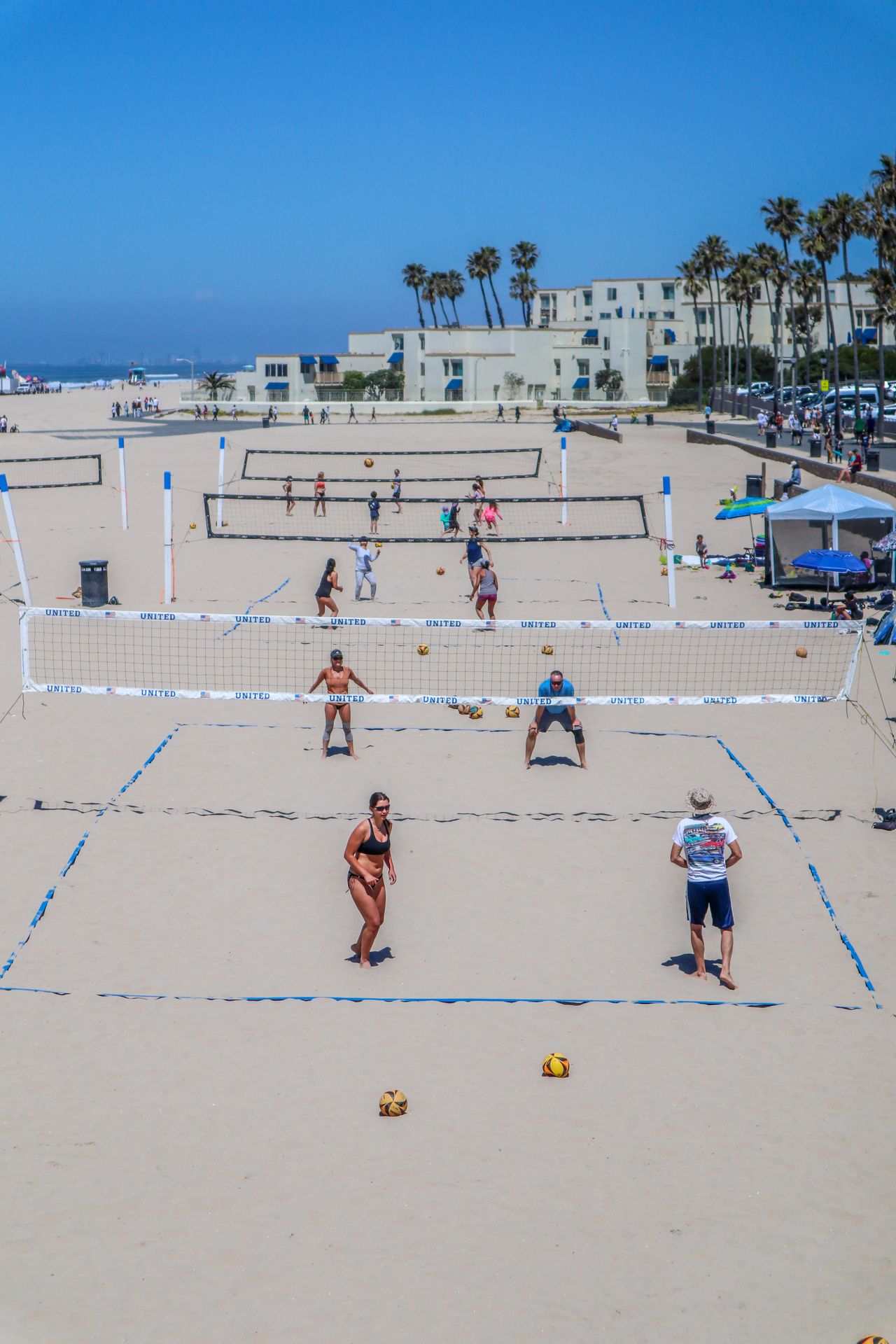
India has an enormous coastline, but beach volleyball has not become central to the country’s volleyball identity in the way it has in Brazil, the United States, Australia, or parts of Europe. That does not mean outdoor volleyball is absent. Informal volleyball is everywhere: schoolyards, open courts, local grounds, police and services facilities, beaches, parks, and community spaces. But beach volleyball as a specialized two-player discipline requires a different competitive ecosystem, including sand-specific coaching, tournament circuits, strength and conditioning, and international exposure.
The opportunity is obvious. States with coastal geography, especially Kerala, Tamil Nadu, Goa, Karnataka, Maharashtra, Andhra Pradesh, and Odisha, could support more beach volleyball development if facilities and events become more consistent. The sport’s Olympic profile gives beach volleyball value, but India’s current volleyball foundation remains indoor-first.
Where Indian Volleyball Goes Next
India’s volleyball future depends less on whether the country has athletes and more on whether the sport can organize itself around them. The raw material is there. The participation base is there. The regional passion is there. The historical proof is there. What Indian volleyball needs is continuity: consistent national-team activity, stronger youth championships, better coaching education, a healthier federation environment, and a professional league that connects with development rather than floating above it.
The best version of Indian volleyball would not try to copy another country exactly. It would build from India’s strengths: state pride, school participation, university competition, institutional teams, and a large athlete pool. If those pieces are aligned, India has the size and talent base to become a more serious Asian volleyball nation again. The sport’s story in India is not a blank slate. It is a legacy waiting for structure.