Maryland’s volleyball identity is a hybrid of high school strength, dense club competition, college volleyball, and a surprisingly active outdoor scene. It is not defined by one single volleyball lane. The state has the public and private school depth of a Mid-Atlantic scholastic market, the club infrastructure of the Baltimore-Washington corridor, the college presence of Division I and Division III programs, and enough beach and grass volleyball to give the sport a broader recreational and competitive base.
That mix makes Maryland one of the more interesting volleyball states on the East Coast. It sits between several major volleyball influences: Pennsylvania and New Jersey to the north, Virginia and the Carolinas to the south, and Washington, D.C. directly in its orbit. Maryland volleyball is shaped by that geography. Players can develop locally, compete regionally, and move into college recruiting environments without having to cross the country to find serious competition.
A Corridor State With Volleyball Depth
Maryland’s volleyball map is heavily influenced by the Baltimore-Washington corridor. Montgomery County, Howard County, Anne Arundel County, Baltimore County, Frederick County, Harford County, Prince George’s County, and the Baltimore metro all help shape the state’s school and club ecosystem. The population density gives volleyball what it needs to grow: athletes, gyms, coaches, school rivalries, club options, and nearby tournaments.
The state’s high school volleyball culture is one of its major strengths. Public school volleyball has a statewide championship structure, while private schools add another layer of competition through independent and conference schedules. That creates different kinds of volleyball environments. Some programs are built around tall, physical front-row athletes. Others win through ball control, defensive range, and smart setter decision-making. The better teams usually have both: pin hitters who can terminate out of system, middles who can pressure the block, and back-row players who can keep rallies alive long enough for the offense to reset.
Maryland’s school volleyball scene also benefits from the state’s overall sports culture. Athletes often grow up around lacrosse, basketball, soccer, field hockey, track, and softball. Volleyball programs can draw from that athletic base and turn multi-sport players into six-rotation outside hitters, quick middles, defensive specialists, or setters with strong court vision. In the best programs, volleyball is not treated as a fallback sport. It becomes a serious competitive lane with its own technical demands.
Club Volleyball as the Engine
If high school volleyball gives Maryland its public-facing structure, club volleyball is the engine that drives much of the sport’s development. The Chesapeake Region sits within the USA Volleyball system and connects Maryland athletes to a larger regional framework that includes nearby Mid-Atlantic competition. That matters because serious volleyball development requires repeated exposure to speed, size, and tactical variation.
Maryland club volleyball is especially strong because the state has enough density to support multiple levels of play. There are athletes trying volleyball for the first time, players looking to make their high school varsity roster, prospects chasing college recruitment, and elite juniors who need national-level tournaments. The club system gives those athletes more touches, more position-specific training, and more opportunities to learn the parts of volleyball that are hard to master in a short school season.
For outside hitters and opposites, club volleyball is where attacking range develops: line, cross-court, high hands, roll shots, tooling the block, and managing bad sets. For setters, it is where tempo and decision-making sharpen. For liberos and defensive specialists, it is where serve receive becomes a craft rather than a reaction. Maryland’s best club players often stand out not just because they jump well, but because they understand the game’s rhythm.
The Baltimore-Washington corridor also gives Maryland athletes access to competition in Virginia, D.C., Delaware, Pennsylvania, and beyond. That regional pressure is important. A player who dominates locally has to prove that the skill holds up against stronger clubs, bigger blocks, and faster offenses.
College Programs Give Maryland a Wide Competitive Range
Maryland’s college volleyball scene gives the state a broader competitive profile than many states its size. The University of Maryland competes in the Big Ten, one of the strongest volleyball conferences in the country. That places College Park inside a national volleyball conversation, even when the Terrapins are facing programs with deeper volleyball histories and larger fan bases.
Towson has become one of the state’s most important Division I volleyball brands. The program’s success in the Coastal Athletic Association has given Maryland a strong example of how a state university outside the biggest power-conference spotlight can build a serious volleyball identity. Towson’s recent era has been marked by winning seasons, postseason relevance, and a home-court environment that gives the state another major college volleyball anchor.
UMBC, Loyola Maryland, Morgan State, Coppin State, Navy, and Maryland Eastern Shore add further Division I variety across different conferences and institutional profiles. That range matters because it gives Maryland athletes multiple models of college volleyball: high-major competition, mid-major development, historically Black college athletics, service academy discipline, and urban campus programs.
Johns Hopkins adds another layer through Division III volleyball. The Blue Jays have been a major presence in the Centennial Conference and help show that high-level volleyball in Maryland is not limited to Division I. Division III volleyball often rewards technical maturity, scouting discipline, and roster depth, and Hopkins has given Maryland a nationally relevant small-college program in that space.
Beach and Outdoor Volleyball Give Maryland a Second Volleyball Language
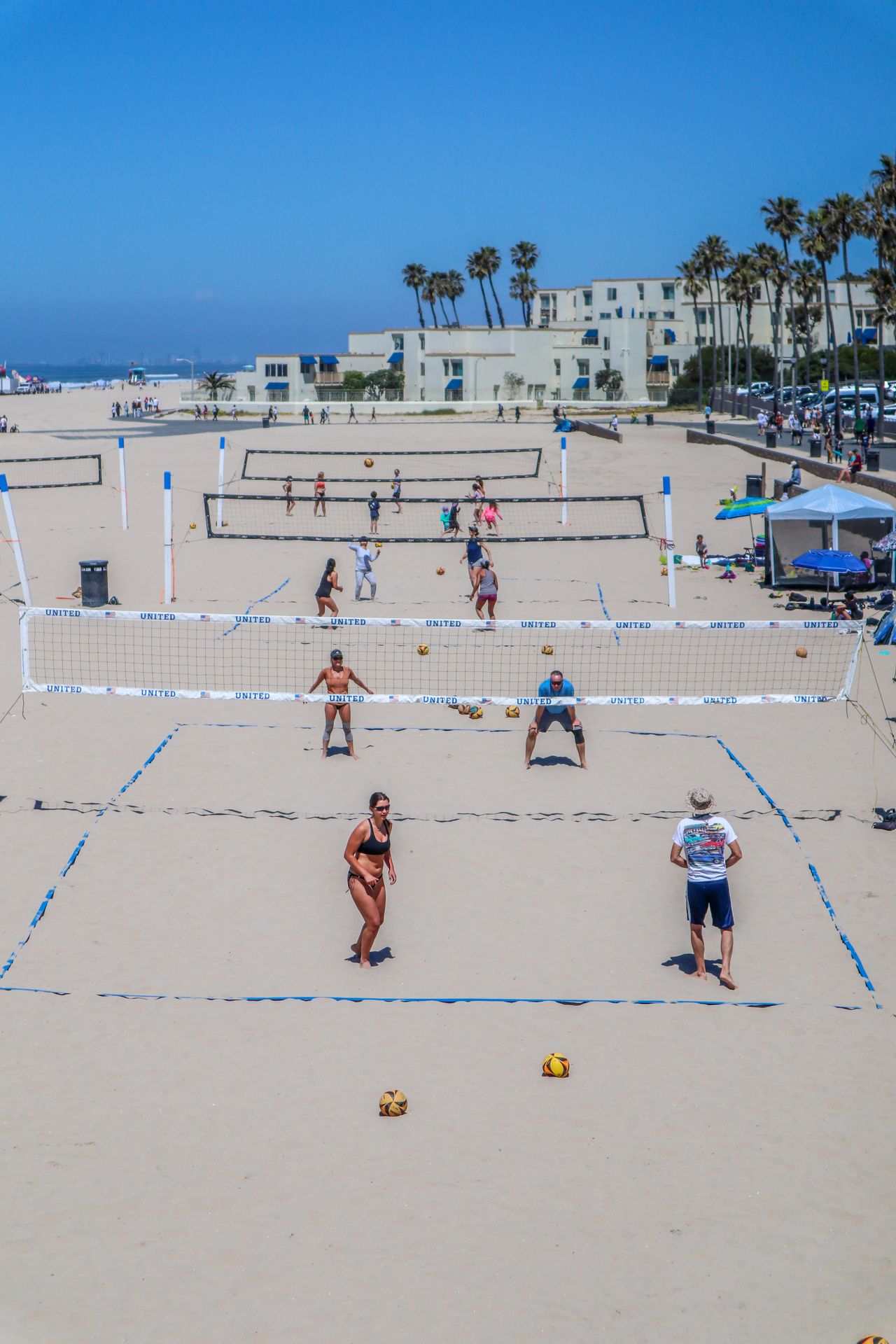
Maryland is not California, Hawaii, or Florida, but outdoor volleyball is still a meaningful part of the state’s identity. The Chesapeake Bay, Ocean City, Baltimore, Annapolis-area parks, and regional beach programs give players more than one way to experience the sport. Baltimore Beach, in particular, has helped make sand volleyball part of the city’s recreational and competitive culture.
Beach volleyball matters because it develops different instincts. Indoor players can hide certain limitations inside a six-player system. Beach players cannot. They have to pass, set, attack, serve, defend, communicate, and solve problems in space. That translates well back indoors, especially for ball control, shot selection, and defensive reading.
For Maryland juniors, beach and grass volleyball also create an alternate development path during the warmer months. The state has enough seasonal outdoor play to give athletes a reason to keep touching the ball outside the school and club calendar. It is not the state’s dominant volleyball identity, but it is a real supplement to the indoor game.
Maryland’s Volleyball Direction
Maryland volleyball is positioned to keep growing because it has the right ingredients: population density, school competition, club infrastructure, college programs, regional access, and outdoor participation. The challenge is not whether the sport exists. The challenge is how connected the system can become.
The strongest version of Maryland volleyball would link the high school, club, college, and beach scenes more clearly. Young players would enter the sport earlier, receive better technical training, face stronger regional competition, and see realistic college pathways at multiple levels. Coaches would continue to raise the tactical standard, especially in serve receive, transition offense, blocking systems, and defensive organization. Boys volleyball and beach volleyball could also become larger parts of the state’s long-term identity if participation and institutional support continue to expand.
Maryland is already a serious volleyball state in the Mid-Atlantic sense. It has enough talent to produce college players, enough clubs to build competitive athletes, enough schools to create meaningful rivalries, and enough college programs to keep the sport visible. Its volleyball story is not about one dynasty or one beach. It is about a dense, connected, multi-layered volleyball market where athletes can enter through school gyms, clubs, college programs, or outdoor courts and find a legitimate path into the sport.