Guinea’s volleyball identity is also rooted in West African development, but its profile differs from Guinea-Bissau because of its larger population, broader geography, and stronger potential base around Conakry and regional urban centers. Volleyball in Guinea remains behind football and several other sports in public attention, yet it has a defined continental frame through CAVB Zone II. That makes Guinea a developmental volleyball country with regional competitive relevance rather than a blank spot on the African volleyball map.
FIVB’s CAVB zonal structure places Guinea in Zone II with Cape Verde, Gambia, Guinea-Bissau, Mali, Mauritania, Senegal, and Sierra Leone. That matters because Guinea’s most meaningful volleyball progress is likely to be measured first inside West Africa. Before a program can think seriously about deeper African Championship runs or global qualification paths, it has to become more consistent in its own zone: better at receiving tough serves, extending rallies, closing sets, and producing enough trained players to survive tournament formats.
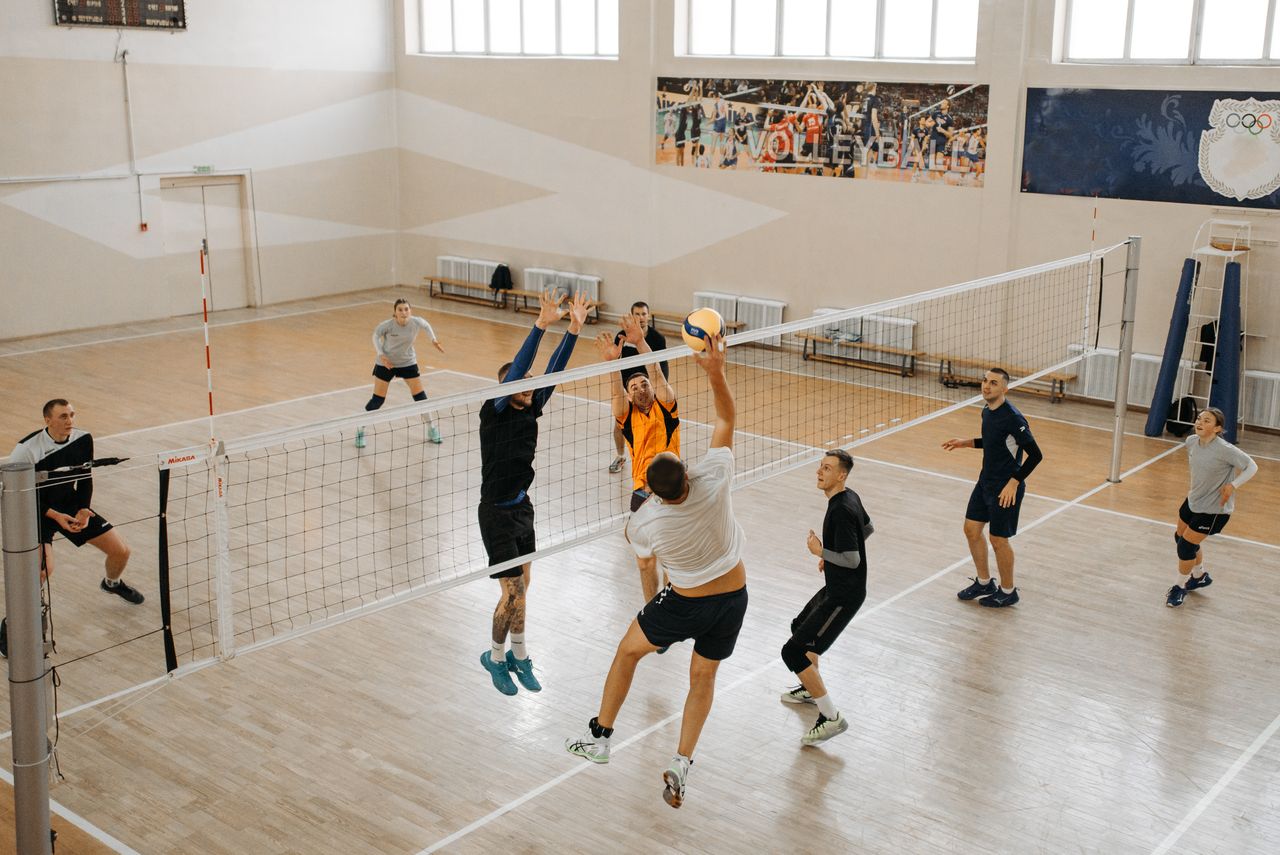
Indoor volleyball is the central discipline for Guinea’s long-term development. The country has the physical profile to produce strong attackers and blockers, but volleyball success depends on technical systems as much as athletic ability. Guinea’s growth depends on whether coaches can develop setters with decision-making range, liberos with stable platforms, middles who can read tempo, and outside hitters who can handle both serve receive and transition offense. In developing programs, the outside hitter position is often the clearest indicator of progress because it demands all-around skill under pressure.
The country’s volleyball structure is shaped by the realities of infrastructure. Indoor volleyball needs courts, nets, balls, trained officials, and regular competition. It also needs a calendar that keeps players active beyond occasional tournaments. For Guinea, the challenge is building enough routine competition to turn volleyball from an event-based sport into a development system. School and community programs can introduce the sport, but clubs and federation-backed competitions have to carry players into senior volleyball.
Beach volleyball gives Guinea an additional route because of the country’s Atlantic coastline and its place in Zone II competition. CAVB’s 2026 Zone II beach volleyball coverage included Guinea among the nations active in the regional qualifying context, and the confederation’s own development coverage shows beach volleyball as an active part of the West African calendar.
For Guinea, beach volleyball can be more than a coastal recreational sport. It can strengthen the country’s overall volleyball base by producing athletes who are comfortable with all phases of play. Beach training improves ball control, court vision, conditioning, and attacking variety. It also gives smaller rosters a competitive target. A strong beach pair can create momentum and visibility even when the indoor national team is still trying to build depth.
The competitive culture Guinea needs is one built around repeatable standards. That means serving with intent rather than simply putting the ball in play, blocking with disciplined footwork, defending with court responsibility, and teaching younger players how to read the game. The countries that rise in African volleyball are usually the ones that turn athletic promise into volleyball habits. Guinea’s ceiling depends on how consistently it can make that conversion.
The future of volleyball in Guinea is tied to regional seriousness. Zone II gives the country a manageable competitive laboratory, and CAVB structures give it a continental framework. The next steps are deeper youth participation, more trained coaches, more women’s volleyball opportunities, stronger indoor competitions, and a clearer beach volleyball pathway. Guinea does not yet have the profile of a continental power, but it has enough geographic, athletic, and regional foundation to become a more visible West African volleyball country if development becomes sustained rather than occasional.