Minneapolis has one of the clearest volleyball identities in the Upper Midwest: a school-and-club city anchored by a major college volleyball brand. The city’s volleyball culture is not built around beaches, resorts, or professional spectacle. It is built around gyms, winter-season intensity, junior clubs, high school rivalries, Big Ten visibility, and a serious developmental environment that treats volleyball as a competitive pathway rather than a casual side sport.
The University of Minnesota gives Minneapolis a national volleyball reference point. The Gophers’ women’s volleyball program sits at the center of the city’s volleyball imagination, connecting local youth players to the pace, physicality, and tactical standard of major NCAA volleyball. In a city where the college sports calendar matters, Minnesota volleyball has helped make the sport visible beyond families already involved in clubs or high school teams. The Gophers’ official athletics platform continues to present volleyball as one of the university’s prominent varsity programs, with current schedules and rosters reinforcing the program’s active role in the local sports ecosystem.
That college presence shapes how Minneapolis thinks about the game. Volleyball here is not only participation-based. It is aspirational. Young players can watch high-level setters run tempo, outside hitters carry serve-receive pressure, liberos control long rallies, and middles turn blocking into a system rather than a reaction. That level of volleyball gives the city a technical vocabulary. Parents, coaches, and players understand that the sport rewards repetition, court awareness, footwork, spacing, and disciplined first contact.
The broader Minnesota volleyball scene gives Minneapolis more depth than a single university program could provide on its own. The metro area benefits from a strong high school sports culture, a dense suburban network, and the kind of indoor facility demand that comes naturally in a northern climate. Volleyball in Minneapolis has to live indoors for much of the year, and that reality pushes the game toward clubs, school gyms, training centers, and organized competition. Unlike warm-weather markets where outdoor volleyball can dominate the social side of the sport, Minneapolis leans into structured development.
That structure is especially important for girls’ volleyball. Minnesota has long been a serious high school volleyball state, and Minneapolis-area athletes grow up in an environment where varsity volleyball can be a major school identity. For many players, the pathway moves from school team to junior club to recruiting showcase to college opportunity. The area’s best athletes do not have to leave the region to understand what high-level volleyball looks like. They can see it at the university level, at elite high school matches, and in club tournaments where local players measure themselves against regional competition.
Minneapolis volleyball also carries a distinctive Midwestern style. It tends to value ball control, defensive commitment, and system play. The best teams are not just tall or physical; they are organized. Serve receive matters. Defensive positioning matters. Setters are expected to manage tempo and location, not simply deliver hittable balls. Outside hitters often have to play complete volleyball, carrying passing load while producing out-of-system offense. That kind of all-around development fits a region where coaching detail and gym time can matter as much as raw athleticism.
Men’s volleyball has a smaller footprint, but it still belongs in the city’s larger volleyball picture. Like many U.S. markets outside California, Hawaii, and certain major men’s volleyball hubs, the boys’ and men’s game has had to grow through clubs, adult play, college club teams, and committed pockets of participation rather than the same broad institutional system that supports girls’ volleyball. That gives the men’s side a different feel: more grassroots, more dependent on organizers, and more connected to adult leagues and open gyms.
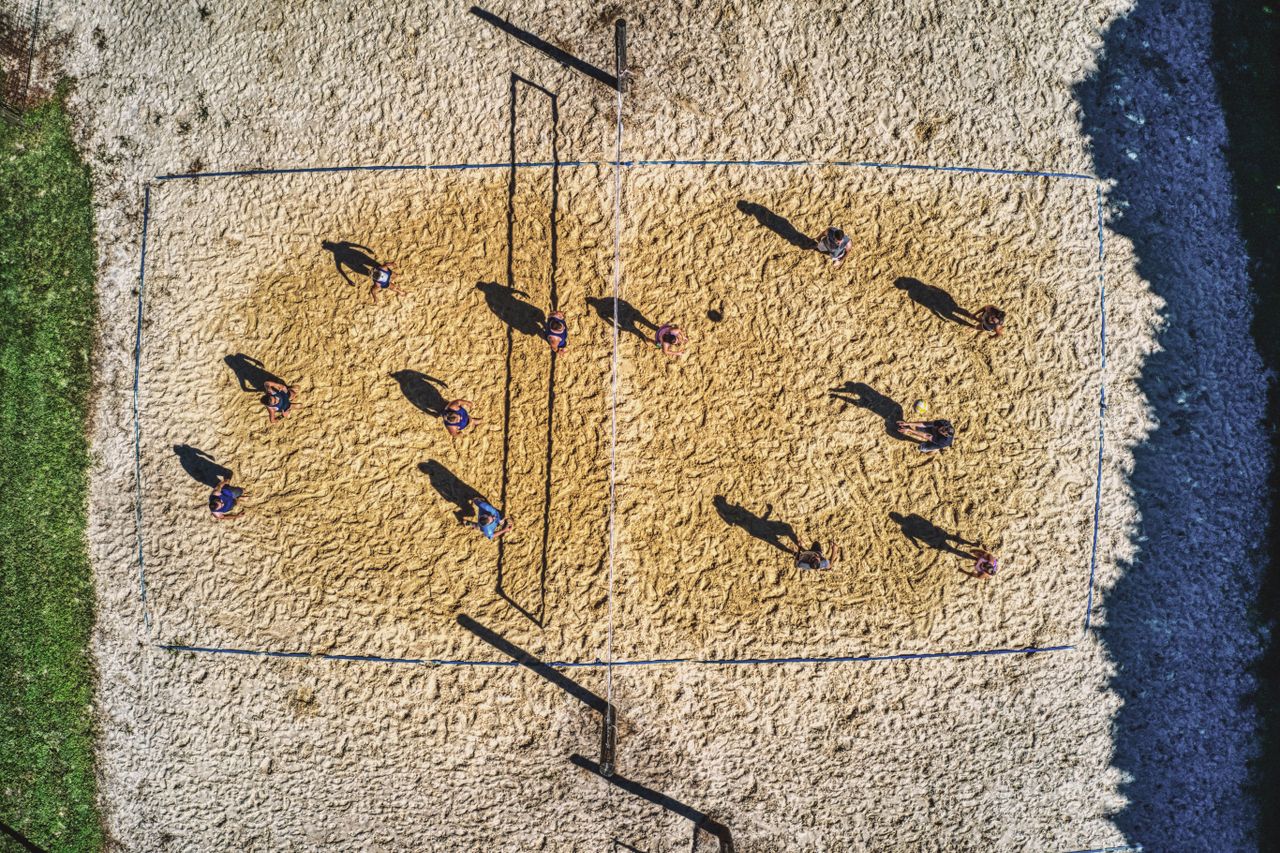
Outdoor volleyball exists in Minneapolis, but it is seasonal rather than defining. Summer grass and sand play add a recreational layer to the city’s volleyball culture, especially around parks, lakes, and social leagues. Still, Minneapolis is not primarily a beach volleyball market. Its volleyball identity is sharpened by the indoor season, the school calendar, and the long arc of player development from youth teams into competitive gyms.
What makes Minneapolis valuable as a volleyball city is the way it connects ambition with access. A young player can start through school or club volleyball, watch Big Ten-level play nearby, and understand that the sport has a serious competitive ladder. The city’s volleyball future will likely remain tied to that ecosystem: junior clubs feeding stronger high school teams, high school athletes pursuing college opportunities, and the Gophers continuing to give the metro a visible standard.
Minneapolis is not a volleyball scene built on spectacle. It is built on repetition, coaching, facilities, and competitive expectation. That gives it a strong and durable place in American volleyball, especially for players who grow up seeing the sport not as seasonal recreation, but as a real athletic identity.