The Dominican Republic is one of the clearest examples of a country whose volleyball identity is larger than its population size. In a Caribbean sports culture dominated by baseball, Dominican volleyball has carved out a separate national reputation through the women’s indoor game, where Las Reinas del Caribe have become one of the most respected programs in the Americas. The country is not simply a recreational volleyball market or a beach-volleyball tourist setting. Its main volleyball identity is competitive, national-team driven, and built around a women’s program that has repeatedly turned Dominican athleticism, defensive range, and attacking power into results against larger volleyball nations.
That distinction matters because volleyball in the Dominican Republic is not just a secondary court sport played in school gyms and neighborhood spaces. At its highest level, it has become a source of international recognition. The Dominican women’s national team has appeared in multiple Olympic cycles, produced world-class players at libero, outside hitter, setter, middle blocker, and opposite, and established itself as a serious opponent in NORCECA, Pan American, Olympic, and world championship competition. The result is a volleyball culture with two layers: a domestic foundation of schools, clubs, associations, and federation programs, and an elite national team that gives the country a global volleyball profile.
Las Reinas del Caribe and the Dominican Volleyball Identity
The nickname Las Reinas del Caribe captures the central place of the women’s national team in Dominican volleyball. The name is not just branding. It reflects a program that has become one of the country’s most visible international sports symbols, especially in women’s team sport. The Dominican Republic has built its reputation through a combination of veteran leadership, strong outside hitters, explosive opposites, elite libero play, and continuity in coaching.
The team’s style has often been defined by physicality and emotion, but its strongest versions have been more complete than that shorthand suggests. Dominican teams can score quickly through the pins, but the best groups have also had world-class backcourt defense, transition scoring, and enough setting stability to compete with more established powers. Against elite teams, the Dominican Republic’s challenge has often been consistency from set to set. Against regional opponents, its ceiling has been high enough to make it one of the teams that defines the NORCECA zone.
That national-team identity gives volleyball in the Dominican Republic a different feel from volleyball in many other Caribbean countries. In some island nations, volleyball is mostly recreational, school-based, or beach-oriented. In the Dominican Republic, the women’s indoor program provides a clear elite pathway and a recognizable standard. Young players can look at Dominican athletes competing in the Olympics, World Championship, Volleyball Nations League, foreign professional leagues, and continental finals and see a real model for what the sport can become.
The men’s game exists within the country’s volleyball structure, but the women’s national team has carried the international reputation. That imbalance is part of the Dominican story. Volleyball’s strongest national identity is female, indoor, and performance-driven. It is a rare case where a Caribbean country is not merely participating in international volleyball, but repeatedly shaping regional competition and forcing itself into conversations with larger, better-funded volleyball systems.
From Regional Contender to International Program
The Dominican Republic’s rise in volleyball has been gradual, but the modern era has made the program much easier to recognize from outside the Caribbean. Olympic qualification, Pan American medals, NORCECA championships, and World Championship results have given the country a résumé that extends beyond occasional upset wins.
The national team’s fourth Olympic appearance came at Paris 2024, after previous appearances in Athens 2004, London 2012, and Tokyo 2020. That Olympic history is central to how the program is viewed because it shows that Dominican volleyball has not been a one-generation project. It has survived roster turnover, changing international formats, and the pressure of playing in a region that includes the United States, Canada, Cuba, Puerto Rico, and Mexico.
The Dominican Republic’s best World Championship result remains one of the clearest markers of its ceiling. A fifth-place finish in 2014 showed that the program could move beyond regional success and make a serious impact in a global field. That run became part of the reference point for later Dominican teams: the standard was no longer just winning in the Caribbean or competing well in NORCECA, but pushing toward the top tier of world volleyball.
Recent seasons have reinforced that place. The Dominican Republic won NORCECA Championship gold in 2021 and 2023, captured the 2023 Pan American Games title, and continued to appear in high-level competitions where it had to measure itself against teams from Europe, Asia, South America, and North America. Those results matter because they show the country’s volleyball program operating on two levels at once: dominant enough regionally to collect titles, but still chasing the deeper consistency required to break through in events such as the Volleyball Nations League and World Championship knockout rounds.
That tension is part of the appeal of Dominican volleyball. The country is not an underdog in the ordinary sense anymore. It has too much talent and too many results for that. But it is also not yet a permanent world-medal favorite. Its volleyball identity sits in the demanding space between respected contender and top-tier power. That makes every major tournament a test of whether the program can convert its athletic gifts, veteran core, and competitive experience into a longer international run.
The Players Who Built the Standard
Dominican volleyball is strongly associated with individual stars, and several players have become central to the country’s identity in the sport. Bethania de la Cruz is one of the defining names. As an outside hitter with scoring range, serving ability, and long-term national-team impact, she has represented the bridge between earlier Dominican generations and the modern Reinas del Caribe. Her career has also shown the importance of foreign professional opportunities for Dominican players. Success abroad strengthens the national team by exposing players to faster systems, deeper scouting, and high-pressure club environments.
Brenda Castillo has given the Dominican Republic one of the most recognizable defensive identities in international volleyball. As a libero, she changed the way many outside observers viewed Dominican volleyball. The country was never only about powerful attackers, but Castillo made the defensive side impossible to ignore. Her court coverage, first contact, emergency defense, and ability to extend rallies have often allowed Dominican hitters to get second and third chances in transition. In a sport where libero play can decide whether an aggressive team becomes erratic or dangerous, Castillo has been one of the program’s most important figures.
Niverka Marte has provided another essential piece: setting and leadership. Dominican volleyball has often had no shortage of attackers, but international success requires a setter who can manage tempo, distribute under pressure, and hold the team together when opponents serve aggressively. Marte’s role as a veteran setter and captain has made her part of the program’s central spine.
The Martínez sisters, Brayelin and Jineiry, have helped carry the program into its current phase. Brayelin Martínez gives the team high-level wing scoring, while Jineiry Martínez brings size and presence in the middle. Alongside players such as Yonkaira Peña, Gaila González, Cándida Arias, Lisvel Eve, and others across different cycles, the Dominican Republic has built a roster profile that can attack from multiple zones and challenge opponents physically at the net.
The broader point is that Dominican volleyball has not depended on a single star. Its best teams have had a recognizable core: an elite libero, veteran setter, high-scoring outside hitters, attacking depth, and middles who can pressure opponents in blocking and transition. That is what separates a short hot streak from a program. The Dominican Republic has built enough player continuity to make its success feel structural, not accidental.
Coaching Stability and Program Development
One of the most important pieces of Dominican volleyball has been coaching stability. Marcos Kwiek’s long tenure with the women’s national team has given the program a clear technical direction over multiple cycles. In international volleyball, that matters. National teams often lose rhythm when coaching changes reset tactics, player roles, training priorities, and selection patterns. The Dominican Republic has instead been able to develop a recognizable style while integrating new players around an experienced core.
The federation structure also matters. The Dominican Republic Volleyball Federation operates as the national governing body, and the sport’s domestic base includes associations, national competitions, youth events, beach volleyball activity, and development tournaments. For a country of the Dominican Republic’s size, the challenge is not whether talent exists. The challenge is turning that talent into a sustained pipeline with enough coaching, facilities, competition, and international exposure.
The women’s national team has benefited from targeted international support, but the deeper story is how that support connects with an existing volleyball culture. Outside funding or technical assistance can help a program, but it does not create national-team identity on its own. The Dominican Republic already had athletes, fan interest, federation organization, and a competitive history. Program support has strengthened the high-performance layer and helped keep the team active at a level where preparation, scouting, and coaching continuity are essential.
The next development question is how widely the national-team standard can influence the domestic base. A strong senior women’s team can inspire participation, but long-term growth depends on youth coaching, early technical instruction, school access, junior competition, and pathways for players outside the capital. Volleyball in the Dominican Republic has the advantage of visible role models. The task is making sure the next generation has enough structured competition to turn interest into elite skill.
Indoor Volleyball as the Country’s Competitive Core
Indoor volleyball is the heart of the Dominican Republic’s volleyball reputation. The country has beaches, resorts, warm weather, and outdoor spaces, but its serious international identity comes from six-on-six indoor volleyball. That identity is important because it distinguishes the Dominican Republic from places where volleyball is mainly associated with sand courts, tourism, or casual recreation.
The Dominican indoor game is built around quick reactions, vertical athleticism, and emotional intensity, but the international version of the team has had to become more tactically mature over time. At the highest level, power alone is not enough. Opponents serve to specific passers, attack seams in blocking systems, force setters away from the net, and punish teams that cannot side out efficiently. The Dominican Republic’s best performances come when its first contact holds, its middles remain involved, and its pin hitters are not forced to take every difficult swing from broken situations.
Serve receive has often been one of the keys to Dominican success. When the pass is stable, the team can use its athletic middles, open space for the outside hitters, and allow the setter to create rhythm. When opponents break the pass, the Dominican Republic can still score through high balls to strong attackers, but the offense becomes easier to read. This is the same problem faced by many physical teams in international volleyball: the difference between dangerous and elite is usually how often the team can stay in system.
Defensively, the Dominican Republic’s best teams have been capable of frustrating opponents with pursuit and rally extension. Castillo’s influence is part of that story, but team defense also depends on block positioning, floor discipline, and transition decisions. The country’s competitive reputation has grown because it can play long enough rallies to unsettle stronger opponents, then finish with enough arm speed and range to win points from imperfect situations.
Beach Volleyball and the Outdoor Layer
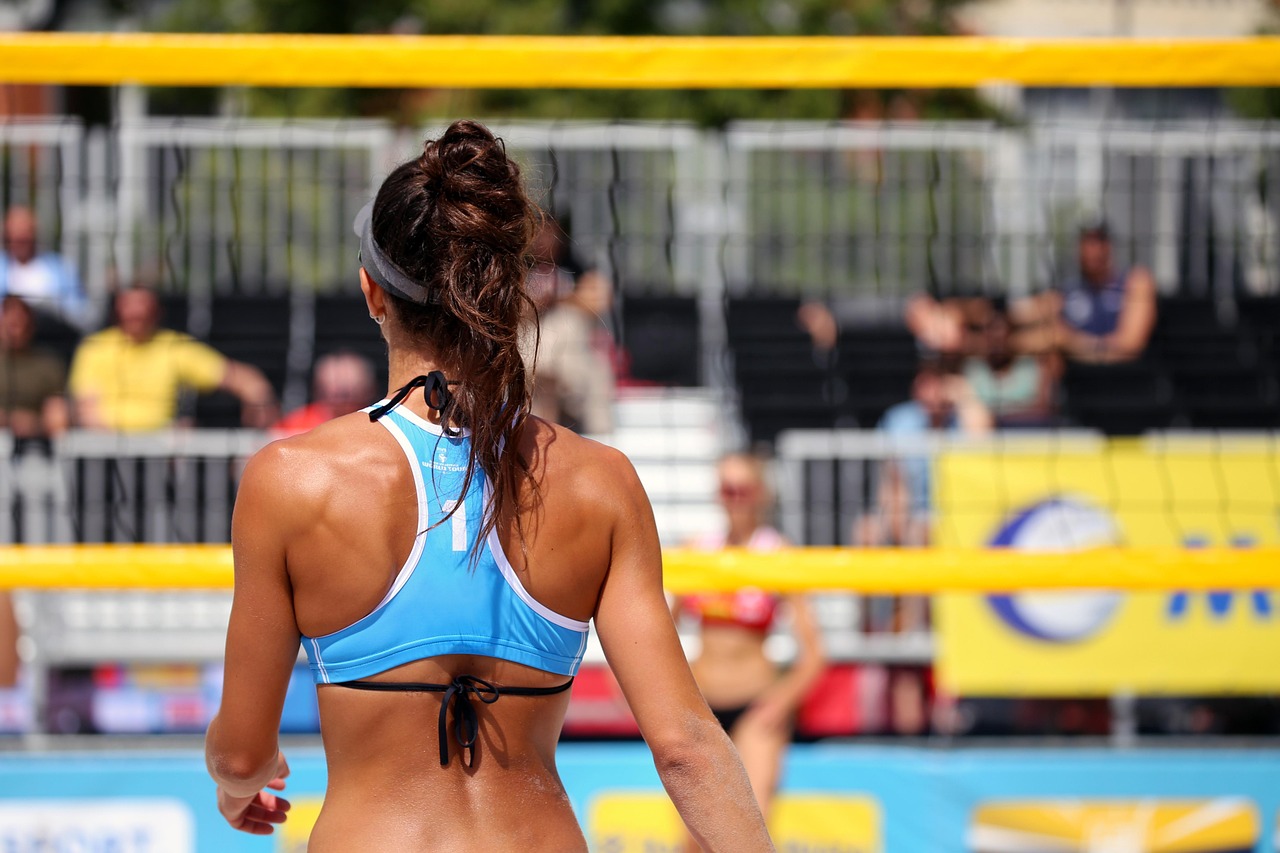
Beach volleyball in the Dominican Republic has a natural geographic logic. The country has extensive coastline, warm weather, and a tourism economy tied to coastal destinations. Places such as Punta Cana, Puerto Plata, Samaná, La Romana, Boca Chica, and other beach communities give volleyball a recreational and outdoor setting that fits the landscape.
Still, beach volleyball is not the primary reason the Dominican Republic is known in the sport. The national identity is indoor first. Beach volleyball adds another layer rather than replacing the indoor story. It can serve as a recreational outlet, a tourism amenity, a local tournament format, and a development opportunity for athletes who benefit from sand training. But Dominican volleyball’s international brand remains tied to the women’s indoor national team.
That indoor-first identity does not make beach volleyball irrelevant. For a Caribbean country, the outdoor game has long-term growth potential. Beach volleyball requires fewer players, can be staged in visible public spaces, and connects naturally with resorts, schools, and coastal communities. It also develops ball control, reading, movement, and conditioning in ways that can help indoor players. If the Dominican Republic continues to invest in beach programming, the sport could become a stronger secondary pathway.
The key is not forcing the country into a beach-volleyball identity simply because it is Caribbean. The Dominican Republic’s competitive volleyball story has already been written most clearly indoors. Beach volleyball is part of the participation culture and may become more important, but the country’s current place in the global game is defined by indoor national-team success.
Volleyball in a Baseball Country
Any honest discussion of Dominican sports culture has to recognize baseball’s dominance. Baseball is the country’s most internationally visible sport, the dream pathway for many young athletes, and one of the strongest parts of Dominican sporting identity. Volleyball grows inside that reality rather than outside it.
That context makes the success of Las Reinas del Caribe more significant. Volleyball has not become nationally important because it displaced baseball. It has become important because the women’s national team built its own lane. In a sports market where attention can be difficult to capture, international victories give volleyball a powerful argument for visibility. Olympic qualification, continental titles, and major tournament wins allow volleyball to appear in national conversation in ways that ordinary domestic competition may not.
Women’s volleyball also gives the Dominican Republic a different kind of sporting pride. Baseball’s global Dominican image is overwhelmingly male. Volleyball has allowed Dominican women to become international sports figures with their own identity, their own fan base, and their own competitive legacy. That matters for the sport’s development because it gives young female athletes a visible team-sport model connected directly to the Dominican flag.
The cultural position of volleyball is therefore more specific than simply “popular” or “emerging.” It is a sport with a strong elite symbol, a passionate following around the women’s team, and a domestic base that benefits from national-team success. It may not dominate everyday sports conversation the way baseball does, but when Las Reinas del Caribe are competing in major events, volleyball becomes part of Dominican national pride.
Regional Rivalries and the NORCECA Stage
The Dominican Republic’s volleyball reputation is inseparable from NORCECA competition. The region gives the team both opportunity and pressure. The United States remains one of the world’s deepest volleyball countries. Canada has improved. Puerto Rico has its own strong volleyball tradition. Cuba has historic significance, even as its current place has shifted across eras. Mexico and other regional opponents can create difficult tournament conditions.
For the Dominican Republic, success in NORCECA is not just about medals. It is about maintaining status. A strong Dominican team is expected to contend for titles, qualify for larger events, and handle regional opponents with the composure of a top program. That expectation is the mark of progress. Earlier generations worked to prove the country belonged. The current program is judged by whether it can defend its position.
Regional competition also shapes the team’s tactical development. Playing the United States tests block-defense systems, serving pressure, and transition offense. Playing Puerto Rico can bring emotional rivalry and technical discipline. Matches against Canada or Mexico often test consistency and control. These opponents force the Dominican Republic to be more than athletic. They demand preparation and execution.
The Pan American stage broadens that test by bringing Brazil, Argentina, Colombia, and other South American teams into the picture. The Dominican Republic’s 2023 Pan American Games gold was important because it showed the team could beat high-level opposition in a multi-sport event environment and defend its status under pressure. Continental success is never only about one match. It is about navigating fatigue, expectations, scouting, and the mental demands of being a favorite.
The Future of Dominican Volleyball
The future of volleyball in the Dominican Republic depends on how well the country turns its golden national-team era into a deeper system. The current identity is strong: Las Reinas del Caribe are respected, experienced, and capable of competing with major opponents. The next step is sustaining that profile as veterans age, younger players take larger roles, and international volleyball continues to get faster and more specialized.
The Paris 2024 roster already showed that transition process. Veterans such as Brenda Castillo, Niverka Marte, Bethania de la Cruz, and others remained central, while younger players such as Ariana Rodríguez, Alondra Tapia, Madeline Guillén, and Geraldine González represented the next wave. That mix is healthy, but it also creates pressure. The Dominican Republic cannot rely forever on the same core that built its modern reputation. It needs new setters, passers, opposites, middles, and liberos who are ready for Volleyball Nations League speed and World Championship pressure.
The country’s future ceiling will likely depend on three areas. The first is youth development: the earlier players receive serious technical training, the easier it becomes to compete with systems that produce polished athletes at younger ages. The second is domestic competition: strong local and regional matches help players learn how to manage pressure before they reach the national team. The third is professional exposure abroad: Dominican players who compete in major foreign leagues bring back tactical experience that raises the national-team standard.
The Dominican Republic has already achieved what many countries are still trying to build: a recognizable volleyball identity. It has a nickname with meaning, a generation of stars, a record of regional titles, Olympic appearances, and a style that opponents respect. The question now is whether Dominican volleyball can keep moving from respected contender toward the narrowest tier of medal threats.
For a country best known globally for baseball, that is an impressive volleyball story. The Dominican Republic has made indoor women’s volleyball one of its strongest international team-sport platforms. It is a Caribbean volleyball power, a NORCECA heavyweight, and a program whose best years have turned Las Reinas del Caribe into one of the defining teams of modern volleyball in the Americas.