Madagascar has a volleyball identity shaped more by indoor competition, regional club volleyball, and national-team development than by the global beach-volleyball image often attached to island countries. The sport does not sit at the top of the country’s athletic hierarchy, but it has a real competitive structure, especially through federation activity, school participation, government-linked clubs, and regional competition in the Indian Ocean volleyball zone.
The country’s volleyball profile is strongest when viewed through the lens of African and island-region competition. Madagascar is part of the African volleyball structure through CAVB, and its women’s national team has a notable historical marker: a third-place finish at the 1989 Women’s African Volleyball Championship. That result remains one of the clearest signs that Madagascar has not merely participated in African volleyball but has, at times, been competitive enough to matter beyond its own borders.
Indoor Volleyball and the Indian Ocean Competitive Map
Indoor volleyball is the central version of the sport in Madagascar. The country’s strongest volleyball settings are usually connected to organized clubs, schools, public institutions, and regional tournaments rather than a large professional league system. In that sense, Madagascar resembles many mid-tier African volleyball countries: the sport has enough structure to produce competitive teams, but the pipeline depends heavily on committed local programs and regional competition.
CAVB Zone 7 competition is especially important for Madagascar because it places the country in a natural volleyball neighborhood with Mauritius, Seychelles, Comoros, and Réunion. These tournaments give Malagasy clubs a competitive outlet beyond domestic play and help measure the country’s standard against other Indian Ocean programs. Gendarmerie Nationale of Madagascar, for example, has appeared prominently in CAVB Zone Seven club competition, including reaching the men’s final in the 2025 Zone Seven Club Championship against Tampon Gecko of Réunion.
That kind of club presence matters because it gives the national volleyball scene a backbone. In countries without a heavily commercial professional league, strong institutional clubs often become the teams that set training standards. They provide a place for setters, opposites, outside hitters, middle blockers, and liberos to develop in a more serious environment than casual school or community play.
Development, Coaching, and the Volleyball Pathway
Madagascar’s player pathway depends on a combination of youth participation, club access, and federation organization. The most important development question is not whether the country has volleyball interest; it is whether the sport can build enough depth across age groups to compete consistently at African level. That means coaching education, more reliable competition calendars, stronger junior programs, and better continuity between school volleyball and senior clubs.
The physical profile of Malagasy volleyball also matters. To compete internationally, teams need more than good athletes. They need serve-receive discipline, faster setting decisions, blocking systems, and defensive organization. For a country like Madagascar, progress often comes from improving the middle layer of the game: better coaching for young players, stronger local competitions, and more exposure to regional opponents that force teams to handle pace, height, and tactical variation.
Beach Volleyball and Outdoor Potential
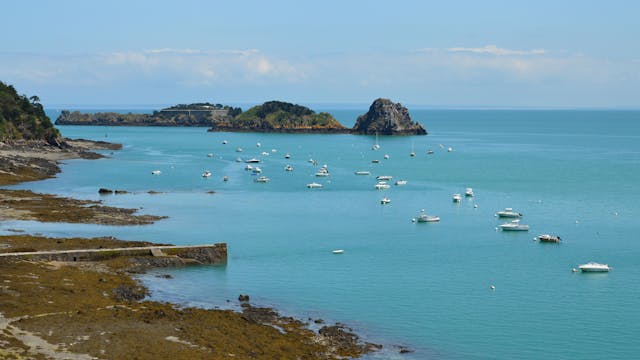
Madagascar has natural geography that could support beach volleyball, but its volleyball identity is still more organized around indoor competition than a globally visible beach circuit. The country’s coastline gives it long-term outdoor potential, especially if beach volleyball becomes more connected to youth development, tourism regions, and regional events. Still, beach volleyball should be understood as an opportunity rather than the country’s defining volleyball product.
That distinction is important. Madagascar is not best described as a beach-volleyball destination in the same way as Brazil, Australia, or parts of the Caribbean. Its volleyball profile is better understood as an Indian Ocean indoor scene with room to grow outdoors.
The Direction of Volleyball in Madagascar
The future of volleyball in Madagascar depends on consistency. The country has enough history, regional participation, and club activity to be taken seriously, but its next step is building a deeper development ladder. If the federation, schools, and leading clubs can create more regular competition for younger players, Madagascar can become a stronger Zone 7 presence and a more stable African volleyball participant.
The country’s best volleyball story is not about instant transformation. It is about converting scattered strength into a more reliable national structure. Madagascar already has the foundation: regional competition, recognizable clubs, and historical evidence that its teams can compete. The next stage is turning that foundation into a broader, more consistent volleyball culture.