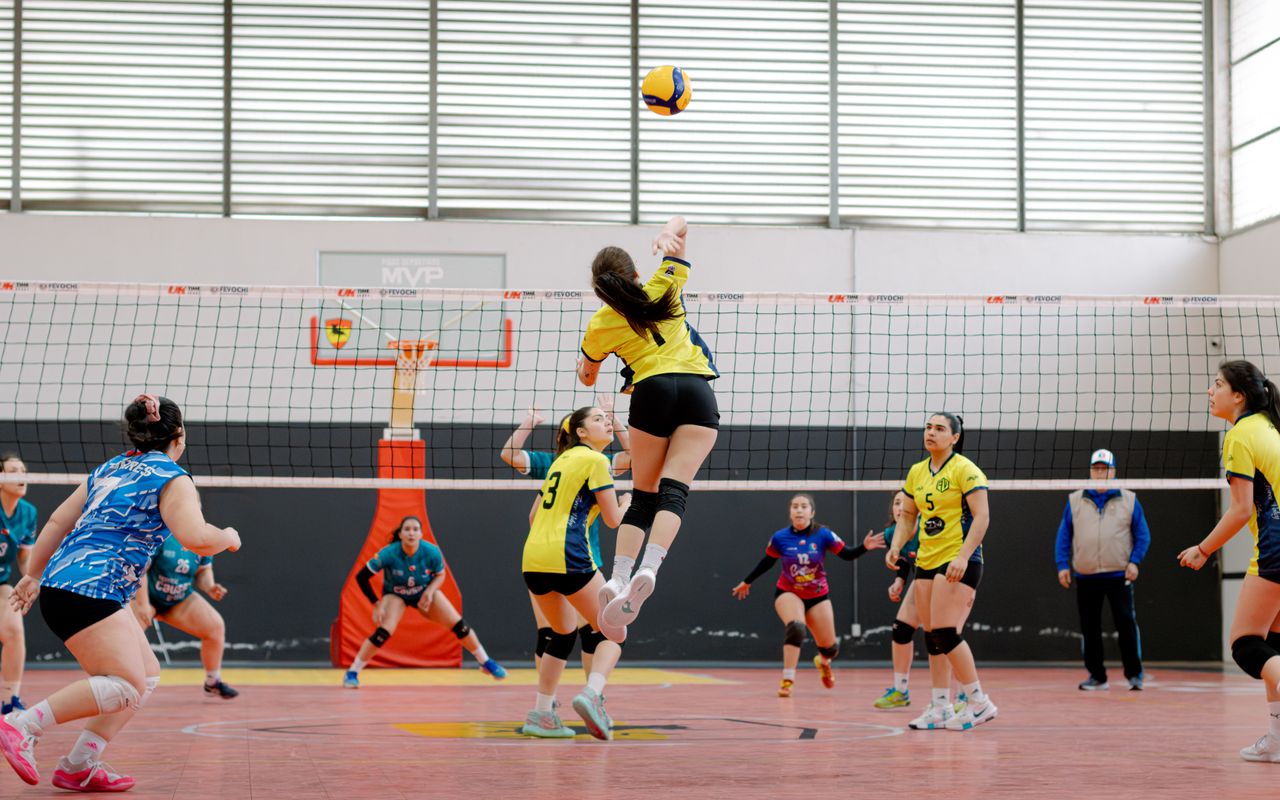
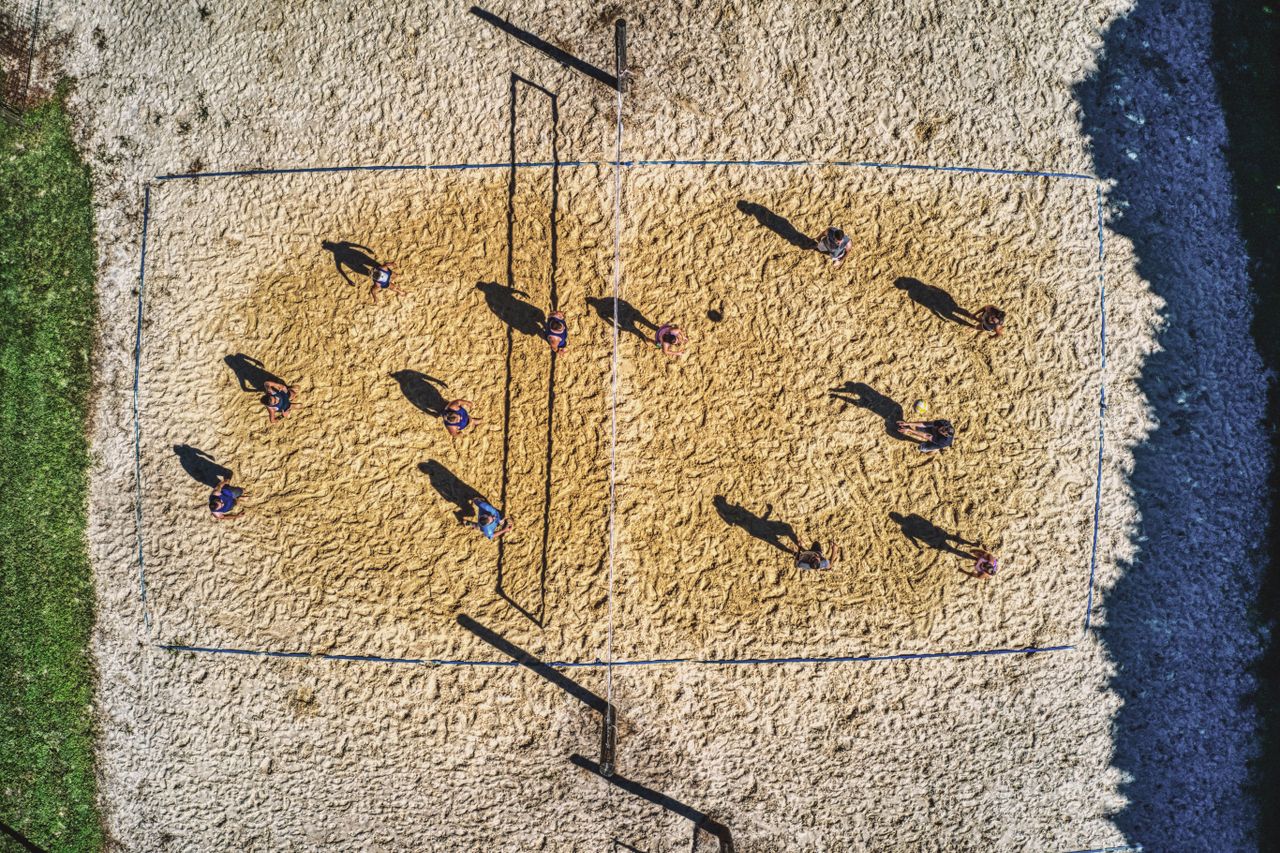
Ghana’s volleyball identity is one of growth, beach potential, and developing national ambition. Unlike countries where volleyball is anchored by long-established professional indoor leagues, Ghana’s profile is shaped by a mix of school participation, federation activity, military and community sport, national-team development, and a coastline that gives beach volleyball a natural platform. The country is not yet one of Africa’s dominant volleyball powers, but it has become increasingly relevant in the beach game and continues to build the structures needed for stronger indoor competition.
The Ghana volleyball story is best understood as a developing system with two linked ambitions: build the indoor game deeply enough to support clubs, schools, and national teams, while using beach volleyball as a more immediate route to international visibility.
Beach Volleyball as Ghana’s Fastest International Door
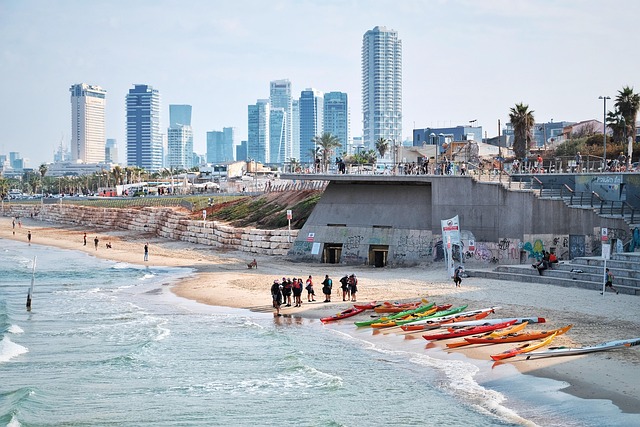
Beach volleyball gives Ghana one of its clearest opportunities in the sport. The country’s coastal geography, particularly around Accra and beach areas such as Laboma, creates a practical environment for training and competition. In a country where full indoor infrastructure can be harder to scale, beach volleyball offers a format that needs fewer players, rewards athleticism and ball control, and provides a realistic pathway into African and Commonwealth competition.
Ghana’s women’s beach volleyball team reached a major visibility point when it qualified for the Birmingham 2022 Commonwealth Games. That moment mattered because Commonwealth beach volleyball is still young as a Games sport, and Ghana was among the newer countries added to the field. The appearance placed Ghanaian beach volleyball on a larger stage, alongside established beach nations and rising programs from Africa, Oceania, and the Caribbean.
Beach volleyball also fits the athletic profile Ghana can develop well: quick defenders, explosive jumpers, players comfortable in heat, and teams that can turn limited resources into tactical sharpness. The two-player format demands all-around skill. A Ghanaian beach pair must serve, pass, set, attack, block or defend, and make constant tactical decisions without the specialization available indoors. That can accelerate player development and produce athletes with a broad volleyball base.
Indoor Volleyball and the Work of Building Depth
Indoor volleyball remains essential to Ghana’s long-term ceiling. Beach success can create headlines, but the indoor game builds broader participation. It brings in schools, clubs, universities, security-service teams, regional competitions, and national-team structures. Ghana’s volleyball federation framework includes senior indoor, beach, sitting, and junior categories, which shows a broad organizational approach to the sport even as competitive depth continues to develop.
The central challenge is not whether volleyball has a place in Ghana. It does. The challenge is building enough consistent competition for players to improve from school and local club levels into national-team readiness. Indoor volleyball requires more infrastructure than beach volleyball: proper courts, nets, training halls, coaching depth, refereeing, travel budgets, and enough club stability to keep athletes in the sport.
For Ghana to rise indoors, the country needs setters who can run an offense under pressure, middles trained to read attackers rather than simply chase the ball, outside hitters who can pass and score, and liberos who can stabilize serve receive. Those details matter because international volleyball punishes loose systems quickly. Raw athleticism helps, but organized indoor volleyball depends on repetition, spacing, timing, and tactical discipline.
Schools, Clubs, and the Participation Base
The future of Ghana volleyball depends heavily on the participation base. Schools and universities can expose athletes to the game early, while clubs give older players a reason to keep training after school competition ends. Community volleyball also matters because it keeps the sport visible outside elite channels.
In emerging volleyball countries, the first major leap is usually not winning international medals. It is creating continuity. Players need somewhere to start, somewhere to train, somewhere to compete, and somewhere to progress. Ghana’s broad federation categories, including junior and sitting volleyball, suggest a sport trying to widen its foundation rather than focusing only on senior indoor teams.
That approach is important. A healthy volleyball system cannot rely only on a few national-team athletes. It needs coaches who understand modern training, referees who support credible competition, clubs that can retain players, and youth programs that teach the game properly before athletes reach senior level. The more Ghana can connect those pieces, the more realistic its international ambitions become.
Women’s Volleyball and Visibility
Ghana’s women’s beach volleyball breakthrough is one of the most important recent storylines for the sport in the country. Visibility matters in volleyball development, especially where football dominates the national sports conversation. When a women’s beach pair competes at a major multi-sport event, it gives the sport a public reference point. It also helps younger girls see volleyball as a serious athletic option rather than just a school activity.
The women’s game can become one of Ghana volleyball’s strongest growth lanes if it receives sustained support. Volleyball is well-suited to school and university systems, and the women’s game often grows quickly when there is a visible pathway from school competition into clubs, national squads, and international tournaments. Beach volleyball adds another layer because it can create elite opportunities without requiring the same roster size as indoor volleyball.
Ghana’s Competitive Place in Africa
Within African volleyball, Ghana is still chasing countries with deeper international records. North African countries, parts of East Africa, and stronger beach programs have often had more developed competitive systems. Ghana’s task is to turn moments of visibility into a repeatable calendar of training, qualification, and competition.
The country’s beach teams have already shown they can enter serious continental conversations. Ghana’s men were part of the African Continental Cup picture during the Tokyo Olympic qualification cycle, and both men’s and women’s beach teams have continued to prepare for African qualifiers. Those campaigns are important because they give Ghana a measurable competitive standard. They show where the country stands not only against global powers, but against the African teams it must beat to reach bigger events.
The Road Ahead for Ghana Volleyball
Ghana volleyball’s next step is consolidation. Beach volleyball can remain the fastest route to international recognition, but indoor volleyball must keep expanding if the sport is going to develop a stable national footprint. The strongest future version of Ghana volleyball would connect schools, clubs, beach training centers, national-team camps, and continental competition into one clearer pathway.
The country has the ingredients for growth: athletic talent, coastal access, federation categories across formats, and recent beach volleyball visibility. The challenge is turning those ingredients into systems. Volleyball development depends on repetition. Players need years of touches, coaching, matches, and tactical learning. National teams need regular competition. Beach pairs need international exposure. Clubs need a reason to keep athletes active year-round.
Ghana’s volleyball identity is therefore not fixed yet. It is being built. The sport has a practical foothold indoors and a more visible opportunity on the beach. If those two tracks continue to support each other, Ghana can become a more regular name in African volleyball and a more dangerous beach volleyball country in Commonwealth and continental competition. The promise is not just that Ghana can participate. The promise is that, with structure, it can become harder to play against every year.