Cuba’s volleyball identity is built around indoor excellence, national-team pride, and a player development system that once turned a Caribbean island into one of the most feared volleyball countries in the world. This is not a place where volleyball is defined mainly by resort courts, casual beach games, or adult recreational leagues. Cuba’s volleyball reputation comes from the highest level of the sport: Olympic finals, World Championship medals, NORCECA dominance, powerful outside hitters, explosive middles, and a women’s national team dynasty that still stands as one of the defining eras in volleyball history.
The Cuban story is especially unusual because it cuts across both the men’s and women’s games. Many countries become known for one side of the sport. Cuba has legitimate claims on both. The women’s team became a global dynasty in the 1990s, winning three straight Olympic gold medals in 1992, 1996, and 2000, along with World Championship titles in 1994 and 1998. The men’s team built its own tradition through continental titles, World Championship podium finishes, Olympic competitiveness, and generations of physically spectacular players who became major figures in international club volleyball. Cuba’s modern position is more complicated than its golden age, but the country’s volleyball name still carries weight because its best teams did not merely participate internationally. They changed expectations for what Caribbean volleyball could be.
A Volleyball Country Built Through the Indoor Game
Cuba’s volleyball foundation is indoor volleyball. The country has beaches, warm weather, and an obvious Caribbean geography, but its global volleyball reputation was not built in the sand. It was built in gyms, national training centers, federation programs, and international tournaments where Cuban teams played with height, vertical explosion, serving pressure, and relentless front-row power.
That matters because Cuba’s best volleyball has always had a recognizable physical profile. Cuban teams at their peak were not simply organized or technically clean. They were intimidating. The classic Cuban look included high-contact outside hitters, fast middles, aggressive blocking, heavy jump serving, and attackers who could turn imperfect sets into terminal swings. In women’s volleyball, Cuba’s power and athleticism disrupted the established order of the sport. In men’s volleyball, Cuba repeatedly produced players with the body type, reach, and explosiveness coveted by elite professional clubs around the world.
This indoor-first identity also connects volleyball to Cuba’s broader sports system. Volleyball has long sat alongside baseball, boxing, track and field, wrestling, and basketball as part of Cuba’s state-supported athletic culture. The country’s sports structure placed a premium on identifying talent early, moving athletes into specialized development environments, and preparing them for international competition. For volleyball, that meant players could be shaped from a young age around positional skill, physical development, and the tactical habits required for national-team volleyball.
The result was a country whose volleyball ceiling was much higher than its population size would normally suggest. Cuba did not become a volleyball power because it had a massive commercial league or a huge professional sports economy. It became one because the national system could identify gifted athletes, concentrate coaching resources, and build teams that reflected a clear competitive style.
Las Morenas del Caribe and the Greatest Cuban Volleyball Era
Any serious account of volleyball in Cuba has to begin with the women’s national team known as Las Morenas del Caribe. The team’s run from the late 1980s through 2000 remains one of the sport’s most important dynasties. Cuba did not just win. It won repeatedly across different tournament formats, against the strongest teams in the world, and with a style that became instantly identifiable.
The central achievement is still the Olympic three-peat: Barcelona 1992, Atlanta 1996, and Sydney 2000. In women’s indoor volleyball, that run remains singular. Cuba became the only women’s indoor volleyball team to win three consecutive Olympic gold medals, and it did so while also capturing World Championship titles in 1994 and 1998. That combination made the Cuban women not just an Olympic story, but the dominant international women’s volleyball program of the decade.
The team’s identity came from a rare mix of physical force and collective control. Cuba could overwhelm opponents at the pins, score through the middle, defend with intensity, and turn matches into tests of nerve. Opponents knew they were facing a team that could close space at the net quickly and punish any weak serve, loose pass, or hesitant transition ball. Cuban volleyball at that level was not passive. It pressured the opponent into playing faster, cleaner, and braver than they wanted to play.
The International Volleyball Hall of Fame’s recognition of the 1991–2000 Cuban Women’s National Team reflects the scale of that dominance. That group was honored for a decade that included three Olympic gold medals, two World Championship crowns, and a long list of major international titles. The dynasty also produced several individual legends, including Mireya Luis, Regla Torres, Magaly Carvajal, Regla Bell, and Taismary Agüero.
The Players Who Defined Cuba’s Women’s Legacy
Mireya Luis became one of the faces of Cuban volleyball because she represented the team’s competitive personality so clearly. She was undersized by elite attacking standards, but her vertical leap, arm speed, and fearlessness made her one of the most spectacular attackers of her generation. Her presence helped define the Cuban women’s image: powerful, elastic, emotional, and capable of scoring against blocks that should have been too big to challenge.
Regla Torres gave the dynasty another kind of anchor. She is regularly discussed among the greatest women’s volleyball players ever because of her combination of height, timing, blocking range, and major-tournament résumé. Cuba’s best teams did not rely on one scorer or one role. They had a full structure of elite players, and Torres gave them a central presence who could change matches both offensively and defensively.
Regla Bell added versatility and championship continuity. She was part of all three Cuban Olympic gold medal teams and helped Cuba win World Championship gold in 1994 and 1998, along with World Cup titles in 1989, 1991, 1995, and 1999. Her ability to contribute as both an outside hitter and opposite reflected the depth and adaptability of that Cuban generation.
Taismary Agüero represents another layer of the Cuban development story. Born in Cuba, she began playing volleyball as a child and entered the Cerro Pelado Training Center in Havana at age ten. By 16, she had already helped Cuba’s junior national team win the 1993 FIVB Women’s U20 World Championship while earning individual honors as MVP, Best Setter, and Best Server. Her career later became internationally complex because she also represented Italy, but her formation as a player was unmistakably Cuban.
The common thread among these players is that Cuba developed athletes with elite physical gifts and then placed them in a team environment strong enough to turn those gifts into international titles. That is the difference between producing talented individuals and producing a volleyball dynasty.
The Men’s Program and Cuba’s Reputation for Power
Cuba’s men’s volleyball history does not have the same Olympic gold-medal peak as the women’s dynasty, but it has a serious international résumé. The Cuban men have long been among the most important programs in NORCECA, and their reputation has been shaped by explosive athletes, elite middles, and players who became major figures in professional leagues outside Cuba.
The men’s national team won Olympic bronze in 1976, reached the World Championship podium multiple times, and became a repeated force in continental competition. Cuba’s men also built a deep NORCECA record, including 16 NORCECA Championship titles and five Pan American Games gold medals. That regional dominance matters because NORCECA includes the United States, Canada, Puerto Rico, Mexico, and the Dominican Republic. Cuba’s place in that field was never ornamental. For long stretches, it was one of the teams everyone else had to measure themselves against.
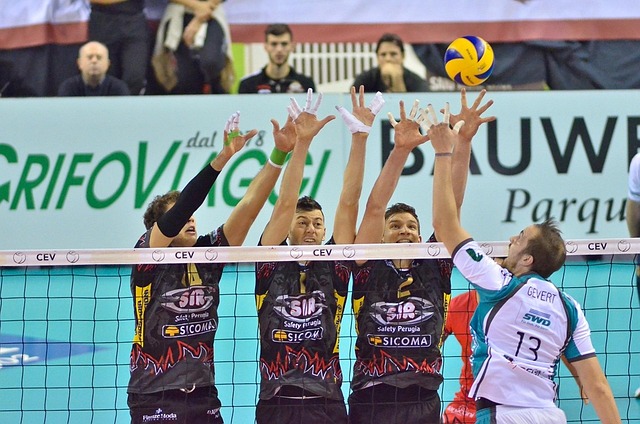
The men’s style has often mirrored the broader Cuban volleyball image: high-contact attacking, big serving, athletic middles, and aggressive net play. At their best, Cuban men’s teams have been difficult to prepare for because they can score in ways that do not always fit a controlled scouting report. A perfect defensive setup still has to deal with a hitter contacting the ball above the block. A good serve-receive pattern still has to survive a run of heavy jump serves. A balanced opponent still has to side out under pressure.
The 2010 World Championship silver medal remains one of the major modern markers for Cuban men’s volleyball. That team included names that became familiar across the international club game, including Robertlandy Simón, Wilfredo León, Yoandy Leal, and Raydel Hierrezuelo. The roster showed both Cuba’s extraordinary talent production and the challenge that would later define the program: many of its best players had futures that stretched beyond Cuba’s national-team structure.
Robertlandy Simón and the Modern Cuban Men’s Standard
Robertlandy Simón is one of the clearest symbols of modern Cuban men’s volleyball. A 2.06-meter middle blocker, Simón captained Cuba to silver medals at the 2009 FIVB World Grand Champions Cup and the 2010 FIVB Men’s World Championship before stepping away from international play to focus on his club career. His return to the Cuban national team years later carried symbolic value because he connected the 2010 generation to the newer Cuban group trying to push the program back toward the top tier.
As a player, Simón fits the Cuban mold but also expands it. He is not simply tall and explosive. He has been one of the world’s most respected middle blockers because of his attacking efficiency, serving threat, blocking presence, and ability to play in elite professional systems. Cuban volleyball has often been described through athleticism, but Simón’s career shows that the best Cuban players also succeed because they can adapt to demanding tactical environments.
The current Cuban men’s team still leans on that blend of experience and firepower. Miguel Ángel López has emerged as a key captain and wing attacker, while Marlon Yant represents the newer generation of Cuban outside hitters with major international club experience. Cuba reached the 2025 VNL Finals, and FIVB framed the 2026 cycle around the idea of a Cuban resurgence, with López, Simón, and other major contributors giving the team renewed international relevance.
That resurgence is not the same as a return to the old dynasty. The men’s international field is deeper, richer, and more professionalized than ever. Poland, Italy, France, Brazil, the United States, Japan, Slovenia, Argentina, and others operate in a brutal global environment. But Cuba remains dangerous because the raw ingredients are still there: size, jump, serve pressure, and attackers who can change matches quickly.
Development, Training, and the Cuban Volleyball Pipeline
Cuba’s volleyball legacy is inseparable from its athlete development structure. The country’s sports system has historically emphasized early identification, specialized training, and centralized preparation. For volleyball, this created a pathway where talented young athletes could be noticed, moved into competitive environments, and trained with national-team ambitions.
The Cerro Pelado Training Center in Havana is one of the names most associated with elite Cuban sports preparation. Taismary Agüero’s biography is a useful example of how early that pathway could begin: she started volleyball at eight and entered Cerro Pelado at ten. That type of early training environment helped Cuba produce players with advanced habits before they reached senior international competition.
Cuba’s school-sports structure has also been important. The country’s School Sport Games have been described as a talent pool and starting point for many Cuban athletes, reflecting how youth competition connects to broader national sports development. In volleyball terms, that means the sport is not only a national-team product at the top. It is fed by a system that tries to identify players through schools, provincial competition, and specialized training.
The strength of that pipeline has always been its ability to make the national team feel like the peak of a long developmental ladder. The weakness, especially in the modern era, is that global professional volleyball creates competing incentives. Elite Cuban players can become highly valuable abroad. Club opportunities in Italy, Brazil, Russia, Japan, Turkey, Poland, Korea, Argentina, and other markets can reshape careers. This has helped Cuban players become more visible internationally, but it has also made continuity harder for the national program.
Beach Volleyball and the Secondary Cuban Identity
Cuba has the geography for beach volleyball, but beach volleyball is not the center of its international identity. That distinction matters. In some countries, the sport’s public image is tied to sand courts, tourism, coastal tournaments, and Olympic beach pairs. Cuba’s volleyball image is different. The country’s greatest achievements, biggest names, and strongest reputation come from the indoor game.
That does not mean outdoor volleyball is irrelevant. Cuba’s climate and coastline make recreational beach play natural, and Cuban athletes have appeared in NORCECA beach volleyball competition. But compared with Brazil, the United States, Australia, or certain European beach volleyball countries, Cuba’s elite volleyball story is still overwhelmingly an indoor story. The sand is part of the broader environment, not the main competitive engine.
This gives Cuba a specific volleyball profile: a Caribbean country whose greatest volleyball export is not beach style, but indoor power. That is part of what makes the Cuban legacy stand out. The country does not fit the easy assumption that island volleyball must be beach-first. Cuba’s volleyball imagination belongs to six-player volleyball, national-team uniforms, packed gyms, and international tournament pressure.
The Women’s Program After the Dynasty
The shadow of Las Morenas del Caribe is both an asset and a burden for Cuban women’s volleyball. It gives the country one of the richest women’s volleyball histories in the world, but it also creates a standard that is nearly impossible for any later generation to match. When a program’s reference point is three straight Olympic gold medals, ordinary rebuilding can look like decline even when the team is still producing serious athletes.
Cuba’s women have been working through a different competitive reality in the modern era. The global women’s game has changed significantly since 2000. Italy, Turkey, Brazil, the United States, Serbia, China, Japan, Poland, the Dominican Republic, and others have built deep professional or federation-supported systems. The margins are smaller, the scouting is better, and elite players are constantly tested in professional leagues.
Still, Cuba’s women remain connected to the international conversation because the program’s name carries historical force and because the development base has not disappeared. Cuba returned to the FIVB Volleyball Women’s World Championship in 2025 after missing the previous edition, entering a pool with Italy, Belgium, and Slovakia. That return was not a restoration of the 1990s dynasty, but it was a marker that the program is still trying to position itself inside the global field.
For Cuban women’s volleyball, the future depends on rebuilding depth, stabilizing the player pathway, and translating individual talent into a team structure that can compete consistently against the modern top 20. The historical standard is enormous, but it also gives the sport a foundation that few countries can claim.
Cuba’s Place in World Volleyball Now
Cuba today sits in a fascinating place. It is not simply a former power living on memory, and it is not yet fully restored to the top tier across both men’s and women’s volleyball. It is a country with one of the sport’s most impressive legacies, a continuing ability to produce high-end athletes, and an ongoing challenge of turning that talent into stable national-team success.
The men’s side currently looks closer to a renewed international breakthrough. With players such as Miguel Ángel López, Marlon Yant, Robertlandy Simón, and others in the mix, Cuba has the physical profile to bother elite opponents. The team’s issue is consistency: serve-receive stability, roster continuity, tactical precision, and the ability to finish matches against the deepest teams in the world. The ceiling is real, but the modern game punishes lapses quickly.
The women’s side is in a different phase, more clearly tied to reconstruction. The dynasty years will always define the program’s mythology, but the immediate challenge is building a new competitive identity that does not rely on nostalgia. Cuba does not need to recreate the 1990s to matter again. It needs to develop a generation that can claim its own style and compete steadily in NORCECA and world-level events.
The Lasting Meaning of Cuban Volleyball
Cuba’s volleyball importance comes from the fact that its greatest teams were not accidents. They reflected a national system, a competitive style, and a belief that Cuban athletes could impose themselves on the world stage. The women’s dynasty made Cuba central to any serious history of Olympic volleyball. The men’s program gave NORCECA one of its strongest and most physically gifted national teams. Cuban-born players have also shaped elite professional volleyball far beyond the island.
That legacy still matters because volleyball countries are not defined only by their current rankings. They are defined by what they have contributed to the sport’s imagination. Cuba contributed a vision of volleyball built on vertical power, emotional intensity, disciplined national-team preparation, and athletes who could make the court feel smaller for everyone else.
For a worldwide volleyball map, Cuba belongs in the category of historic indoor powerhouse. Its beach scene may be part of the broader landscape, and its current programs may be working through new realities, but the country’s volleyball identity remains rooted in the indoor game. Cuba is the island of Las Morenas del Caribe, of Olympic gold, of world-class middle blockers, of explosive outside hitters, and of a volleyball tradition that still carries a charge whenever the Cuban flag appears across the net.