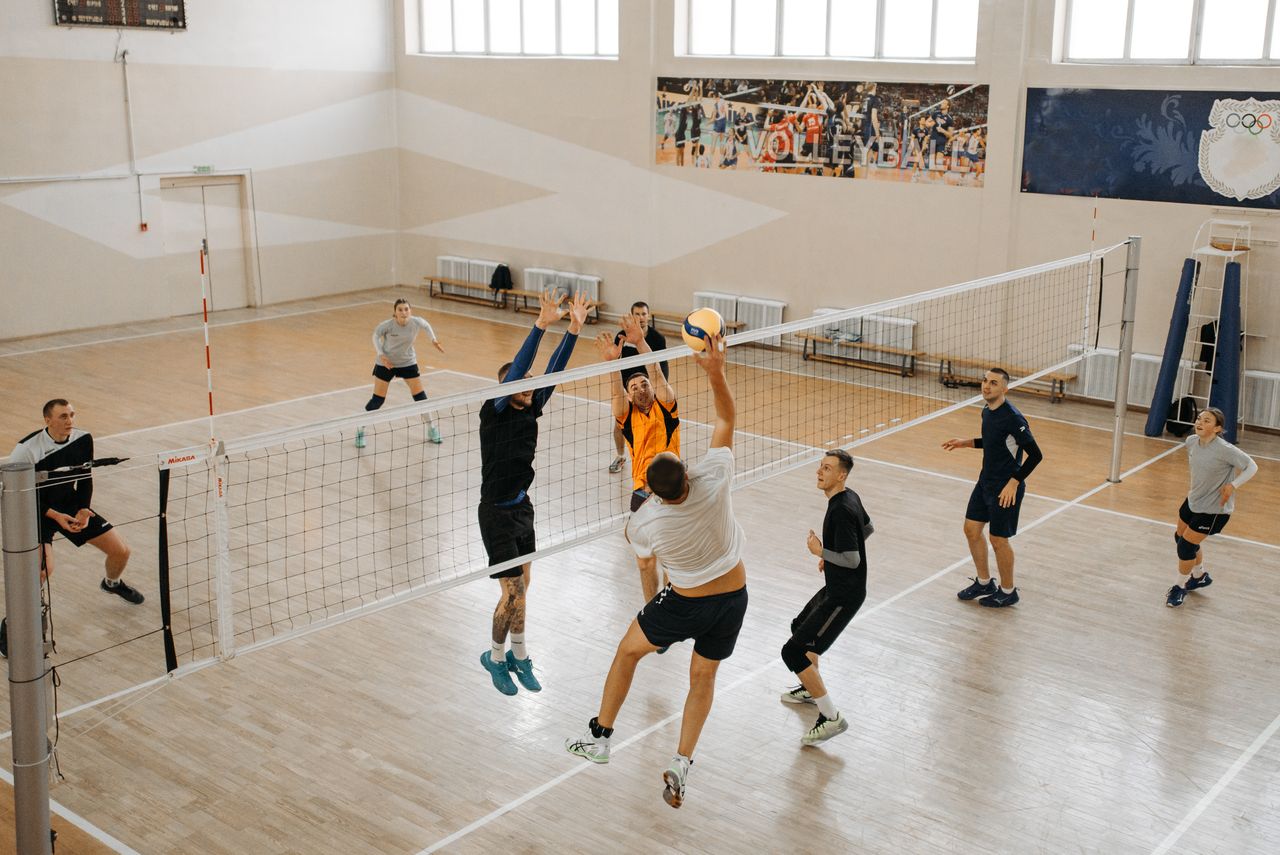
Toronto’s volleyball identity is a hybrid of beach volleyball, university competition, junior club development, and adult recreational play. It is not a traditional professional volleyball city in the way Warsaw or Tokyo can be. Its strength comes from scale, diversity, facilities, and participation. Volleyball in Toronto is a city game, a waterfront game, a school game, and a club game all at once.
The sport fits Toronto’s broader athletic character. The city is large, multicultural, and deeply connected to both organized sport and recreational participation. Volleyball benefits from that environment because it can exist in several forms at the same time. Indoor players move through school gyms and university programs. Beach players gather along Lake Ontario. Adult players build social leagues around weeknight matches. Junior clubs serve families looking for competitive training, tournament travel, and a possible pathway into university volleyball.
A Volleyball City Built on Participation
Toronto is not defined by one dominant volleyball institution. Its scene is distributed. The University of Toronto, Toronto Metropolitan University, York University, local clubs, high schools, beach leagues, and community programs all contribute to the city’s volleyball identity. That makes Toronto less like a single-club volleyball town and more like a broad participation market.
This matters because volleyball in Toronto is accessible across many levels. A player can enter through school, recreational leagues, summer beach programs, club tryouts, university competition, or adult indoor play. The city’s size creates a wide range of standards. There are beginners learning rotations and serve receive, experienced beach players playing doubles by the lake, high school athletes chasing club reps, and university players competing in Ontario University Athletics.
Toronto’s diversity also shapes the sport. Volleyball has strong followings in many immigrant communities, including groups with connections to Europe, Asia, the Caribbean, Latin America, and the Middle East. That gives the city a volleyball culture that is not limited to one tradition. Indoor volleyball, beach volleyball, recreational sixes, co-ed leagues, and competitive youth clubs can all find an audience.
Ashbridges Bay and the Beach Volleyball Identity
Toronto’s most distinctive volleyball feature is its beach scene. Ashbridges Bay gives the city a serious sand volleyball identity, rare for a Canadian metro with long winters. The site is one of the major beach volleyball centers in the country, and its concentration of courts along the Lake Ontario shoreline gives Toronto a summer volleyball culture that feels much larger than the climate might suggest.
That beach culture changes how Toronto is perceived as a volleyball city. Without Ashbridges Bay, Toronto would mainly read as an indoor school, university, and club market. With it, the city gains a public-facing volleyball landmark. Beach volleyball becomes visible, social, and connected to the city’s waterfront life.
The sand scene also serves different types of players. Some use beach volleyball as cross-training for the indoor game, improving ball control, reading, conditioning, and shot selection. Others treat it as their main form of volleyball. Doubles rewards all-around skill: serving, passing, setting, attacking, blocking, and defending without the specialization of six-on-six indoor volleyball. That makes Toronto’s beach culture an important developmental complement, not just a recreational add-on.
Universities and the Indoor Competitive Layer
Toronto’s university programs help give the indoor game structure and credibility. The University of Toronto Varsity Blues, TMU Bold, and York Lions provide visible competitive platforms inside the city. Their presence matters because university volleyball in Canada is a serious stage for athletes who want to keep playing after high school and club competition.
The university game also helps define the city’s volleyball rhythm. Matches are tied to campus identity, OUA standings, recruiting, and athlete development. Players who come through Toronto-area clubs can see local examples of what the next level looks like. They can watch athletes who are older, stronger, more disciplined in serve receive, and better prepared tactically.
For men’s volleyball, university programs are especially important because the sport often has fewer mainstream pathways than women’s volleyball. For women’s volleyball, the depth of high school and club participation feeds into a broader competitive environment. In both cases, Toronto’s universities help keep serious indoor volleyball visible in a market dominated by professional sports in other games.
The Junior Club Pipeline
The junior club system is one of the most important pieces of Toronto volleyball. In a city this large, high school volleyball alone cannot carry the full development load. Club volleyball gives players more reps, stronger coaching, tournament exposure, and a pathway into provincial and national competition.
Toronto-area clubs are part of a wider Ontario volleyball ecosystem. That ecosystem matters because Ontario is one of Canada’s largest volleyball provinces, and Toronto is the province’s biggest media and population center. Clubs give athletes a place to specialize as setters, liberos, middles, opposites, and outside hitters. They also teach the details that separate recreational volleyball from competitive volleyball: serve targeting, defensive base positions, transition footwork, blocking schemes, and communication under pressure.
This is where Toronto’s volleyball identity becomes serious. The city may look recreational from the outside because of its beach leagues and social adult scene, but underneath that is a competitive youth structure. Families invest time and money into training, travel, and tournaments. Players use club volleyball to pursue university opportunities. Coaches build systems that reflect both Canadian volleyball standards and international influences from the city’s communities.
Adult Volleyball and the Social Game
Adult volleyball is a major part of Toronto’s scene. The city has the population density and facility demand to support indoor leagues, beach leagues, corporate teams, co-ed competition, and informal volleyball groups. For many adults, volleyball is not a school pathway or elite project. It is a weekly athletic habit.
That adult layer keeps the sport visible long after players leave school. It also gives Toronto volleyball a broad base. Some cities have strong youth development but little adult culture. Toronto has both. Indoor leagues keep gym volleyball active through colder months, while the beach season gives the sport a summer identity.
The Future of Toronto Volleyball
Toronto’s volleyball future is tied to participation growth, facility access, and the continued connection between beach, club, school, and university volleyball. The city has the population and athletic diversity to support a stronger volleyball profile. Its challenge is fragmentation. Volleyball exists everywhere in Toronto, but it is not always centralized in one narrative.
That may also be the city’s advantage. Toronto does not need one dominant volleyball identity. It can be a hybrid market: beach in the summer, indoor through the school year, university competition in the winter, club development across age groups, and adult leagues year-round. Its volleyball story is not built on a single championship tradition. It is built on volume, access, and the ability of the sport to find players in almost every corner of the city.