Michigan volleyball has the profile of a major indoor volleyball state: school-driven, college-connected, club-heavy, and anchored by the competitive pressure of the Big Ten. The state is not defined by beaches or a single metropolitan volleyball culture. It is defined by gyms, high school championships, college arenas, regional clubs, and a development system that stretches from Detroit suburbs to Grand Rapids, Lansing, Ann Arbor, Kalamazoo, the lakeshore, and northern communities.
Michigan’s volleyball identity is rooted in the indoor game. The state produces athletes through school teams, junior clubs, and college programs, then measures them against one of the toughest volleyball regions in the country. That regional context matters. Michigan sits inside the broader Midwest volleyball belt, where high school volleyball is serious, college volleyball is visible, and club competition can be physically and tactically demanding. A Michigan player grows up around a sport where ball control, blocking systems, serve pressure, and positional specialization matter early.
A State Built Around the Indoor Game
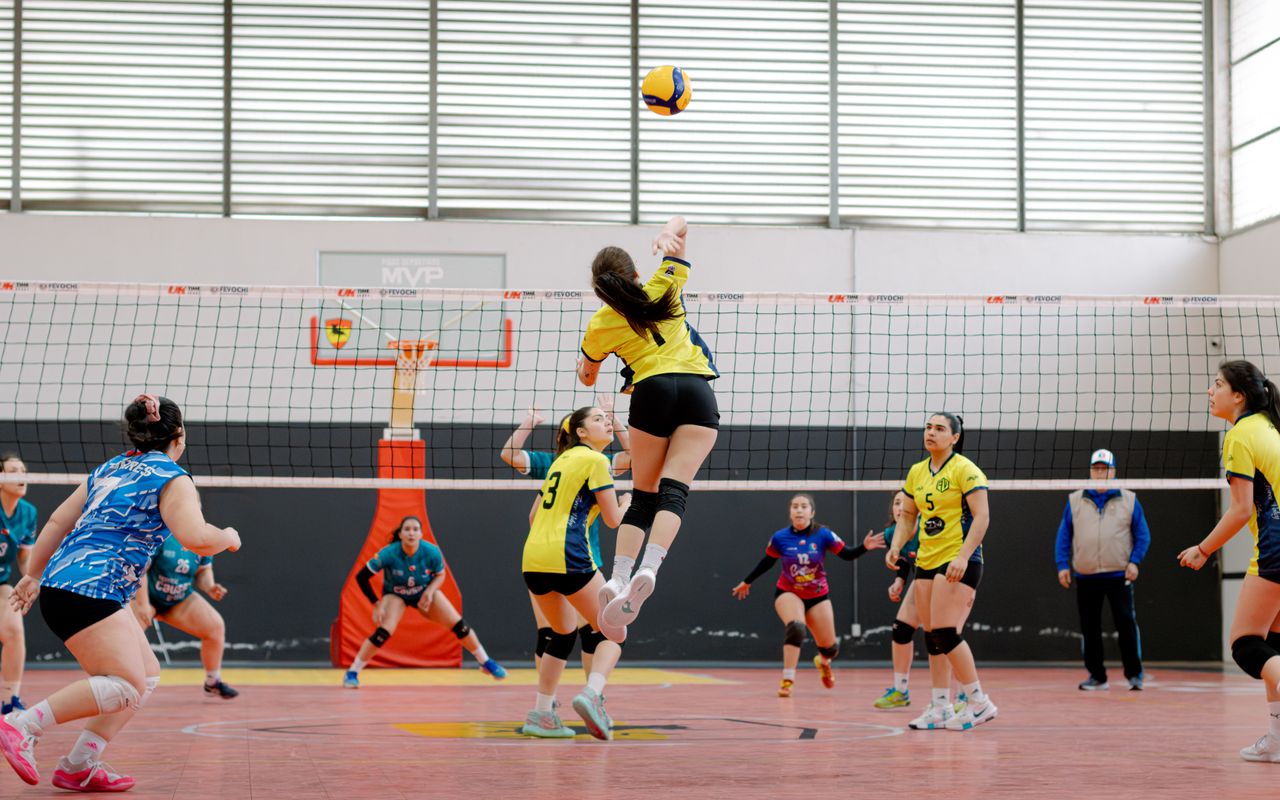
Michigan volleyball starts with the high school season. The Michigan High School Athletic Association has a long girls’ volleyball championship history, and the move of volleyball into the fall season helped align the sport with the broader national rhythm of school and college volleyball. That fall identity matters. Volleyball becomes part of the same autumn sports landscape as football, soccer, and cross country, giving school gyms a defined seasonal spotlight and giving athletes a clear path into club season and college recruiting.
The state’s high school volleyball map is not limited to one area. Metro Detroit produces strong athletes and deep school competition. West Michigan has long been one of the state’s important volleyball regions, with programs around Grand Rapids, Holland, Muskegon, and the lakeshore often carrying serious tradition. Mid-Michigan connects through Lansing-area schools and the pull of Michigan State. Ann Arbor brings the University of Michigan’s influence. Northern Michigan and smaller communities add a different kind of volleyball culture, where school teams can become central fall institutions.
That broad geography gives Michigan volleyball a statewide feel. The sport is not simply a suburban activity. It belongs to large schools, small schools, private schools, public schools, and rural communities. State tournament runs become local events because volleyball is one of the sports where a disciplined, well-coached team can build a real identity around serve receive, defense, setter decision-making, and end-of-set toughness.
The Big Ten Standard
The University of Michigan and Michigan State give the state its most visible college volleyball anchors. Both compete in the Big Ten, which is one of the strongest volleyball conferences in the country. That matters for Michigan’s volleyball culture because local players, coaches, and fans have direct exposure to elite size, speed, and tactical execution. Big Ten volleyball is a different level of the sport: bigger pins, faster middles, disciplined liberos, physical serving, and blocking schemes that punish imprecision.
Michigan’s program in Ann Arbor has had moments of national relevance, including NCAA tournament runs and a national semifinal appearance in 2012. The Wolverines’ volleyball identity is tied to the broader University of Michigan athletic brand: high expectations, Big Ten pressure, and the challenge of competing in a league where there are very few light nights. For players in the state, Michigan represents the visible top of the women’s college ladder.
Michigan State brings its own volleyball tradition from East Lansing. The Spartans have produced All-America-level talent and have spent decades inside the Big Ten grind. The program’s identity has often reflected the broader athletic culture of the university: physical, competitive, and comfortable in long rallies. Michigan State’s presence also matters because it pulls attention into the central part of the state, making college volleyball feel less concentrated around Ann Arbor or Detroit alone.
The Big Ten’s expanded volleyball profile only increases that visibility. With the conference continuing to feature national contenders and adding more postseason structure, Michigan and Michigan State operate in a volleyball environment where every conference match can become a national measuring stick. That raises the expectations for athletes coming out of the state. To play at that level, a hitter must terminate against organized blocks. A setter must run tempo under pressure. A libero must pass tough serves and extend rallies against elite arms.
Beyond the Flagships
Michigan volleyball is deeper than its two Big Ten programs. Western Michigan, Central Michigan, Eastern Michigan, Oakland, Detroit Mercy, Wayne State, Grand Valley State, Ferris State, Northern Michigan, Michigan Tech, Calvin, Hope, and other programs help create a layered college environment. The state has Division I, Division II, Division III, and NAIA volleyball options, giving athletes multiple routes into the college game.
This is one of Michigan’s strengths. Not every serious volleyball player is a Big Ten recruit, and the state’s college ecosystem recognizes that. A player can develop into a strong Division II outside hitter, a Division III setter, a defensive specialist at a mid-major program, or a middle blocker who grows later and finds the right fit outside the Power Four level. That range keeps more athletes in the sport longer and gives high school and club coaches realistic pathways to discuss with players.
Western Michigan and the other Mid-American Conference programs are especially important because they connect the state to a strong mid-major volleyball tradition. MAC volleyball has long been competitive, physical, and regionally relevant. It gives Michigan athletes a level of college play that is demanding without being limited to the national spotlight of the Big Ten.
Club Volleyball and the Development Pipeline
Michigan’s club scene is central to the state’s volleyball identity. High school volleyball gives athletes school pride and competitive structure, but club volleyball supplies the volume: more touches, more tournament pressure, more specialized coaching, and more exposure to college recruiters. The best players in Michigan usually develop through both systems, using the school season for team identity and the club season for technical growth.
The state’s club pathway reflects the demands of Midwest volleyball. Players are expected to serve aggressively, pass consistently, defend with discipline, and understand systems early. Outside hitters need to become reliable in serve receive. Middles need fast footwork and blocking reads. Setters must learn to run different tempos and make decisions based on pass quality. Liberos are judged not only by digs, but by first-contact control and the ability to stabilize rotations.
Metro Detroit and West Michigan are major engines for this development, but the pathway reaches well beyond them. Clubs around Lansing, Ann Arbor, Kalamazoo, the Tri-Cities, and northern parts of the state all contribute to the competitive base. Because Michigan is large and geographically varied, travel and tournament access can shape a player’s development. Athletes in dense metro areas may see stronger week-to-week competition, while players from smaller communities sometimes have to travel farther to find the right training environment.
Beach and Outdoor Volleyball in a Great Lakes State
Michigan has a strong outdoor recreation identity, but beach volleyball plays a secondary role to indoor volleyball. The Great Lakes give the state summer sand and recreational play, especially along the western shoreline and in parks around urban areas, but Michigan is not a beach volleyball pipeline in the way coastal warm-weather states are.
Still, outdoor volleyball has a useful place in the state’s volleyball culture. Summer beach and grass play can make indoor athletes more complete. Doubles volleyball forces all-around skill: serving, passing, setting, attacking, blocking, and defending without hiding inside a specialized rotation. For Michigan players, outdoor volleyball often functions as a developmental supplement and a social extension of the indoor season rather than the central competitive pathway.
Michigan’s Volleyball Character
Michigan volleyball has a practical, competitive character. It is not built around spectacle. It is built around fall gyms, club tournaments, college matches, and communities that care when their teams make postseason runs. The style of play that emerges from that environment tends to reward toughness: clean first contact, defensive patience, disciplined blocking, and the ability to win long points.
The state’s best volleyball identity is its balance. Michigan has Big Ten visibility at the top, a strong high school championship culture at the base, and a broad college ecosystem in between. It has club volleyball to sharpen players and enough regional competition to test them. It has large suburban programs and smaller schools where volleyball can become a defining sport.
Where Michigan Volleyball Goes Next
The future of Michigan volleyball is tied to three areas: continued growth in club training, broader boys’ volleyball development, and the rising visibility of women’s college volleyball nationally. Girls’ volleyball already has a strong foundation in the state, but the sport’s next stage depends on how well Michigan expands access, improves coaching depth, and keeps athletes engaged through the transition from school season to club season to college recruitment.
Boys’ volleyball remains an opportunity. As more states invest in boys’ high school volleyball, Michigan has the athletic base to become more competitive on that side of the sport. The same communities that produce basketball, football, and soccer athletes can produce volleyball players if the school and club infrastructure expands.
Michigan will remain an indoor-first volleyball state because that is where its institutions are strongest. The sport’s foundation is in school gyms, college programs, and club tournaments. Its ceiling is shaped by the Big Ten and by a statewide development culture that keeps producing disciplined, physical, tactically trained players. Michigan volleyball is not a niche scene. It is a serious Midwest volleyball market with deep roots, visible college anchors, and room to grow.