Sofia’s volleyball identity is built around indoor tradition, club rivalry, and Bulgaria’s long-standing reputation as one of Europe’s serious volleyball nations. This is not a beach volleyball city in the way a coastal resort or Mediterranean destination might be. Sofia’s volleyball character comes from sports halls, club systems, national-team ambition, and the old institutional weight of names like Levski and CSKA.
That gives the city a harder-edged volleyball personality. Sofia is not simply a place where people play volleyball. It is a city where volleyball has been absorbed into the wider Bulgarian sporting structure, especially through clubs with deep histories and rivalries that stretch across multiple sports. When Levski Sofia and CSKA Sofia meet, the matchup carries more than standings value. It carries the colors, memory, and competitive tension of two of Bulgaria’s most recognizable sporting institutions.
Levski, CSKA, and the Capital Rivalry
The Levski-CSKA rivalry gives Sofia volleyball one of its clearest identities. In Bulgarian sport, these clubs are not minor labels. They represent large multi-sport traditions, and volleyball is part of that broader rivalry. The men’s league has seen Levski and CSKA compete at the top level, including championship-stage meetings that keep Sofia central to Bulgaria’s club volleyball conversation. In 2024, CEV reported that Levski Sofia won Bulgaria’s men’s national league after defeating CSKA Sofia in the championship series, a result that sent Levski into the CEV Champions League group stage.
That kind of result matters because it reinforces Sofia’s place as a competitive capital, not just an administrative one. Bulgarian volleyball has major forces beyond Sofia, particularly in the women’s game, where Maritza Plovdiv has become a dominant national power. But Sofia remains one of the country’s defining volleyball centers because of its clubs, its rivalry structure, and its proximity to the national federation and elite sporting institutions. Maritza’s continued dominance in women’s competitions, including another Bulgarian Cup title reported by CEV in late 2025, shows that Bulgarian volleyball is not Sofia-only, but the capital remains essential to the sport’s national geography.
A City Connected to Bulgaria’s International Reputation
Sofia’s volleyball story cannot be separated from Bulgaria’s national volleyball identity. Bulgaria has long been respected in European and world volleyball for producing tall, physical players, strong attackers, powerful servers, and technically capable setters. The country has not always had the financial strength of the richest volleyball leagues, but it has consistently had talent, coaching knowledge, and a serious indoor tradition.
Sofia plays a role in that reputation because capital-city clubs help sustain the domestic standard. Players who come through Sofia’s systems are developed in an environment where volleyball is understood as a competitive discipline. The expectations are not casual. Athletes learn early that the sport is built around blocking schemes, serve pressure, reception quality, transition offense, and the ability to compete in tight sets.
The city’s best volleyball culture is therefore not built around spectacle alone. It is built around substance. A Sofia volleyball crowd recognizes when a middle blocker closes a seam, when a setter freezes the block, when a libero stabilizes a shaky rotation, and when an outside hitter keeps scoring despite receiving target pressure. That technical literacy gives the sport a strong base.
Club Systems and Player Development
Sofia’s volleyball development pathway is closely tied to clubs, youth sections, school sport, and the wider Bulgarian federation environment. Unlike countries where volleyball is primarily driven by private academies or university recruiting, Bulgaria’s model has historically leaned on clubs as developmental institutions. Sofia’s major clubs are not just senior teams. They are part of a chain that can include youth teams, coaching pipelines, and early competitive exposure.
Levski’s club structure, for example, includes men’s, women’s, and youth categories, reflecting the multi-level nature of elite volleyball development in the city. That matters because volleyball players are not built only through senior matches. They are built through years of technical repetition, youth competition, positional specialization, and the gradual move from junior promise to adult responsibility.
For Sofia, this kind of structure helps explain why the city remains relevant even when another Bulgarian club is dominant in a given season. A capital volleyball ecosystem is not measured only by who wins one title. It is measured by how many players it develops, how many serious teams it supports, how much coaching knowledge it retains, and how much pressure it places on the national standard.
Indoor Volleyball as the Core Identity
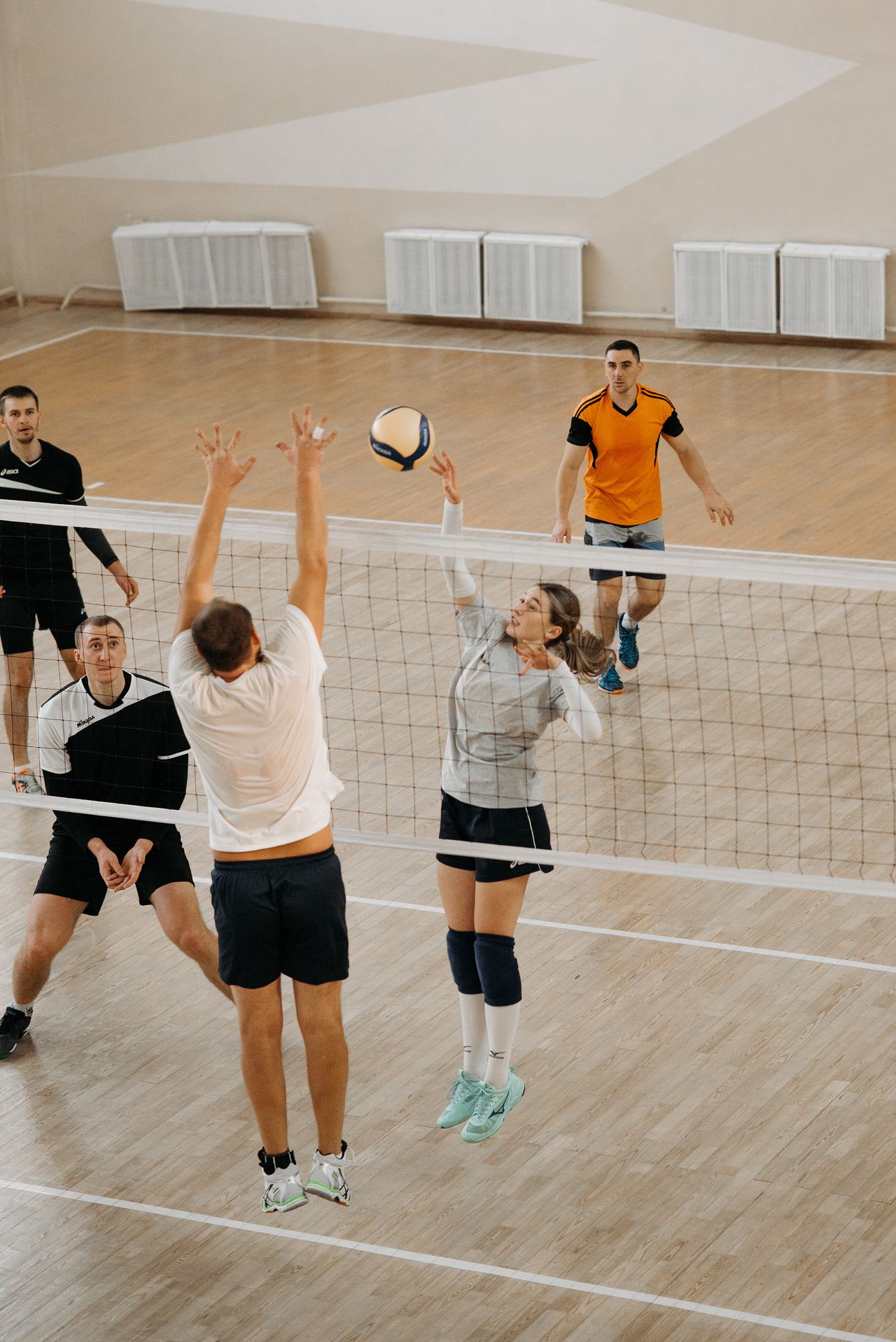
Sofia’s volleyball identity is overwhelmingly indoor. Outdoor volleyball may exist in recreational settings, but it is not the city’s defining contribution to the sport. The serious volleyball story in Sofia is played under a roof, on a full indoor court, with formal club systems and competitive league stakes.
That indoor focus aligns with Bulgaria’s broader volleyball strengths. Bulgarian players have often been valued for height, attacking power, and blocking presence, but the best Bulgarian volleyball also requires serve-receive quality and tactical discipline. Sofia’s clubs sit inside that tradition. The city’s volleyball language is one of rotations, middle attacks, opposite hitters, reception formations, and pressure serving.
This makes Sofia different from volleyball cities where participation culture is more visible than elite competition. In Sofia, the deeper story is competitive seriousness. The city’s volleyball scene carries the marks of Eastern European club sport: institutional identity, rivalry, youth systems, and a strong belief that volleyball belongs in the country’s elite sports conversation.
Events, Atmosphere, and the Meaning of Rivalry
Volleyball in Sofia gains texture from rivalry. The Levski-CSKA dynamic gives matches an emotional frame that a neutral club system cannot easily create. Even when volleyball does not command the same mass attention as football, the rivalry provides history and intensity. A championship meeting between the two clubs is not just another fixture. It is a continuation of a sporting argument that Bulgarian fans understand immediately.
The atmosphere around Sofia volleyball is therefore shaped by more than attendance numbers. It is shaped by identity. Club colors matter. History matters. The opponent matters. The result matters because it sits inside a larger sports culture where Levski and CSKA are familiar names to generations of fans.
That is one of Sofia’s strongest volleyball assets. A club scene with rivalry has a built-in narrative. It gives young players something to join, supporters something to argue about, and the sport itself a way to remain visible.
The Future of Volleyball in Sofia
Sofia’s volleyball future depends on how well the city can convert its tradition into modern development. The old club names still matter, but volleyball across Europe is increasingly shaped by professionalization, sports science, media visibility, youth retention, and the ability to keep top players from leaving too early. Sofia has the history and the rivalry. The challenge is to keep building infrastructure and competitive depth around them.
The city’s strongest path forward is not to become something it is not. Sofia does not need to imitate beach volleyball markets or recreational resort scenes. Its value is in indoor volleyball: clubs with history, athletes with ambition, and a national volleyball culture that still treats the sport as a serious competitive pursuit.
At its best, Sofia volleyball is direct, intense, technical, and institutional. It is a city of club colors, rivalry matches, youth systems, and indoor ambition. For Bulgarian volleyball, Sofia remains one of the essential stages.