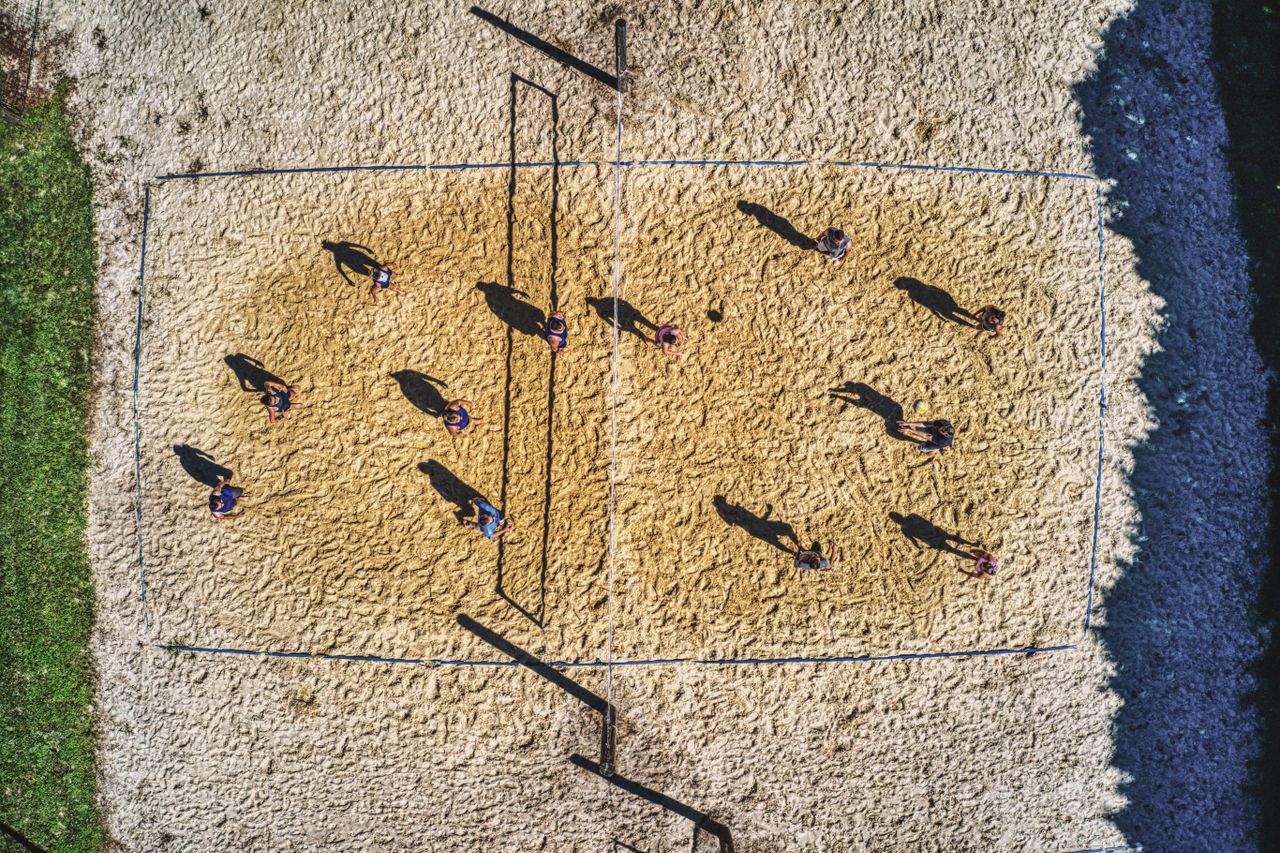
Puerto Rico has one of the most complete volleyball identities in the Caribbean: indoor tradition, professional leagues, national-team pride, women’s volleyball credibility, men’s volleyball depth, beach volleyball growth, and a youth pipeline that keeps the sport visible from school gyms to federation competition. It is not a volleyball market built on one narrow lane. The island has produced Olympic indoor players, international beach pairs, professional club rivalries, strong women’s and men’s leagues, and a national federation structure connected to FIVB, NORCECA, and the Puerto Rico Olympic Committee.
That combination gives Puerto Rico a distinct place in the volleyball world. It is smaller than the major global powers, but it does not play like a small volleyball country. Puerto Rico’s best teams have long competed with the expectation that they can trouble larger nations, especially inside NORCECA, where the United States, Cuba, the Dominican Republic, Canada, Mexico, and Puerto Rico create one of the sport’s most competitive regional environments. For Puerto Rico, volleyball is not a background recreational activity. It is a legitimate national sport with professional structure, recognizable athletes, and a competitive history that gives the island credibility far beyond its population size.
A Volleyball Island With Indoor Roots
Puerto Rico’s volleyball identity begins indoors. The sport’s strongest historical footprint has been built through organized six-player volleyball: school teams, municipal programs, club development, senior leagues, and national-team competition. In many volleyball countries, the indoor game depends heavily on either schools or professional clubs. Puerto Rico has both. That matters because it gives the sport several entry points. A young player can encounter volleyball through school competition, move into club or federation settings, watch the professional leagues, and see Puerto Rican players representing the island internationally.
The Puerto Rican Volleyball Federation, founded in 1958, has long served as the organizing body for the sport’s national development. Its connection to FIVB and NORCECA places Puerto Rico inside the official global and regional volleyball systems, while its domestic competitions give the island a year-round volleyball rhythm.
The island’s volleyball reputation is especially strong because the sport has a real competitive ladder. Puerto Rico is not simply producing isolated players who leave for college or overseas careers. It has domestic senior leagues, national teams, youth categories, beach volleyball programming, and a federation calendar that keeps the sport active across multiple levels. The FPV’s current structure includes the Liga de Voleibol Superior Femenino, the Liga de Voleibol Superior Masculino, and beach volleyball activity, which reflects how broad the sport’s base has become.
The indoor game also fits Puerto Rico’s sporting personality. Volleyball rewards rhythm, communication, quick defensive reactions, controlled aggression, and emotional momentum. Puerto Rican teams have often been at their best when playing with speed on the pins, disciplined libero play, aggressive serving, and a willingness to challenge physically larger opponents through tempo and defensive pressure. That profile has helped Puerto Rico remain relevant in international competition even when facing countries with deeper player pools.
The Women’s National Team and the Olympic Breakthrough
The defining modern moment for Puerto Rican volleyball came in women’s indoor volleyball, when Puerto Rico qualified for the 2016 Rio Olympic Games. The achievement mattered because it was the island’s first Olympic appearance in women’s volleyball and because it confirmed years of progress by a generation of players who had carried Puerto Rico through NORCECA competition, professional leagues, and international tournaments. Puerto Rico earned the berth by winning the final Olympic qualifying event in San Juan, defeating Kenya in straight sets to secure the last place in the Rio women’s tournament.
That Olympic team gave Puerto Rico a volleyball milestone that still shapes the sport’s identity. The roster included major names in Puerto Rican volleyball, including Aury Cruz, Karina Ocasio, Stephanie Enright, Daly Santana, Yarimar Rosa, Shara Venegas, Debora Seilhamer, and others who formed one of the island’s most important volleyball generations.
Aury Cruz’s role in that era was especially significant. She had already built a long international career and became one of Puerto Rico’s most recognizable volleyball figures. Karina Ocasio brought opposite-side scoring and veteran presence. Daly Santana represented the next wave of Puerto Rican outside-hitting talent, with the athleticism and scoring profile that made her a major name in the national-team setup. Shara Venegas and Debora Seilhamer reflected another important part of Puerto Rico’s volleyball personality: defensive specialists and liberos who could stabilize serve receive, extend rallies, and let the island compete against taller, more physical teams.
The Olympic berth did not make Puerto Rico a permanent global power overnight, but it changed the ceiling of the program. It gave young players a clear proof point. A Puerto Rican girl entering volleyball could look at the senior national team and see an Olympic pathway, not just a local competitive outlet. That matters in a sport where confidence in the development system can influence participation, training intensity, and player retention.
Puerto Rico has continued to pursue major international competition since Rio. The women’s national team remained active in the global championship cycle, with Volleyball World listing Puerto Rico among the teams in the 2025 FIVB Women’s World Championship structure.
The Men’s Game and a Serious Regional Reputation
Puerto Rico’s men’s volleyball history is also deeper than casual followers may realize. The men’s national team has competed in multiple FIVB World Championships, with its first appearance listed in 1974 and a best World Championship finish of 12th in 2006. The program also produced a notable 2007 NORCECA Championship run, when Puerto Rico defeated Cuba in the semifinals, took silver, and qualified for the FIVB World Cup for the first time.
That 2007 moment is important because Cuba has historically been one of the great volleyball nations of the Americas. Beating Cuba in a regional semifinal was not just another tournament result; it was a marker of Puerto Rico’s ability to challenge elite Caribbean volleyball programs. For a country with a smaller player base, those results build credibility. They also help explain why Puerto Rico’s men’s volleyball scene has maintained a serious domestic following.
The men’s game in Puerto Rico has often been tied closely to the Liga de Voleibol Superior Masculino, one of the core institutions of the island’s volleyball ecosystem. The LVSM has featured long-running teams and local volleyball identities such as Changos de Naranjito, Plataneros de Corozal, Mets de Guaynabo, Patriotas de Lares, Caribes de San Sebastián, and others.
Naranjito, in particular, carries historic weight in Puerto Rican volleyball. The Changos have been one of the island’s signature men’s volleyball names, and their presence in the league’s history reflects how volleyball identity in Puerto Rico is not confined to San Juan. Volleyball strength has been distributed across municipalities, giving the sport a local and regional texture. The game belongs to towns, gyms, fan bases, and club identities, not only to national-team windows.
Puerto Rico’s recent men’s results also suggest that the program remains ambitious. The federation highlighted Puerto Rico’s 2026 NORCECA Final Four Masculino title, describing the team as completing a third consecutive championship in that event after defeating host Mexico in straight sets.
Professional Leagues as the Sport’s Backbone
Puerto Rico’s domestic leagues are central to its volleyball identity. In many countries, national teams are visible only during international tournaments, while domestic competition struggles for consistent relevance. Puerto Rico has a stronger league tradition than most places of comparable size, and that gives the sport a steadier public presence.
The women’s league, Liga de Voleibol Superior Femenino, has been particularly important. The LVSF has given Puerto Rican women’s volleyball a competitive platform, a professional identity, and a bridge between local development and international careers. Teams such as Criollas de Caguas, Cangrejeras de Santurce, Pinkin de Corozal, Atenienses de Manatí, Leonas de Ponce, Changas de Naranjito, and others have made the women’s league a meaningful part of the island’s volleyball landscape. NORCECA’s 2025 LVSF season preview listed clubs including defending champion Cangrejeras de Santurce, 2024 runner-up Atenienses de Manatí, Criollas de Caguas, Changas de Naranjito, Mets de Guaynabo, Pinkin de Corozal, and Valencianas de Juncos.
The league also has continuity through recognizable programs. Caguas, Santurce, Corozal, Manatí, Ponce, and Naranjito are not interchangeable names on a schedule. They represent different volleyball communities and competitive memories. The Criollas de Caguas have been one of the sport’s major women’s brands. The Cangrejeras de Santurce have carried San Juan-area visibility. Corozal’s Pinkin name has long been associated with women’s volleyball history. Ponce gives the league another major city presence. That distribution matters because it keeps the sport connected to the island’s municipal geography.
The men’s LVSM plays a similar role. Its history includes established volleyball towns, long-running rivalries, and clubs that give players a domestic platform beyond school and national-team play. The LVSM’s record of champions and finalists shows how deeply the league has shaped Puerto Rican men’s volleyball, especially through programs such as Naranjito, Corozal, Guaynabo, Lares, San Sebastián, and Yauco.
Domestic leagues also influence style. When players compete regularly in professional environments, they develop match management, pressure serving, late-set composure, and familiarity with tactical adjustments. That is particularly important for Puerto Rico, which often faces taller and deeper opponents internationally. A strong league does not erase those gaps, but it gives Puerto Rican players more meaningful repetitions in competitive situations.
The Player Legacy: Outside Hitters, Liberos, Opposites, and Leaders
Puerto Rico’s volleyball legacy is defined by players who made the island visible internationally. The women’s side has produced some of the country’s most recognizable names. Aury Cruz remains one of the central figures in modern Puerto Rican volleyball, with a career that connected college volleyball, professional volleyball, and national-team leadership. Karina Ocasio gave Puerto Rico a long-serving scoring presence. Daly Santana became a key figure of the post-Rio generation and one of the most visible Puerto Rican attackers of her era. Stephanie Enright, Yarimar Rosa, Shara Venegas, Debora Seilhamer, Natalia Valentín, Raymariely Santos, and others helped sustain the island’s international profile through different roles and cycles.
What stands out is the range of player types. Puerto Rico’s best teams have not been built only around one superstar outside hitter. They have needed ball-control wings, steady setters, high-contact opposites, defensive specialists, and middle blockers capable of challenging larger teams at the net. That has made Puerto Rican volleyball a study in balance. The island’s teams often need enough first-contact quality to stay in system, enough tempo to reduce size disadvantages, and enough defensive organization to survive extended rallies.
The men’s player legacy has also been important, especially through athletes associated with the national team and the LVSM. Puerto Rico’s best men’s teams have relied on experienced attackers, strong serving, and players capable of competing in the physical NORCECA environment. Because the region includes historically powerful teams such as the United States and Cuba, Puerto Rico’s men have had to develop toughness against elite blocking, heavy serving, and international speed.
Player legacy also matters culturally. In a smaller volleyball nation, a few visible players can shape how the next generation sees the sport. When Puerto Rican athletes appear in Olympic qualifiers, World Championships, professional leagues, NCAA volleyball, European clubs, or beach volleyball events, they expand the imagination of young players on the island. Volleyball becomes a pathway with examples attached to it.
Beach Volleyball’s Rising Place in the Puerto Rican Game
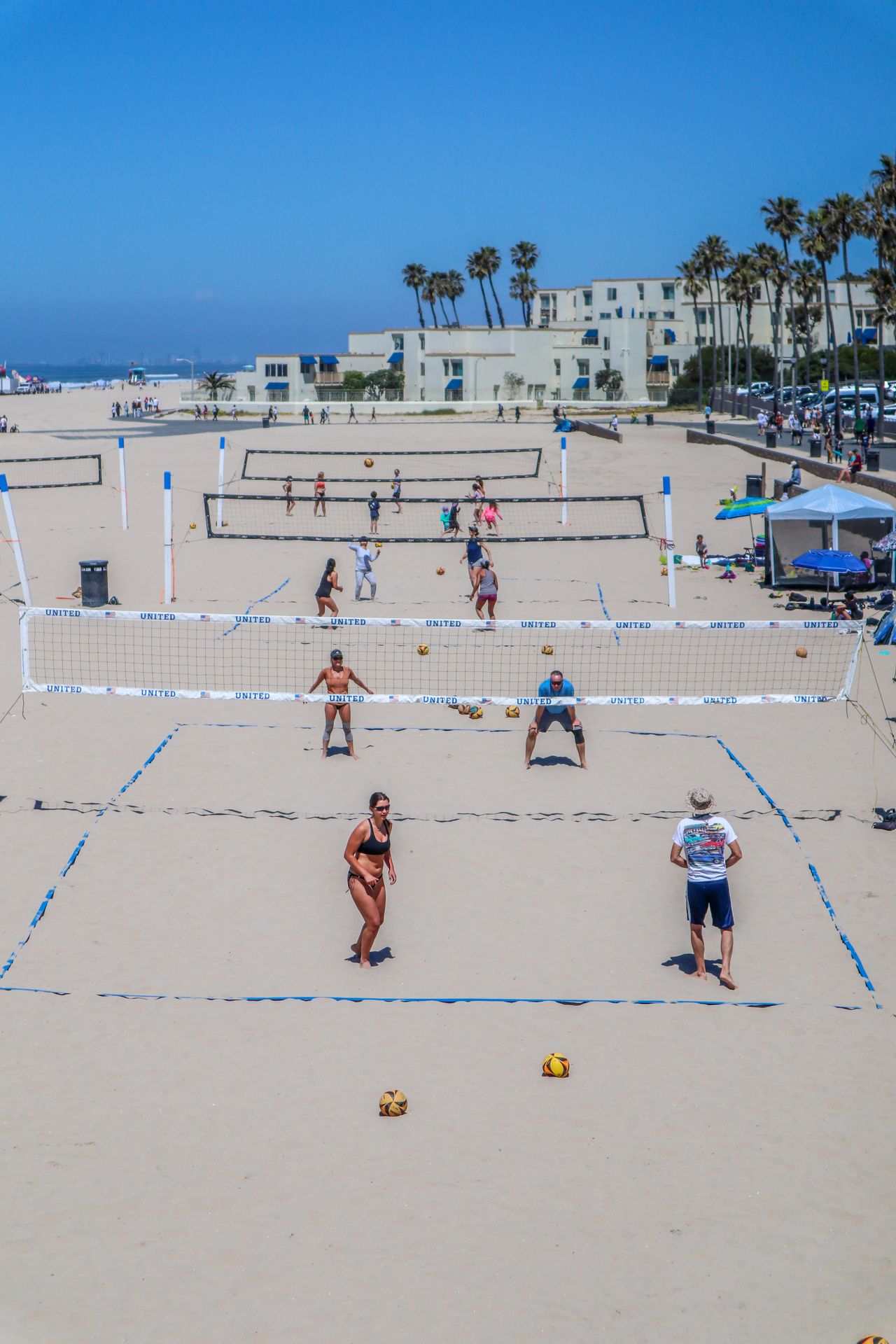
Puerto Rico is naturally suited to beach volleyball, but its beach identity has taken time to become a major competitive story. The island has the climate, coastline, and outdoor sports culture for beach volleyball, yet the indoor game historically held the deeper institutional roots. That balance has started to shift as Puerto Rican beach pairs have become more visible internationally.
The most important recent beach volleyball story has been the women’s pair of Allanis Navas and María González. FIVB noted that the pair made Puerto Rico’s first appearance at the FIVB Beach Volleyball World Championships in 2023 and pursued a historic Olympic qualification push for Paris 2024 with FIVB Volleyball Empowerment support.
That kind of progress matters because beach volleyball can give Puerto Rico another route into global relevance. Indoor volleyball requires deep rosters, specialized depth, and sustained investment across many positions. Beach volleyball is still brutally competitive, but a country can make international noise with one elite pair. For Puerto Rico, that creates a meaningful opportunity. A well-developed beach pair can carry the flag in NORCECA events, challenge for continental medals, and potentially reach the Olympic stage.
The FPV’s own coverage has reflected this growing beach emphasis, with recent federation headlines highlighting Puerto Rican beach volleyball results, including medals and repeated success by González and Navas on the NORCECA beach circuit.
Beach volleyball also complements the island’s sports image. Puerto Rico can be both an indoor volleyball country and a beach volleyball country. That hybrid identity is valuable. Indoor volleyball provides structure, leagues, and school pathways. Beach volleyball adds international pairs, outdoor visibility, and a natural connection to the island’s coastline. Together, they make Puerto Rico’s volleyball profile more complete.
Youth Development and the Next Competitive Cycle
Puerto Rico’s future depends on whether its youth development system can keep turning participation into elite players. The island has the core ingredients: federation structure, school interest, club competition, professional leagues, national-team visibility, and a volleyball culture that already values the sport. The challenge is depth. Puerto Rico can produce excellent players, but sustaining international success requires multiple athletes at each position, especially setters, middles, liberos, and opposite hitters.
The signs are not limited to senior competition. Puerto Rico has continued appearing in youth and junior volleyball events, and Volleyball World reported a Puerto Rico win over Canada at the 2025 FIVB Women’s U21 World Championship, led by Chareika Carrión González with support from Karielys Meléndez Rodríguez and Valeria Núñez Altagracia.
Those youth results are valuable because they point to the next layer of the pipeline. Senior national teams cannot live forever on one golden generation. Puerto Rico’s 2016 Olympic group gave the island a benchmark, but the next task is replacing veteran leadership with younger players who can handle international serve pressure, faster offenses, and the physical demands of modern volleyball.
For the women’s program, the road toward future Olympic qualification will likely run through NORCECA competition. Local reporting in 2026 noted that Puerto Rico’s women had begun training with an eye toward the NORCECA Pre-Olympic tournament as part of the path toward the Los Angeles 2028 cycle.
That gives the current era a clear competitive frame. Puerto Rico is not starting from scratch. It is trying to return to the Olympic level while also maintaining its standing in World Championship, Pan American, NORCECA, and regional competition. The program’s ability to develop younger scorers, stabilize first contact, and maintain setter continuity will decide how close it gets.
Why Volleyball in Puerto Rico Matters
Puerto Rico’s volleyball scene matters because it shows how a smaller island can build a layered volleyball identity. The sport is not dependent on a single team, a single beach pair, or one memorable Olympic moment. It has national teams, professional leagues, municipal rivalries, women’s volleyball tradition, men’s volleyball credibility, beach volleyball growth, and youth development.
The island’s volleyball story is also different from the dominant sports narrative often attached to Puerto Rico. Baseball, boxing, and basketball may claim much of the outside attention, but volleyball has earned a serious place in Puerto Rican sport. It has sent athletes to the Olympics, produced professional careers, created strong league brands, and built a fan culture around local clubs and national teams.
Puerto Rico’s ceiling is tied to continuity. The more the island can connect youth players to strong coaching, domestic competition, beach opportunities, professional standards, and international exposure, the more durable its volleyball success becomes. The challenge is not passion. Puerto Rico has that. The challenge is building enough depth to compete consistently with bigger volleyball systems.
That is why Puerto Rico remains one of the most interesting volleyball locations in the Americas. It is a true hybrid: indoor-first by tradition, professional by structure, international by ambition, and increasingly relevant on the beach. Its best volleyball has always carried a clear identity: quick, emotional, technical, resilient, and proud of the island it represents.