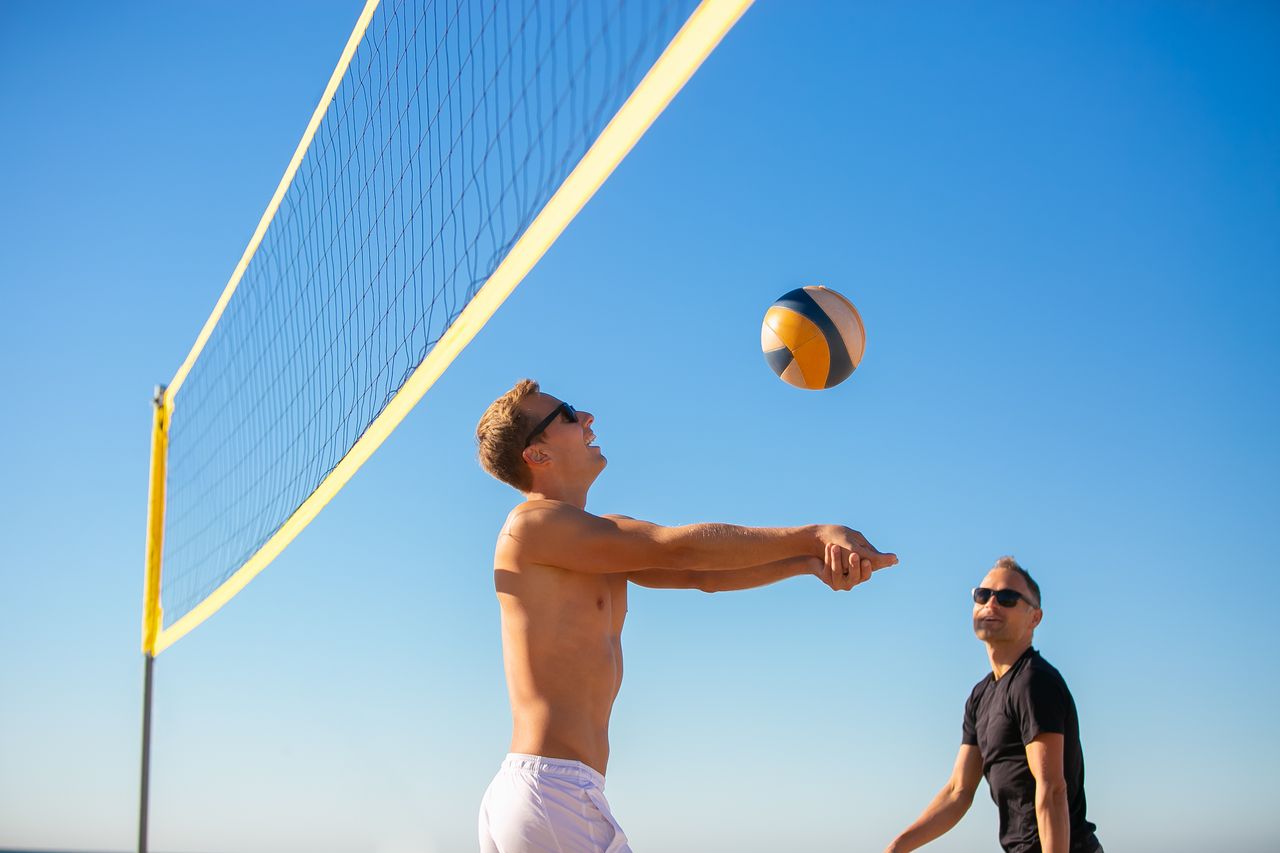
Why volleyball coaches hide weak blockers comes down to one of the sport’s least obvious truths: blocking is not just about height or jumping. It is about matchups, timing, reading the setter, closing space, and surviving the rotations where an opponent can attack a weakness. A single vulnerable blocker can change how a team serves, defends, substitutes, and lines up across the net. Coaches do not hide weak blockers because the player lacks value. They do it because volleyball is a rotation sport, and every rotation creates different exposure. Good coaching protects the weakness while keeping the player’s passing, serving, attacking, or leadership on the floor.
Rotations Create Matchups Coaches Cannot Ignore
Volleyball is unusual because players do not stay in one fixed tactical role for the entire match. They rotate through the court, and those rotations decide which blockers line up against which attackers. A strong outside hitter may be manageable in one rotation and a major problem in another if the opposing blocker is late, undersized, or unable to seal the line.
That is why coaches study matchups so closely. They are not only asking which team has the best hitters. They are asking when those hitters are front row, who is across from them, and whether the blocker can take away enough space for the defense behind them to work.
A weak blocker can create pressure in several ways. If they fail to close the block, attackers can hit through seams. If they drift too far inside, line shots open. If they jump late, quick sets become difficult to slow down. If they guess instead of reading, the setter can move the ball around them. At higher levels, those small gaps are enough to turn one rotation into a repeated scoring run.
This is why a coach may adjust a lineup even when the player being protected is strong in other areas. A libero may stabilize passing. An outside hitter may be vital in serve receive. A setter may run the offense well but struggle as a front-row blocker. The challenge is not whether that player belongs on the court. The challenge is how to limit the damage when the opponent tries to attack that matchup.
Why Volleyball Coaches Hide Weak Blockers With Serving, Subs, and Defensive Shape
Why volleyball coaches hide weak blockers is best understood through the adjustments around the blocker, not just the blocker’s individual technique. Coaches rarely solve the issue with one move. They layer several choices together.
One method is serving strategy. If the opponent has a dangerous middle attacker, the serving team may target passers in a way that pulls the setter away from the net. A weaker pass limits quick offense and makes it harder for the opponent to isolate the weak blocker. In that case, the serve is not just a way to start the rally. It is the first move in protecting a vulnerable front-row matchup.
Another method is substitution. In some systems, coaches use a defensive specialist, serving sub, or front-row replacement to limit how long a weaker blocker has to handle a difficult rotation. This is especially common when a team has a player who is valuable in the back row but vulnerable at the net. The goal is to keep the player’s strengths while reducing the number of times the opponent can attack their weakness.
Defensive positioning also matters. If a coach knows a blocker is unlikely to take away a hard cross-court swing, the back-row defense may shift to cover that angle. If the blocker can at least take line, the defense can load toward cross. If the blocker cannot reliably close the seam, middle-back or left-back defenders may shade into the open space. The block and floor defense must work together; a weak block becomes much more damaging when the defense behind it is positioned as if the block were strong.
Coaches may also hide a weak blocker by changing blocking assignments. Against certain hitters, the team may commit less aggressively with that player and rely more on controlled touches, soft blocks, or funneling the ball toward defenders. The blocker does not have to stuff every attack. Sometimes the job is simply to touch enough balls, slow enough swings, and keep the rally playable.
The Best Teams Protect Weakness Without Losing Their System
Every volleyball team has matchup problems. Even elite teams have rotations they would rather move through quickly. The difference is that good teams know how to protect a weakness without letting the entire system bend around it.
That starts with honest lineup construction. A coach has to know what each player can and cannot handle. A weaker blocker might still be essential because they are the best passer, most reliable server, smartest attacker, or most consistent setter. Volleyball rewards complete team balance, not just six players who all block well.
It also requires trust. The protected player still has a job to do. They need disciplined hand positioning, clean footwork, and smart decision-making. They may not dominate at the net, but they can still be useful if they take away the correct space and avoid making the defense guess. Hiding a weak blocker does not mean removing responsibility. It means giving that player a more realistic task inside the team structure.
The legacy of this idea shows up in how modern volleyball is coached. Matchups are planned before the match. Serving zones are tied to blocking assignments. Substitutions are used to manage rotations. Defenses are shaped around what the block can actually take away. The result is a sport where a single weakness does not have to decide the match if the coach can manage it intelligently.
Volleyball coaches hide weak blockers because the net is where matchups become visible. A vulnerable blocker can be targeted quickly, but smart rotation planning, serving pressure, substitutions, and defensive support can protect the team. The best coaches do not pretend every player has the same strengths. They build systems that let each player survive their hardest rotation and still help the team win.