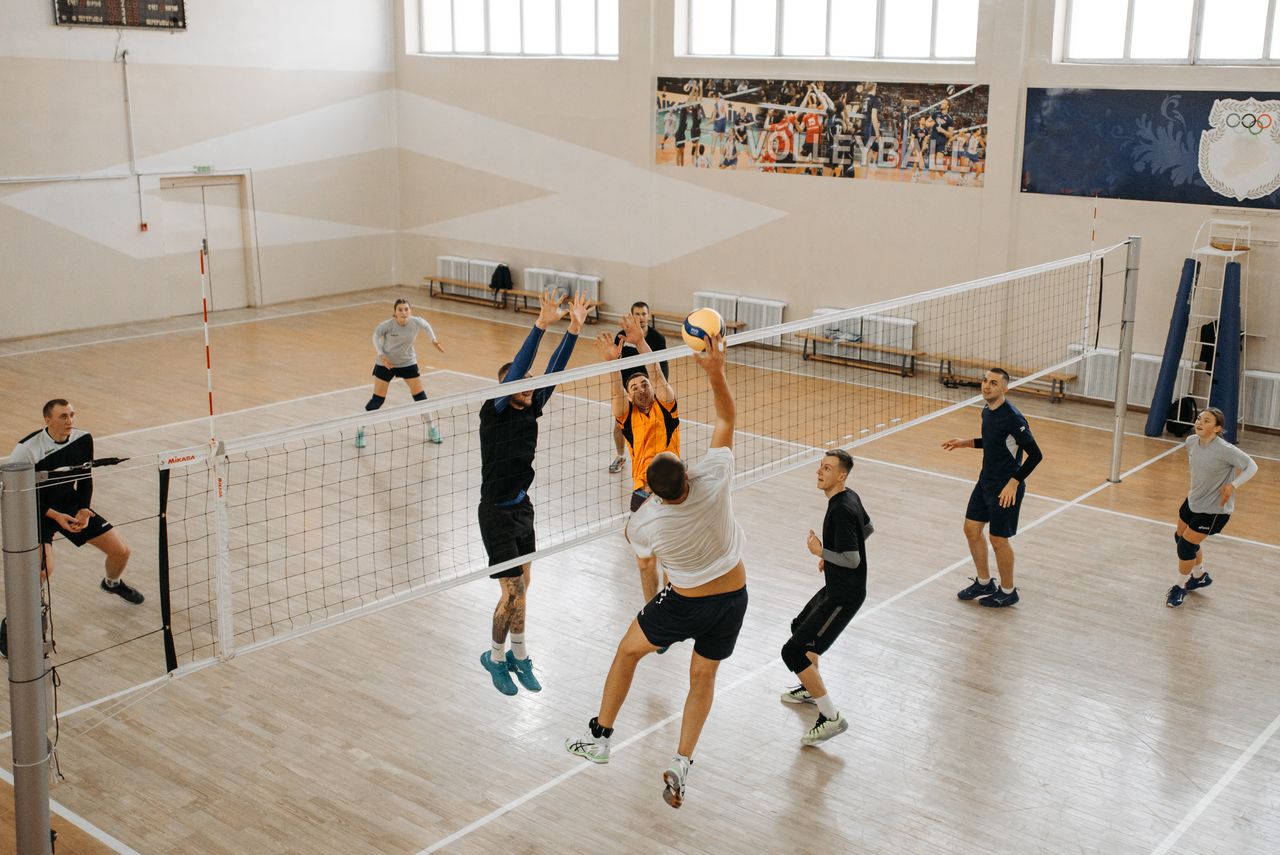
Zurich’s volleyball identity is unusual. It is not the largest volleyball market in Europe, and Switzerland is not usually placed in the same category as Italy, Poland, Turkey, Serbia, or Russia when discussing the continent’s deepest volleyball powers. Yet Zurich has carried a club volleyball reputation that reached far beyond the size of the Swiss league. That reputation is tied above all to Volero Zürich, a club whose women’s team became one of the defining forces in Swiss volleyball and a recognizable name in European and world club competition.
Volero’s history gives Zurich a volleyball profile with real weight. The club traces its roots to 1973, with early men’s success that included a Swiss national championship in 1977 and Swiss Cup titles in 1975 and 1978. The women’s side later became the club’s international calling card, especially after the professionalization of the elite women’s team in 2003.
That makes Zurich a hybrid volleyball city: part historic Swiss club center, part elite women’s volleyball project, part urban development market, and part example of how a club can outgrow the competitive limits of its domestic league.
The Volero Era
Volero Zürich’s women’s team reshaped how Zurich was seen in volleyball circles. The club dominated Swiss domestic competition for more than a decade, winning league and cup titles repeatedly and becoming a regular participant in CEV competitions. Its domestic strength allowed Zurich to appear in the CEV Women’s Champions League and the FIVB Women’s Club World Championship, with third-place finishes at the Club World Championship in 2015 and 2017.
Those results mattered because they placed Zurich in matches against clubs from deeper, more volleyball-intensive countries. Swiss volleyball could not match the week-to-week domestic strength of Turkey, Italy, Russia, or Brazil, but Volero could recruit, organize, and compete at a level that made Zurich visible. The club became a destination for international players and coaches, giving the city a volleyball identity that was more cosmopolitan than purely local.
At its peak, Volero was not only a Swiss champion. It was a project designed to test the boundary between Swiss volleyball and the elite club game. That ambition made Zurich more important to international volleyball than a casual glance at the Swiss league table might suggest.
Domestic Dominance and the Problem of Scale
Volero’s success also revealed the central tension in Zurich volleyball: how does a club with elite ambition keep growing inside a smaller domestic volleyball environment? Dominating Switzerland brought trophies, but it did not always provide the weekly resistance needed to prepare for the very best clubs in Europe. That problem eventually became part of the Volero story.
In 2018, the elite women’s team joined Entente sportive Le Cannet-Rocheville in France, forming Volero Le Cannet, while Volero Zürich kept an elite team in Switzerland that restarted lower in the system. This was not merely an administrative change. It showed the strategic reality of European club volleyball. To compete at the highest level, a club sometimes needs a domestic league with greater depth, stronger media attention, and more demanding opposition.
For Zurich, that move created a before-and-after. The city’s volleyball reputation still carried the Volero name, but the original Swiss dominance era had changed. The task became rebuilding and sustaining local volleyball identity while the elite project extended into France.
A City With a Serious Indoor Volleyball Memory
Zurich volleyball is primarily indoor volleyball. The city has outdoor and recreational possibilities, but its reputation comes from the six-on-six game: professional ambition, club systems, Swiss league titles, European competition, and youth development. The style of volleyball associated with Zurich’s peak years was not casual. It was international, physical, and technical.
Volero teams featured players from multiple volleyball cultures, which gave the club a level of tactical variety uncommon in many smaller domestic leagues. International setters, opposites, middles, liberos, and outside hitters brought different systems into the same gym. That kind of roster construction can raise the standard around a club because training itself becomes more demanding. Players must adjust to speed, language, tempo, and expectations.
Zurich’s volleyball memory is therefore not only about trophies. It is about the experience of seeing Swiss volleyball connected to a broader professional world. For young players in the city, Volero’s peak offered a visible example of what high-level volleyball looked like up close.
Women’s Volleyball as Zurich’s Signature
Although Zurich has men’s and youth volleyball history, the city’s signature volleyball identity is women’s club volleyball. Volero’s women won Swiss league and cup titles repeatedly from the mid-2000s through the late 2010s, and the Swiss Women’s Volleyball League’s title history places VBC Voléro Zurich among the country’s most successful clubs.
This matters because women’s volleyball has often been the more internationally visible side of the Swiss club scene. Volero gave Zurich a place in Champions League conversations, Club World Championship results, and international player movement. The club’s rosters included major international names, and its matches placed Zurich against some of the sport’s most developed professional environments.
The women’s game also provided a model for what Swiss volleyball could be with investment. Good coaching, international recruiting, professional standards, and repeated European exposure made Zurich a more ambitious volleyball city than the size of its domestic scene alone would imply.
Youth Development and the Local Club Base
Behind the elite story, Zurich volleyball also depends on local club participation. VBC Voléro Zürich remains connected to men’s and youth teams, and the club’s own structure reflects the split between professional ambition and community development. That dual role is important. A city cannot live only on imported stars or past titles. It needs young players, coaches, referees, facilities, and local competition.
Zurich’s youth volleyball environment benefits from Switzerland’s organized club-sport culture. Players are typically formed through clubs rather than an American-style school sports system. That changes the pathway. Development depends on coaching access, age-group teams, federation structures, regional competition, and the ability of clubs to retain athletes as they move through education and work commitments.
For Zurich, the challenge is turning participation into sustained performance. Switzerland has a strong sports culture, but volleyball competes with football, skiing, ice hockey, tennis, athletics, and other club sports. The city’s volleyball future depends on whether clubs can make volleyball attractive to young athletes early enough and competitive enough to keep them.
Swiss Volleyball and Zurich’s National Role
Zurich is not the only important volleyball city in Switzerland. Basel, Neuchâtel, Düdingen, Schaffhausen, Lugano, and other locations have contributed to the national volleyball map. But Zurich’s role is distinct because Volero brought the city a level of international recognition that few Swiss clubs could match.
Swiss Volley remains the governing structure for the national game, including indoor and beach volleyball competitions. Zurich fits into that structure as both a participant and a symbol. It represents what is possible when a Swiss club builds beyond local limits. At the same time, it shows the difficulty of sustaining elite ambition in a country where volleyball is not the dominant professional sport.
This tension gives Zurich volleyball its most interesting character. The city is polished, international, and capable of supporting serious sport. But volleyball still has to fight for space inside a crowded athletic landscape. Its reputation is strong enough to matter, but not broad enough to dominate public attention.
The Future of Volleyball in Zurich
Zurich volleyball’s future will likely be measured less by recreating Volero’s peak exactly and more by building a durable post-peak identity. The old model proved that Zurich could host elite women’s volleyball, attract international players, and compete beyond Switzerland. The next model has to connect that history to youth development, sustainable club operations, and a realistic place inside Swiss and European volleyball.
There are signs of continuity. Volero returned to Swiss relevance after the elite-team relocation, including a 2022 national cup victory that marked a return to the major domestic scene. That kind of result matters because it keeps the city connected to its own volleyball memory while giving younger players a current reference point.
Zurich’s volleyball story is therefore not only about dominance. It is about ambition, scale, adaptation, and rebuilding. The city became known through a club that pushed Swiss volleyball outward. Now its task is to keep that identity alive in a more sustainable form. Zurich remains one of Switzerland’s most important volleyball names because it has already shown what the city can be when organization, investment, coaching, and international standards align.