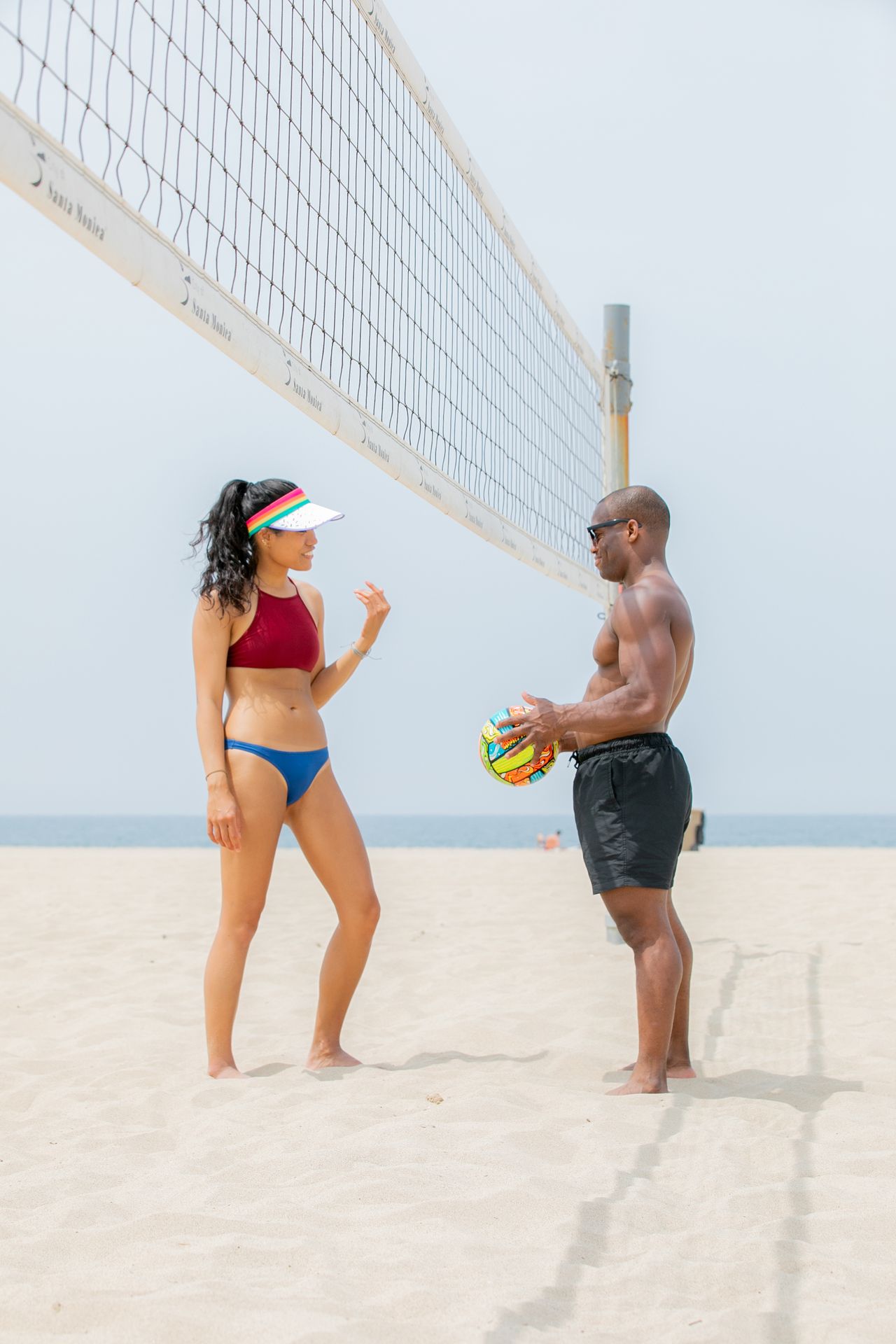
Beach volleyball partnerships are the foundation of the sport because every weakness, adjustment, and decision is shared by only two players. Indoor volleyball can spread responsibility across six positions, specialized substitutions, and a deeper tactical structure. Beach volleyball removes most of that cover. One player serves, one player receives, one player blocks, one player defends, and both must constantly read the wind, court, opponent, and each other. That makes partnership chemistry more than a soft intangible. It is the tactical core of the sport. The best beach teams are not simply two elite athletes standing on the same side of the net; they are pairs whose roles, instincts, and trust hold up under pressure.
Two Players, No Hiding Place
Beach volleyball compresses the game into its most exposed form. With only two players covering the court, every serve target matters, every defensive choice is visible, and every miscommunication leaves open sand. There is no libero to stabilize serve receive, no middle blocker to change the matchup, and no bench rotation to reset the rhythm. The partnership has to solve problems in real time.
That structure gives beach volleyball its distinctive tension. Partners must divide responsibility without becoming predictable. A blocker has to decide when to stay at the net, when to peel back, and how to signal defensive plans before the serve. The defender has to read the hitter, cover the open court, and trust that the block will take away the agreed angle. Those decisions happen quickly, often in difficult conditions, and the partnership’s success depends on both players believing the same plan at the same time.
This is why beach volleyball partnerships often have clear identities. Some pairs are built around a dominant blocker and a tireless defender. Others rely on two balanced players who can switch responsibilities more fluidly. Some teams thrive on emotional energy; others win through calm repetition. The common thread is clarity. Great teams know who they are before the rally begins.
Beach Volleyball Partnerships Are Built on Roles and Trust
The best partnerships are usually not mirror images. They are complementary. One player may be the stronger blocker, the more physical attacker, or the more intimidating presence at the net. The other may be the steadier passer, the sharper defender, or the player who extends rallies with control and patience. When those roles fit, the team becomes larger than two individual résumés.
Trust is especially important because beach volleyball punishes hesitation. A defender who doubts the block may drift into the wrong space. A blocker who doubts the defender may change the call too late. A passer who feels isolated may begin forcing plays instead of building points. The sport asks partners to make independent reads while still playing inside a shared system.
Communication is constant, but much of it is compact. Hand signals behind the back tell the server and defender what the block intends to take away. Short words between points reset strategy. Eye contact after errors can matter as much as technical advice. A good partnership has to absorb mistakes without letting one lost point become three. In beach volleyball, emotional recovery is part of match strategy.
That is one reason long-running teams can become so difficult to beat. Years together create a shared memory bank: how a partner responds in wind, what kind of set they prefer under pressure, when they need encouragement, and when they need space. Chemistry does not replace skill, but it allows skill to survive the most stressful moments.
Why Great Pairs Shape Beach Volleyball History
Beach volleyball history is often remembered through partnerships because the pair is the team, the system, and the story. Misty May-Treanor and Kerri Walsh Jennings became the defining example of dominance on the women’s side, combining ball control, blocking, attacking, and competitive steadiness across three Olympic gold-medal runs. Their success showed how a partnership could become a dynasty.
On the men’s side, pairings such as Sinjin Smith and Randy Stoklos, Karch Kiraly and Kent Steffes, and Phil Dalhausser and Todd Rogers helped define different eras of the sport. Each partnership carried a different shape. Some were built on physical force, some on precision, some on tactical balance, and some on the ability to manage pressure better than everyone else on the sand.
That is the lasting appeal of beach volleyball partnerships. They give the sport its human structure. Fans do not only watch serves, blocks, and digs; they watch two players negotiate responsibility in public. Every match becomes a test of skill and relationship at the same time.
Beach volleyball partnerships matter because the sport leaves so little room for separation between talent and trust. A great pair has to pass, defend, attack, adjust, and recover together. The sand exposes everything, which is why the best partnerships become the clearest expression of what beach volleyball demands.