Saint Lucia has one of the more active volleyball profiles in the Eastern Caribbean, especially in beach volleyball. The country’s volleyball identity is not simply recreational or school-based. It has a formal national association, a place within the NORCECA and ECVA structure, and recent evidence that its beach program can compete for medals at the zonal level. For a small island nation, that combination gives volleyball a clear competitive shape.
The sport in Saint Lucia sits in a crowded athletic landscape. Football, cricket, track and field, and netball all have strong cultural visibility, so volleyball has to earn its space through organization, school participation, community competition, and regional results. Its advantage is that it works well in both indoor and outdoor settings. Indoor volleyball gives the country a structured team sport with defined roles, while beach volleyball fits the island’s climate, geography, and tournament opportunities.
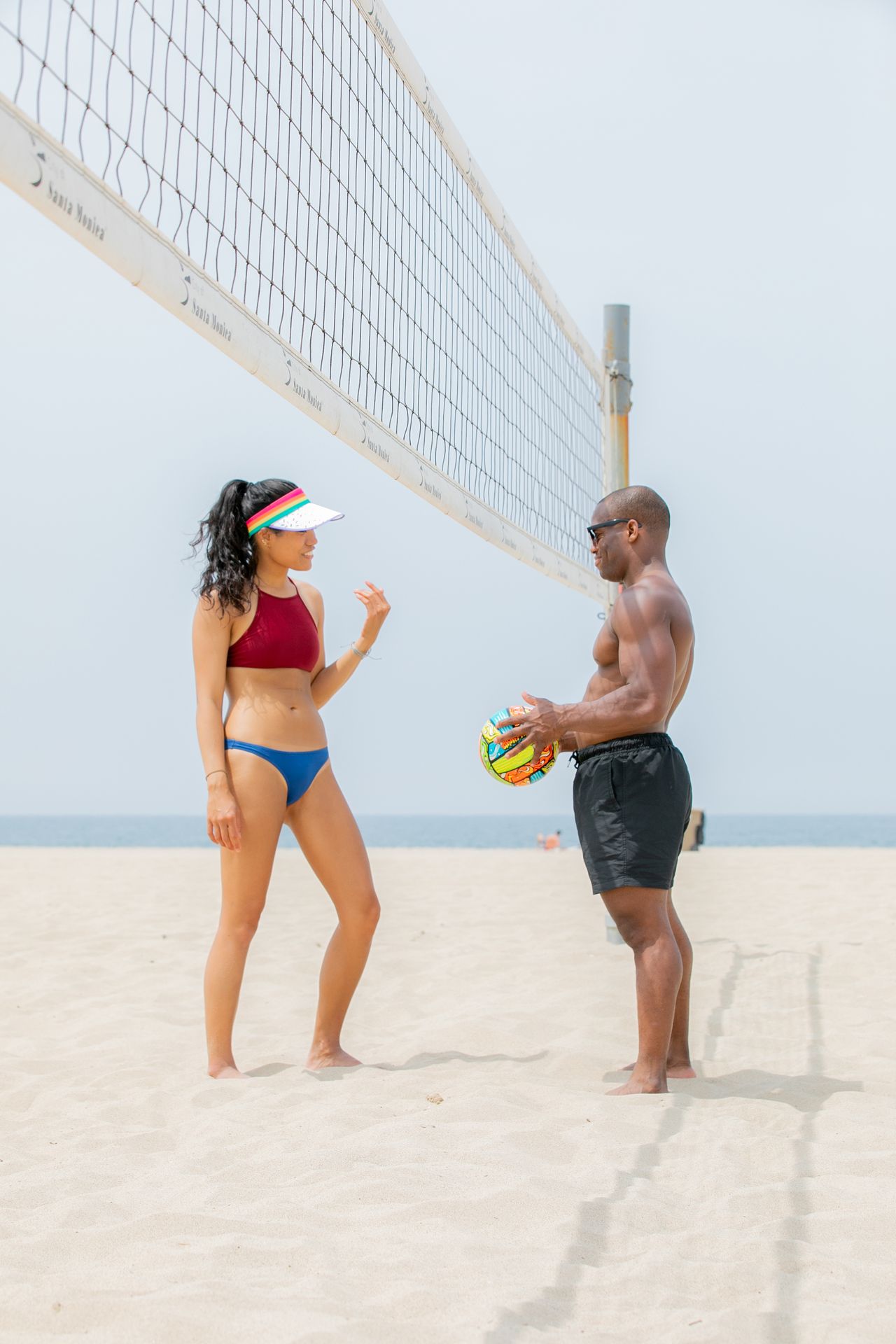
Saint Lucia’s beach volleyball profile has become especially important. Regional ECVA beach events have given the country a platform to compete at home and against neighboring islands. Success in men’s and women’s beach volleyball has helped make the sport more visible beyond casual participation. Beach volleyball also gives Saint Lucia a format where a small number of well-trained athletes can produce meaningful results. A disciplined pair with strong serve receive, defensive range, transition setting, and attacking control can become competitive quickly in the regional environment.
Indoor volleyball still matters because it supplies the technical foundation. Saint Lucian players who come through school or club-style indoor environments learn how to pass under pressure, serve zones, read hitters, and communicate in structured defensive systems. Those skills transfer directly into beach volleyball, where every touch is magnified and weak ball control is exposed immediately. The best development model for Saint Lucia is not indoor versus beach; it is indoor as the base and beach as one of the country’s clearest competitive opportunities.
The national association’s role is central. Volleyball development in a country of Saint Lucia’s size depends on coordination: training coaches, selecting national teams, staging domestic competition, connecting players to ECVA events, and keeping youth programs alive. Without that structure, volleyball risks becoming scattered across schools, beaches, and occasional tournaments. With it, the sport can create a pathway from student participation to national representation.
Saint Lucia also benefits from hosting. When a Caribbean country stages regional volleyball, it does more than provide a venue. It gives local players home-court pressure, creates visibility for younger athletes, and allows the wider sports public to see volleyball as a serious competitive product. For beach volleyball in particular, hosting can help connect tourism-friendly imagery with real athletic performance: serving strategy, blocking calls, defensive coverage, and the endurance required to win long matches in heat and wind.
The future of volleyball in Saint Lucia looks strongest if the country continues to treat beach volleyball as a medal-capable discipline while strengthening the indoor base that feeds it. More consistent youth competition, coach education, and women’s development would deepen the player pool. The country does not need to become a global volleyball power to have a strong volleyball identity. Its realistic lane is as a serious Eastern Caribbean beach volleyball nation with an indoor structure that keeps producing skilled, adaptable players.