Iran is one of Asia’s defining volleyball nations, especially on the men’s side, where the sport has grown from a strong regional game into one of the country’s most internationally visible team sports. In a national landscape where football dominates attention, volleyball has built a distinct identity of its own: technical, intense, ambitious, and strongly connected to both club tradition and national-team pride.
The heart of Iranian volleyball is indoor volleyball. Beach volleyball exists, and recreational volleyball can be found in parks, schools, and local sports halls, but Iran’s reputation has been made on the hardwood. The country’s best-known volleyball story is not about casual play or coastal sand courts. It is about national teams, packed arenas, sharp setters, heavy-serving opposite hitters, disciplined middle blockers, and the long project of turning Iran into a serious competitor against the best teams in Asia, Europe, and the Americas.
That identity gives volleyball in Iran a different shape from many other countries. In some places, volleyball is primarily a school sport. In others, it is a beach lifestyle sport or a recreational option for adults. Iran’s volleyball culture is more performance-driven. The sport is followed through national-team results, club championships, continental competitions, and the emergence of players who can compete in demanding leagues abroad. For Iranian fans, volleyball has become one of the clearest examples of a domestic sport system producing athletes who can stand on an international court without looking out of place.
The Rise of Iran as an Asian Volleyball Power
Iran’s volleyball rise is one of the most important developments in modern Asian volleyball. For much of the sport’s international history, Asian men’s volleyball was associated with countries such as Japan, South Korea, and China. Iran gradually forced itself into that conversation through improved coaching, stronger club competition, better athlete development, and a national team that learned how to play with the speed and discipline required at world level.
The country’s breakthrough was not built on one tournament or one player. It came through years of institutional investment and a shift in expectations. Iran stopped treating success in Asia as a ceiling and began using continental competition as a platform for broader international relevance. That change mattered. Once Iran became capable of beating established Asian rivals, the next question became whether it could challenge teams from volleyball’s traditional power centers: Brazil, Poland, Russia, Italy, France, Serbia, and the United States.
The answer has often been yes, especially in individual matches and major international tournaments. Iran’s men’s national team has had stretches where it could pressure elite opponents with physical serving, aggressive transition offense, and a setter-led tempo that made the attack difficult to read. The team’s best versions have combined Asian defensive discipline with a more European-style physical profile at the net. That blend helped Iran become a genuine problem for opponents who once expected Asian teams to be technically sharp but undersized.
The result is a national volleyball identity built around ambition. Iran is not merely an emerging volleyball country anymore. It is an established Asian contender with enough history, talent, and expectation that losses at continental level are treated as disappointments, not learning experiences. That is the mark of a country that has crossed into a different volleyball category.
The Men’s National Team and the Weight of Expectation
The Iranian men’s national team is the center of the country’s volleyball reputation. Its matches carry a level of attention that most domestic volleyball leagues around the world rarely receive. When Iran plays in major international competitions, the national team becomes the clearest expression of the sport’s popularity and competitive seriousness.
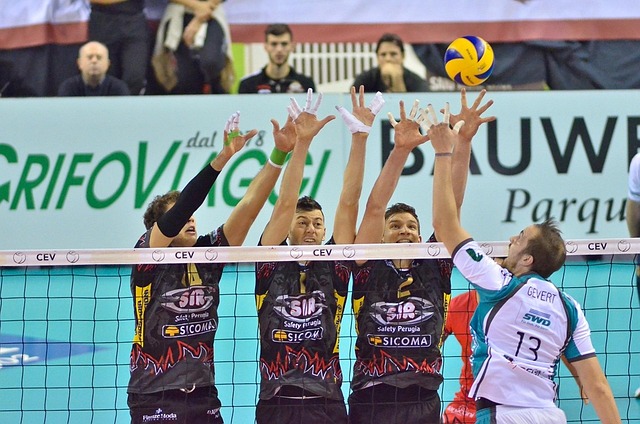
Iran’s strongest teams have been known for their emotional edge, sharp setting, and willingness to challenge more decorated opponents. The team’s style has often depended on rhythm. When the pass is stable and the setter can use the full width of the net, Iran can look fast, balanced, and difficult to block. The outside hitters are asked to carry serve receive and still score in high-pressure situations. The opposite position has usually been central to the attack, especially when Iran needs a reliable point scorer out of system. Middle blockers are important not only for quick offense but for changing the tone of a match at the net.
That tactical balance is part of why Iran has been so compelling internationally. The team is not simply a physical group trying to overpower opponents. At its best, Iran plays with a recognizable volleyball intelligence. The setter manipulates matchups. The middles force blockers to hold. The backcourt defense creates second-chance points. Serving pressure can turn sets quickly. When all of those pieces work together, Iran can play at a level that matches the country’s reputation.
The difficulty is consistency. Volleyball at the highest level punishes small lapses. A few missed serves, a poor reception rotation, or a late-set hitting error can change the entire match. Iran has had teams capable of playing excellent volleyball for long stretches, but sustaining that level across an entire international calendar is the challenge that separates strong national teams from medal favorites. That tension has become part of Iran’s volleyball story: a country with enough talent to challenge elite opponents, enough expectation to demand results, and enough volatility to make every major tournament feel consequential.
Saeid Marouf and the Player Legacy of Modern Iranian Volleyball
No discussion of modern Iranian volleyball can avoid Saeid Marouf. He became one of the defining figures of Iran’s rise, not only because of his skill as a setter but because of what he represented. Marouf gave Iran a world-class floor leader at the exact moment the national team needed one. His game was built on tempo, deception, control, and emotional command. He could make Iran’s offense look organized even under pressure, and his presence helped give the team a stronger identity in international play.
A great setter changes more than the ball. He changes how a team thinks. Marouf’s value was not just that he could deliver clean sets to the pins or run quick combinations through the middle. It was that he gave Iran a sense of tactical authority. Against elite opposition, that matters. Teams that arrive at world tournaments without a real organizer often get exposed. Iran, with Marouf directing the offense, had a player who could make the team look like it belonged in the highest-level conversation.
His influence also shaped how Iranian volleyball was perceived abroad. For international fans, Marouf became one of the faces of Iran’s emergence. He showed that Iran was not only producing height and power, but also elite decision-making and technical quality. That distinction helped change the outside view of Iranian volleyball.
Other Iranian players have also carried the country’s reputation forward. Iran has produced attackers, blockers, liberos, and opposites capable of competing in major international competitions and professional environments. The broader player legacy is important because it shows that Iran’s rise was not a one-player event. Marouf may be the symbol, but the system around him produced enough talent to keep Iran relevant beyond a single golden generation.
Club Volleyball and the Domestic Engine
Iran’s domestic club system is a major reason the national team became strong. The Iranian Volleyball Super League has long been one of the more significant club competitions in Asia, giving players a competitive environment before they reach the national team. Clubs such as Paykan Tehran, Shahrdari Urmia, Saipa Tehran, Shahdab Yazd, Foolad Sirjan, Sepahan Isfahan, and others have helped give the sport a professional structure inside the country.
Paykan Tehran holds a special place in Iranian volleyball history. The club has been one of the country’s most recognizable volleyball names, associated with domestic success and continental ambition. Its role in the sport is similar to the way major clubs in other volleyball nations become reference points: not just teams, but institutions that help shape standards.
Urmia is also central to Iran’s volleyball identity. The city is often described as one of the country’s true volleyball centers, with a passionate local following and a reputation for caring deeply about the sport. That matters because volleyball cultures are not built only in capitals. They grow in cities where the game has local meaning, where fans understand the pressure of a tight fifth set, and where young athletes can imagine volleyball as a serious pursuit.
The domestic league gives Iran something many developing volleyball countries lack: a competitive bridge between youth talent and international volleyball. Players need meaningful matches before they face national-team pressure. They need to learn how to handle scouting, blocking schemes, hostile crowds, service pressure, and the rhythm of a long season. A serious club league provides those lessons.
At the same time, Iranian club volleyball faces the same broader challenges that affect many leagues outside the wealthiest European markets. Financial stability, international player movement, coaching continuity, and media visibility all shape how far the league can go. But as a foundation for national development, the Iranian club system has been essential. It keeps the sport visible, creates rivalries, and gives players a competitive identity before they wear the national shirt.
Urmia, Tehran, and the Geography of Iranian Volleyball
Iranian volleyball has a national profile, but it also has local centers of gravity. Tehran is naturally important because of its population, institutions, clubs, and sporting infrastructure. As the capital, it has the resources and visibility to support high-level teams and federation activity. But volleyball in Iran is not only a Tehran story.
Urmia has one of the strongest volleyball identities in the country. Its reputation comes from fan passion, club culture, and the sense that volleyball has a real place in the city’s sporting life. In many volleyball countries, certain cities become known as hotbeds because the sport feels unusually concentrated there. Urmia fits that role for Iran. The game is not just played there; it is followed with seriousness.
Other cities and provinces contribute through clubs, school programs, and local competitions. Iranian volleyball benefits from this broader geography because national strength depends on more than one talent pipeline. A country that relies only on a capital city can become narrow. Iran’s volleyball map is more distributed, with multiple communities feeding the sport in different ways.
That distribution also gives the sport texture. Volleyball in Tehran may be shaped by institutions, major clubs, and national media. Volleyball in Urmia may be shaped more by local passion and club loyalty. Volleyball in other cities may develop through schools, universities, municipal clubs, or regional sports programs. Together, those layers create a fuller volleyball culture than a single-team or single-city model could provide.
Women’s Volleyball and the Development Gap
Women’s volleyball in Iran has a different profile from the men’s game. The men’s national team has achieved major international visibility, while the women’s program has been working through a longer development process. That gap is one of the defining realities of volleyball in the country.
The women’s game has shown growth, especially through regional competition and development programs, but it does not yet occupy the same space in Iran’s sports culture as the men’s national team. The challenges are structural as much as competitive. Building a strong women’s volleyball program requires coaching depth, regular high-level matches, youth participation, club investment, sports-science support, and international exposure. Those pieces take time to develop.
Still, the presence of a women’s national program matters for the broader future of Iranian volleyball. Countries with strong volleyball cultures usually become stronger when the sport is not limited to one gender. A deeper women’s structure expands the coaching base, increases participation, creates more competition, and gives the federation a wider foundation. It also allows the country to compete across more events and age groups.
Iran’s women’s volleyball development should be viewed as part of the sport’s next stage rather than as a side note. The men’s team proved that Iran can build a serious international volleyball project. The question for the women’s game is how much of that infrastructure, ambition, and technical knowledge can be extended into a more competitive long-term system.
Sitting Volleyball and Iran’s Broader Volleyball Excellence
Iran’s volleyball identity also includes sitting volleyball, where the country has been one of the world’s major powers. This matters because it broadens the meaning of volleyball in Iran beyond the indoor standing game. Sitting volleyball has brought Iran major international success and has become one of the strongest examples of the country’s excellence in Paralympic team sport.
The discipline requires speed, coordination, upper-body strength, reading ability, and sharp tactical awareness. It is not simply a modified version of volleyball in a symbolic sense; it is a demanding sport with its own rhythm and technical requirements. Iran’s success in sitting volleyball shows a deeper institutional relationship with the volleyball family of sports.
For Iranian volleyball as a whole, sitting volleyball adds another layer of international credibility. The country is not known only for one national team or one generation of players. It has built success in a discipline where sustained excellence requires coaching knowledge, player identification, and a serious competitive culture.
Beach Volleyball and Outdoor Play in Iran
Beach volleyball is not the main pillar of Iran’s volleyball identity. The country has coastline along the Persian Gulf, the Gulf of Oman, and the Caspian Sea, and outdoor volleyball can be part of recreational life in parks, schools, and local communities. But Iran’s volleyball reputation has been built overwhelmingly indoors.
That does not mean beach volleyball is irrelevant. For many countries, beach volleyball offers a useful development space because it teaches ball control, reading, serving strategy, and all-around responsibility. Players on sand cannot hide in narrow roles. They must pass, set, attack, block or defend, and make decisions constantly. Those skills can support the broader volleyball ecosystem even when beach volleyball is not the country’s primary international brand.
In Iran, however, beach volleyball sits behind the indoor game in visibility and competitive importance. A volleyball article about Brazil, the United States, Australia, or parts of the Caribbean would need to treat beach volleyball as a central pillar. For Iran, it is better understood as a secondary strand. The gyms, clubs, national-team pathway, and indoor league structure define the country’s volleyball personality much more clearly than the sand.
Tournaments, Rivalries, and the Emotional Edge of Iranian Volleyball
Iranian volleyball is shaped by high-stakes matches. Continental tournaments against Japan, China, South Korea, and other Asian rivals carry obvious importance. Matches against elite European and American opponents carry a different kind of weight because they measure Iran against the sport’s global standard.
The Asian rivalry picture is especially important. Iran’s rise changed the balance of power in the region. When Iran beats Japan or China in a major competition, it is not just a result; it is a statement about who controls the top tier of Asian volleyball. Those matches often carry a tactical contrast as well. Japan is known for speed, defense, and technical precision. China brings size and structure. Iran’s best teams have tried to combine physicality with creativity, using serving pressure and a varied offense to disrupt more established systems.
International tournaments have also given Iranian fans a reason to follow volleyball closely. The Volleyball Nations League, Asian Championships, Asian Games, Olympic qualifiers, and world-level events all place Iran in a wider conversation. For supporters, these competitions offer more than medals. They test whether Iran’s volleyball project is advancing, stalling, or resetting.
Iranian teams often play with visible emotion, and that emotional edge can be both strength and risk. Momentum can make Iran dangerous. A run of blocks, aces, and transition kills can turn a match quickly. But high emotion can also create instability if errors pile up or officiating decisions become distractions. Managing that edge is part of Iran’s competitive evolution. The best teams keep the fire without losing structure.
The Future of Volleyball in Iran
The future of volleyball in Iran depends on whether the country can turn strong tradition into sustained world-level consistency. The foundation is already there. Iran has a recognized men’s national team, a meaningful club league, passionate volleyball cities, a history of continental success, and players who have shown they can compete against major opponents.
The next step is refinement. Iran’s talent pipeline must continue producing setters who can control elite matches, outside hitters who can pass and score under pressure, opposites who can terminate against organized blocks, and middles who can influence both offense and defense. The modern international game is unforgiving. Teams need depth at every position, not just one or two stars.
Coaching continuity will also matter. Iran’s national team has benefited from high-level coaching influences over the years, and the country’s tactical growth has been tied to exposure to international systems. Maintaining that standard across senior, youth, and club volleyball is essential. A strong volleyball country cannot rely only on the senior national team. It needs age-group programs, club coaching, sports science, video analysis, and competitive junior environments that prepare players before they are asked to carry national expectations.
Women’s volleyball is another important growth area. If Iran can build a stronger women’s structure, the country’s overall volleyball culture will become deeper and more balanced. That development would not simply add another team; it would expand the sport’s reach, coaching base, and long-term institutional strength.
Iran’s volleyball identity is already secure in one sense. It is an indoor volleyball nation with a serious men’s tradition, a respected club culture, and a place among Asia’s elite. But the most interesting part of the story is that Iran’s ambitions are no longer regional. The country measures itself against the world. That is what separates a good volleyball country from a true volleyball nation.
Iran has become one of volleyball’s most important Asian stories because it changed its own expectations. It built a national team that could challenge major opponents, produced players with international recognition, developed clubs with real competitive meaning, and created fan bases that treat volleyball as a sport worthy of serious attention. The next era will determine whether Iran can move from dangerous contender to consistent world medal threat. But the identity is clear: Iranian volleyball is technical, emotional, competitive, and built around the belief that Asia’s best teams should expect to matter on the global stage.