Moldova’s volleyball identity is that of a small European volleyball country working between two realities: it is part of a highly competitive continental system, but it does not have the professional depth or national-team profile of Europe’s leading volleyball nations. That makes Moldova an emerging-to-developing volleyball country, with indoor volleyball tied to federation competition and beach volleyball becoming a visible area of growth. Its volleyball story is not built around Olympic medals or elite club dynasties. It is built around participation, European qualification cycles, domestic organization, and the challenge of competing inside one of the toughest volleyball regions in the world.
Indoor volleyball gives Moldova its formal competitive structure. The country appears in CEV competition records across men’s European Championship and World Championship qualification cycles, which places it inside the same administrative and competitive world as major European volleyball countries. Moldova’s men have been listed in CEV EuroVolley and FIVB World Championship European qualification events across multiple cycles, including EuroVolley 2011, 2015, 2017, 2019, and 2021-related competition records. That matters because even when results are difficult, regular entry into European pathways gives a federation standards to chase: better serving pressure, stronger blocking systems, deeper benches, and more players who can handle international pace.
Moldova’s volleyball geography is naturally centered around Chisinau and the country’s main sports institutions. Like many smaller European countries, the sport depends on clubs, schools, federation support, and the ability of talented players to find higher-level training environments. For Moldovan players, development often means learning the game locally and then, for the strongest athletes, seeking opportunities in stronger domestic or foreign club settings. That is common across smaller federations in Europe, where volleyball talent can exist even when the home league does not have the scale of Italy, Poland, Turkey, or France.
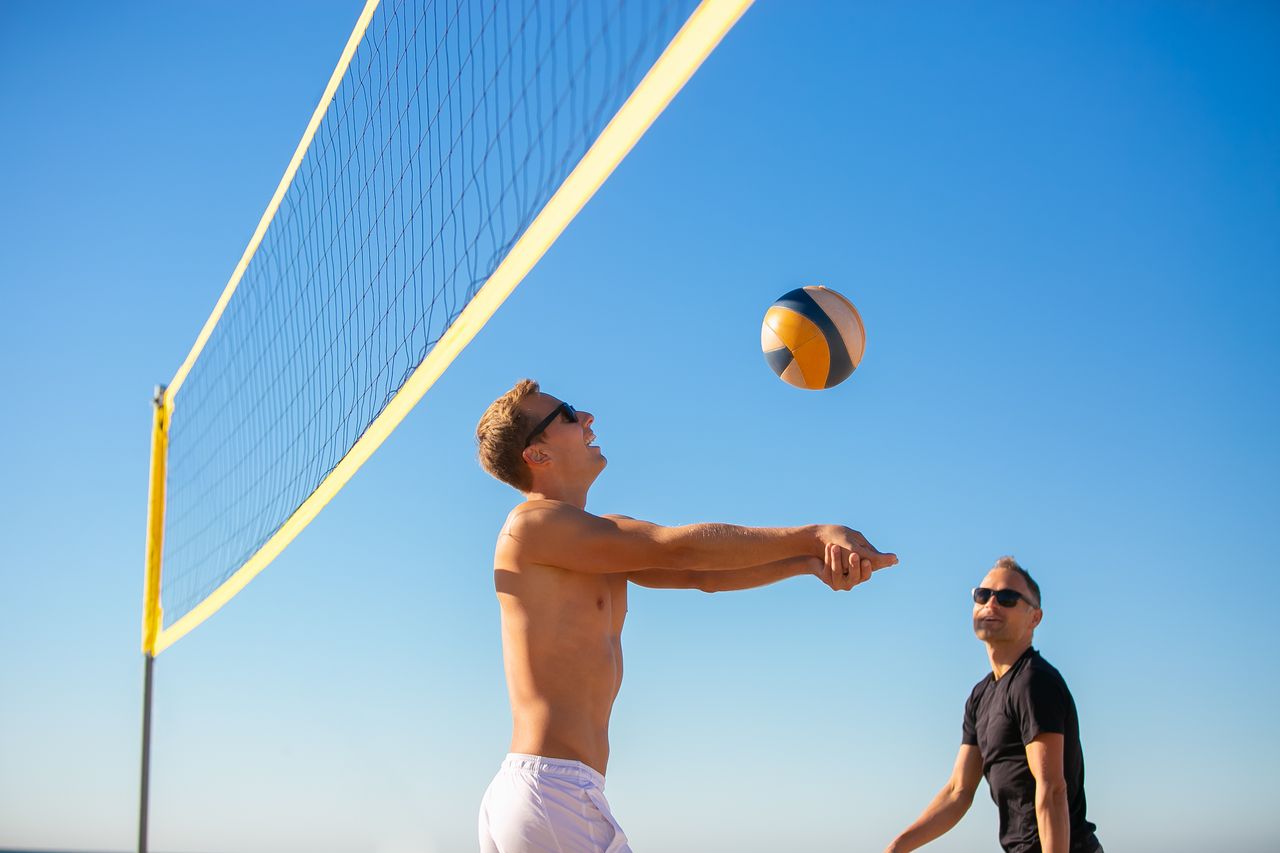
Beach volleyball has become one of Moldova’s more interesting growth areas. The country is not a beach destination in the obvious coastal sense, but modern beach volleyball is not limited to oceanfront countries. Sand courts, compact rosters, and targeted coaching can allow smaller federations to build competitive pathways without needing the same club infrastructure as indoor volleyball. Moldova hosted a 2025 CEV Beach Volley European Cup qualifying event in Chisinau, with eight participating clubs split evenly between men’s and women’s competition, and DOR winning both the men’s and women’s titles.
The FIVB’s development support also points to beach volleyball as a strategic lane for Moldova. FIVB reported that Moldova’s beach volleyball program benefited from a USD 42,000 Volleyball Empowerment grant for coach support, with Bulgarian coach Vladimir Orlov working with national teams. For a country trying to improve its international volleyball profile, that kind of targeted coaching can matter. Beach volleyball rewards technical quality, serve placement, reading, conditioning, and partnership chemistry. A smaller player pool can still become competitive if pairs train consistently and get enough regional tournament experience.
Moldova’s future in volleyball will likely depend on balance. Indoor volleyball remains the traditional national-team framework, but beach volleyball may offer faster visibility and more efficient development opportunities. The country’s best path is not to imitate Europe’s largest volleyball systems. It is to build a sharper Moldovan model: concentrated coaching, stronger youth identification, better domestic competition, and serious use of European small-federation events. In a continent where the standard is brutally high, Moldova’s progress will be measured by depth, organization, and whether more players can move from local promise into real international competitiveness.