Belgium’s volleyball identity is built less around mass spectacle than around structure, persistence, and a quietly serious competitive culture. It is not the kind of country where volleyball overwhelms the national sports conversation, but it is a country where the sport has built credible institutions, recognizable national teams, respected clubs, and a development system capable of producing players who compete across Europe.
Belgian volleyball sits in a distinctive middle ground. It is not a global giant on the scale of Brazil, Italy, Poland, Serbia, or the United States, but it is also far beyond an emerging volleyball nation. Belgium has professional and semi-professional club roots, a long-running domestic league, organized youth structures, and national teams that have created meaningful moments on the European and world stage. The women’s national team, the Yellow Tigers, gave the sport one of its defining Belgian breakthroughs with a bronze medal at the 2013 European Championship. The men’s national team, the Red Dragons, has grown into a serious international side, with results that have pushed Belgium further into the conversation among Europe’s competitive volleyball nations.
The country’s volleyball story is also shaped by geography and culture. Belgium is compact, multilingual, and regionally distinct. Volleyball exists across Flanders, Wallonia, and Brussels, but much of the sport’s club infrastructure and competitive depth has been especially visible in Flemish volleyball communities. The Belgian scene is not built around a single metropolis or one iconic beach culture. It is built around clubs, sports halls, local development, school participation, and the slow accumulation of competitive standards. That gives Belgian volleyball a practical, indoor-first character: disciplined, organized, and tied closely to the club system.
An Indoor Volleyball Country With European Aspirations
Belgium’s strongest volleyball identity is indoor volleyball. Beach volleyball exists and has its own competitive and recreational space, but the country’s main volleyball reputation has been built on six-player indoor competition: club volleyball, national leagues, youth development, and national-team campaigns.
That indoor emphasis fits Belgium’s sporting landscape. The country’s climate, facilities, and club tradition make volleyball a gym-centered sport. The core image of Belgian volleyball is not a beach court under permanent sun; it is a sports hall in Roeselare, Maaseik, Leuven, Aalst, Menen, Beveren, Charleroi, or another club community where the sport is organized around training blocks, league fixtures, tactical systems, and player progression.
Belgian volleyball is also shaped by its proximity to stronger volleyball powers. The country sits near the Netherlands, France, Germany, and other European volleyball markets, while competing in a continental environment dominated by countries with deep professional leagues and major national-team traditions. That can make Belgium’s path difficult, but it also raises the standard. Belgian players and clubs are not isolated. They measure themselves against a dense European volleyball ecosystem where a national team can quickly discover the difference between being good domestically and being good internationally.
That reality has helped produce a Belgian style that values organization. At its best, Belgian volleyball is structured around serve pressure, disciplined block-defense relationships, controlled first contact, and balanced attacking options. The country does not always have the overwhelming physical depth of the largest volleyball nations, so Belgian teams often need to win through system, scouting, and efficiency. The best Belgian sides are rarely casual; they tend to be tactical, prepared, and comfortable in the kind of point-by-point contest where a libero’s passing lane, a setter’s tempo choice, or a middle blocker’s timing can decide a match.
The Yellow Tigers and a Defining Breakthrough
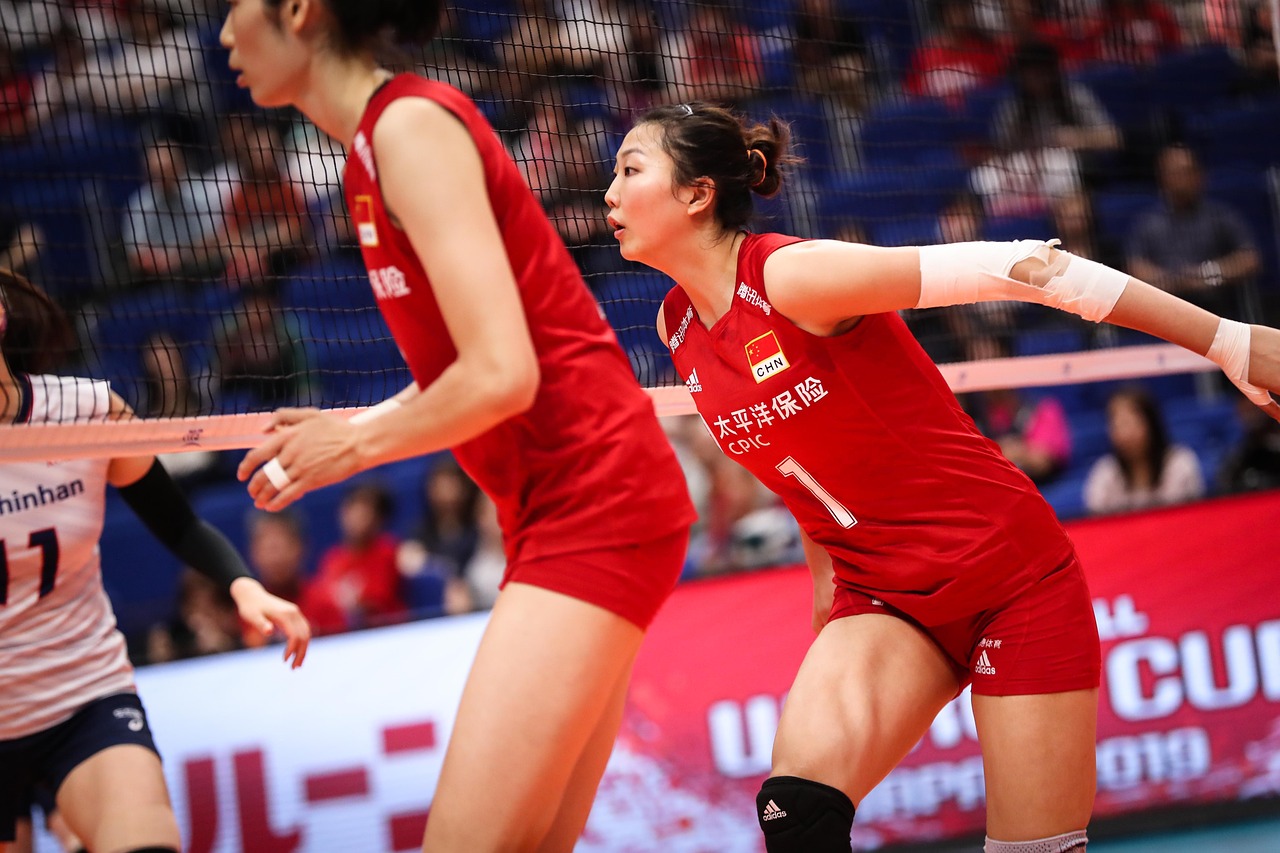
Belgium’s women’s national team has supplied one of the country’s clearest volleyball identity markers. The Yellow Tigers became a recognizable national brand through a period of rising ambition, and their bronze medal at the 2013 Women’s European Volleyball Championship remains a landmark for Belgian volleyball.
That result mattered because it gave the sport a visible moment beyond the ordinary club calendar. Belgium is a country where volleyball usually competes for attention with football, cycling, tennis, basketball, field hockey, and other sports. A European Championship podium gave the Yellow Tigers a different kind of legitimacy. It showed that Belgium could produce a team capable of beating high-level opponents in a major continental setting, and it gave younger players a national example that felt recent, concrete, and attainable.
The Yellow Tigers’ rise was not simply about one tournament. It reflected the presence of a generation of players who could perform in strong club environments, both at home and abroad. Belgian women such as Lise Van Hecke, Britt Herbots, Laura Heyrman, Ilka Van de Vyver, and others helped establish a standard for what Belgian players could become: not just domestic standouts, but professionals capable of playing in major European leagues and competing against elite national teams.
Belgium’s women’s volleyball reputation is especially important because the women’s game has often carried a strong share of the country’s international visibility. The Yellow Tigers have been able to make Belgian volleyball feel more relevant in the European conversation. Their matches against major volleyball nations have also sharpened the team’s identity. Belgium often has to play with precision because the margin against the elite is thin. Passing must hold under serve pressure. The setter has to create enough tempo to free the pins. Middles have to be available often enough to keep the opposing block honest. Defensive discipline has to extend rallies against teams with heavier arms and deeper benches.
That competitive problem has become part of Belgium’s volleyball personality. The Yellow Tigers are not usually framed as overwhelming favorites against the continent’s deepest teams, but they are credible, organized, and capable of difficult matches when their serve receive and transition game are stable. That makes them an important part of Belgium’s broader sports identity: a team that has had to earn visibility through results rather than inherited attention.
The Red Dragons and Belgium’s Men’s Volleyball Ceiling
The Belgian men’s national team, the Red Dragons, gives the country another major volleyball pillar. Men’s volleyball in Belgium has a strong club foundation, and the Red Dragons have increasingly represented the country’s ambition to be more than a respectable European participant.
The men’s game is demanding in a different way. International men’s volleyball is heavily influenced by serve velocity, block size, transition speed, and terminal attacking from the pins and opposite position. For Belgium, the challenge has been to build enough physicality and depth to survive against teams that can produce waves of elite attackers. The Red Dragons’ progress has depended on finding the right mix of size, skill, and tactical discipline.
Belgian men’s volleyball has benefited from players who have competed beyond the domestic league and brought international experience back into the national-team environment. The best Belgian men’s players have often had to prove themselves in stronger European club contexts, where training intensity and match pressure accelerate development. That pathway matters because Belgium’s domestic league is useful and historic, but the broader European market is where top players are tested against the highest tempo and physical standards.
The Red Dragons name also gives the men’s team a clear identity. It is marketable, memorable, and connected to the national color language that Belgian teams often use. More importantly, the team’s recent competitive direction has given Belgian volleyball another reason to think bigger. A men’s national team that can challenge established opponents changes how the sport is perceived internally. It gives junior boys a visible pathway. It strengthens the relationship between clubs and the national program. It also helps keep Belgium relevant in European discussions that can otherwise be dominated by the continent’s biggest volleyball countries.
For Belgium, the men’s ceiling depends on depth. A small country can produce an excellent starting lineup, but sustaining performance across long tournaments requires replacements, serving specialists, backup setters, second opposites, and young players ready to handle international pressure. That is where Belgium’s next stage of growth becomes more demanding. The Red Dragons have shown that Belgium can compete seriously. The deeper question is whether the system can keep producing enough high-level players to make those performances routine rather than exceptional.
Club Volleyball: The Backbone of the Belgian Game
Belgian volleyball is inseparable from its club structure. The domestic league gives the sport its year-round rhythm, and clubs such as Knack Roeselare and Greenyard Maaseik have been central to the country’s men’s volleyball identity. Their rivalry and consistency have helped define the standard at the top of the Belgian game.
Roeselare and Maaseik matter because they give Belgian volleyball recognizable anchors. In countries where volleyball is not the dominant sport, clubs with sustained success are essential. They create expectations, develop fan bases, attract sponsors, provide professional environments, and give young players something to chase. A strong domestic club does not only win titles; it raises the competitive temperature around the league.
Knack Roeselare has long been one of Belgium’s defining volleyball names, with a reputation tied to domestic success and European participation. Greenyard Maaseik, formerly known widely through the Noliko Maaseik era, has also been one of the country’s most important clubs, associated with title races, strong squads, and a high standard of men’s volleyball. When Belgian clubs compete in European competitions, they carry more than their own badge. They become measuring sticks for the Belgian league.
The domestic league also performs another function: it gives Belgian players a high-level home base before or between moves abroad. Not every player can or should leave early. A credible national league allows players to develop physically, tactically, and emotionally before stepping into larger European leagues. It also keeps volleyball visible in local communities. Fans may not follow every international competition, but they can know their local club, attend matches, and recognize the players who represent the sport nearby.
Women’s club volleyball has its own Belgian importance, with clubs such as Asterix AVO Beveren standing out as major names in the women’s game. Successful women’s clubs matter because they connect youth participation to elite possibility. A young player who sees a Belgian women’s club winning domestically or competing internationally has a clearer sense that volleyball can become more than a school sport or recreational activity.
The Belgian club system is not just about the top division. Beneath the best-known teams is a broader network of local clubs that introduce players to the sport, train juniors, and sustain adult participation. That base is what gives Belgian volleyball its durability. National-team moments are the most visible, but the club system is the machinery underneath.
How Belgium Produces Volleyball Players
Belgium’s development pathway is a blend of local clubs, school exposure, federation structures, and elite training opportunities. Unlike countries where volleyball is heavily centralized through a single national sports school or overwhelmingly driven by universities, Belgium’s pathway is more club-based. Players often enter the game locally, develop through age-group teams, and then move into stronger club environments as their ability becomes clear.
This type of system has advantages. It allows volleyball to reach many communities rather than being restricted to a few elite centers. It also gives players steady match experience, which matters in a sport where reading the game is as important as raw athleticism. A young outside hitter needs thousands of serve-receive repetitions. A setter needs to learn how different pass locations change the offense. A middle blocker needs to develop eye work, footwork, and timing. Those skills are built through repeated training and competition, not just occasional camps.
The challenge is that club-based systems require coaching consistency. Belgium’s ability to keep improving depends on the quality of instruction at youth level. Technical details matter early in volleyball. Passing platform habits, arm-swing mechanics, blocking footwork, serving rhythm, defensive posture, and setter hand position can shape a player’s ceiling years later. A country with a smaller player pool cannot afford to lose too many athletes to poor early development.
Belgium’s best players often become more complete when they encounter stronger competition abroad. That is common for medium-sized European volleyball countries. Domestic clubs can build the foundation, but international club volleyball exposes players to faster offenses, more physical attackers, heavier serves, and deeper tactical preparation. When those players return to the national team, they raise the standard around them.
The development question is especially important for men’s volleyball, where physical profiles can determine international viability. Belgium needs tall, explosive athletes, but it also needs them early enough to train the technical side of the sport. A powerful arm is not enough if a player cannot pass, block, or manage high-pressure swings. On the women’s side, the pathway has shown that Belgium can produce players with the skill and competitiveness to succeed internationally, but sustaining that requires constant renewal.
Beach Volleyball and the Outdoor Game
Beach volleyball is part of Belgium’s volleyball landscape, but it does not define the country in the same way indoor volleyball does. Belgium has coastline, summer events, and recreational beach participation, but it is not a beach volleyball nation in the cultural sense of Brazil, the United States, Australia, or some Mediterranean markets. The Belgian beach scene is more seasonal and more selective.
That does not make it unimportant. Beach volleyball gives Belgium another development and participation channel. It sharpens ball control, serving, defensive range, and attacking creativity. Players who spend time on sand often learn to read the game differently because there are only two players on court and no hiding from first contact. Every serve receive, set, attack, block decision, and defensive move carries weight. For indoor players, beach volleyball can build touch and resilience. For specialists, it offers a separate competitive pathway.
Belgium’s climate limits the scale of the beach game, but organized beach volleyball can still matter during the warmer months. Coastal towns, temporary courts, urban summer events, and club-linked beach programs give the sport visibility outside the gym. The beach version also has marketing value. It is visually distinct, accessible to casual spectators, and easier to connect with festivals or outdoor sports events.
Still, Belgium’s volleyball identity remains indoor-first. Beach volleyball works best in the Belgian context as a complementary branch rather than the central trunk. It can support player development, broaden recreational participation, and create summer energy, but the country’s competitive reputation continues to come primarily from indoor clubs and national teams.
Volleyball Culture in a Crowded Sports Country
Belgium is a crowded sports market. Football dominates much of the national conversation. Cycling carries historic and cultural weight. Tennis, field hockey, basketball, athletics, and other sports all compete for athletes, sponsorship, media space, and public attention. Volleyball has had to build its place within that environment rather than assume it.
That has shaped the sport’s culture. Belgian volleyball is often local before it is national. People connect to clubs, school teams, regional competitions, and national-team moments when they break through. The sport’s strongest communities tend to be built around participation and continuity: families connected to a club, coaches who stay involved for years, players who move from youth teams into senior teams, and local halls where volleyball is part of the weekly sports calendar.
The fan culture is more intimate than massive. Belgian volleyball does not usually produce the enormous arena atmosphere associated with Poland or Turkey, but it can produce knowledgeable crowds who understand the rhythms of the sport. In a volleyball hall, fans can feel the pressure of a serving run, the frustration of a broken pass, or the momentum swing created by a stuff block. The scale may be smaller, but the connection can be direct.
National-team success changes the equation. When the Yellow Tigers won European bronze in 2013, it created a surge of attention that ordinary league play rarely receives. When the Red Dragons achieve major international results, they do the same for the men’s game. Those moments matter because they remind the broader public that Belgium is capable of producing volleyball teams worth following.
The challenge is converting spikes of attention into lasting growth. Volleyball can receive a burst of visibility from a tournament result, but the long-term gains depend on youth sign-ups, coaching investment, club stability, media coverage, and facilities. Belgium has enough volleyball infrastructure to capitalize on success, but the sport still has to work for its place.
Belgium’s Place in European Volleyball
Belgium’s volleyball standing is best understood as ambitious, credible, and still chasing the next tier. It is strong enough to matter, organized enough to produce professional players, and competitive enough to challenge high-level opponents. But it operates in a European landscape where the top tier is exceptionally difficult to enter.
On the women’s side, Europe includes powerhouses with deep rosters, major leagues, and long national-team traditions. On the men’s side, the physical and tactical standard is even more unforgiving. Belgium’s progress has to be measured against that reality. Being competitive in Europe is not a minor achievement. It means facing countries with elite coaching, professional depth, and strong volleyball cultures.
Belgium’s advantage is that it does not need to invent a volleyball system from nothing. It already has clubs, national-team brands, experienced players, and a history of meaningful results. The next step is sustainability. A single golden generation can create a memory; a sustainable system creates expectations. Belgium’s task is to make international competitiveness repeatable.
That means strengthening the link between youth development and elite volleyball. It means keeping strong domestic clubs healthy. It means giving top prospects enough high-level match exposure. It means maintaining women’s volleyball momentum while continuing to raise the ceiling of the men’s program. It also means using national-team success as a recruiting tool for the next group of players.
The Future of Volleyball in Belgium
The future of Belgian volleyball depends on whether the country can turn its established structure into deeper competitive depth. The foundation is already there. Belgium has national teams with identity, clubs with history, youth pathways, experienced coaches, and enough international credibility to be taken seriously. The question is how far that foundation can stretch.
For the Yellow Tigers, the task is to keep renewing the player pool while staying competitive in a demanding European field. The bronze-medal generation gave Belgian women’s volleyball a reference point, but the program cannot live only on that memory. It needs new attackers, setters, middles, liberos, and servers who can handle the speed and physical pressure of modern international volleyball.
For the Red Dragons, the future is about confirming that Belgium belongs in the upper conversation more consistently. Men’s volleyball rewards depth and power, but Belgium’s best route is likely a combination of physical development, tactical discipline, and international club experience. If enough Belgian players continue to grow in strong professional environments, the national team can keep pushing its ceiling upward.
At club level, Belgium’s challenge is to remain relevant in a European market where money, media, and player movement often favor larger countries. Belgian clubs need to develop talent, compete domestically, and choose their European ambitions carefully. Success does not always mean becoming one of the continent’s richest leagues. It can mean being a respected development league, a difficult opponent in European competition, and a stable home for Belgian volleyball culture.
Beach volleyball can continue to grow as a complementary piece, especially through summer events and youth participation, but Belgium’s future will still be written mainly indoors. The country’s volleyball identity is rooted in sports halls, club systems, national-team campaigns, and the steady work of turning local players into European-level competitors.
Belgium is not the loudest volleyball country in Europe, but it is one of the countries that has earned a serious place in the sport through persistence and structure. Its volleyball story is not built on one single dynasty or one beach culture. It is built on the Yellow Tigers making history, the Red Dragons raising expectations, clubs like Roeselare and Maaseik setting domestic standards, women’s clubs sustaining elite pathways, and a national system trying to convert moments of success into a durable volleyball future.
That makes Belgium a hybrid volleyball country with an indoor core: competitive enough to matter internationally, grounded enough to keep developing locally, and ambitious enough to keep chasing the next level.