Czechia is not a new volleyball country trying to find a foothold. It is a historic indoor volleyball nation with a deep Czechoslovak legacy, a serious domestic club structure, a strong tradition of technical players, and one of the more interesting modern beach volleyball stories in Europe. The country’s volleyball identity is built around contrast: past world titles and Olympic medals, a later period outside the very top tier, and a current scene that is trying to reconnect elite history with modern European competition.
That makes Czech volleyball different from countries where the sport is mostly recreational or beach-driven. In Czechia, volleyball has long had institutional weight. It belongs in school gyms, club halls, regional sports centers, and federation programs. It has also produced enough international players and teams to make the country more than a secondary European volleyball market. Czechia does not have the week-to-week professional visibility of Italy, Poland, or Turkey, but it has a genuine volleyball culture and a record that gives the sport historical standing.
The strongest Czech volleyball story starts indoors. During the Czechoslovak era, the men’s national team was one of the sport’s early powers, winning world titles, European titles, and Olympic medals. That history still matters because it defines the standard Czech volleyball is measured against. Modern Czech teams are not just trying to “grow the game.” They are trying to revive a reputation that once placed the country among the most respected volleyball nations in the world.
At the same time, Czechia’s modern identity is no longer only indoor. The rise of Ondřej Perušič and David Schweiner into beach volleyball’s world elite gave the country a new international volleyball symbol. For a landlocked Central European nation, Czechia’s beach volleyball success is especially notable. It shows that the country’s volleyball base is broad enough to produce world-class talent in different versions of the sport.
The Czechoslovak Standard
The Czechoslovak men’s national team gave Czech volleyball its deepest historical foundation. In the early decades of international volleyball, Czechoslovakia was not chasing the leading countries. It was one of them. The team won world championships, collected major European medals, and built a reputation around disciplined, technically advanced indoor volleyball.
That legacy is important because volleyball in Czechia has never been purely a participation sport. It has always had an elite reference point. The older Czechoslovak teams represented a style of volleyball that fit the wider Central European sporting environment: organized, tactical, technically sound, and difficult to break down. Setters had to manage tempo. Middle blockers mattered. Floor defense and serve receive were treated as structure, not afterthoughts. The best Czech and Czechoslovak teams were not built only on height or power. They were built on volleyball education.
The Olympic record also gives Czech volleyball a permanent place in the country’s broader sporting history. Czechoslovakia’s men reached the Olympic podium in the 1960s, a period when volleyball was establishing itself as a permanent Olympic sport. Those medals remain part of the Czech volleyball inheritance. They are not simply old achievements. They help explain why the sport has institutional credibility inside the country.
The challenge for modern Czechia is that early greatness can become both an asset and a burden. The sport has a proud history, but European volleyball has become much deeper, richer, faster, and more professional. Countries such as Poland, Italy, France, Slovenia, Serbia, and Turkey have raised the level of competition. For Czechia, returning to major tournaments is not enough by itself. The bigger goal is to show that the national program can again compete with nations that now define the top end of European volleyball.
The Men’s National Team and the Long Climb Back
The modern Czech men’s national team carries the clearest “rebuild” storyline. Czechia has the name, history, and volleyball infrastructure of a serious nation, but it has had to fight its way back toward the world stage. That process has made recent progress especially meaningful. When a country with a former world-champion identity returns to major competition after a long absence, the story is not simply qualification. It is restoration.
The current men’s program is built around a mix of experienced professionals and younger players who have come through a more modern development environment. Czech volleyball has had to adapt to the demands of the current international game: bigger serving pressure, faster transition offense, more athletic wings, improved block-defense systems, and more specialized back-row play. The old Czech strengths of technique and organization still matter, but they have to be paired with terminal attacking and physicality.
Players such as Jan Hadrava have helped give the national team an experienced attacking reference point, while the emergence of younger contributors has given the team a more contemporary profile. The most important shift is that Czechia is again being discussed as a nation capable of competing inside the broader European middle tier with upward mobility. That tier is brutal. A team can be organized, talented, and well coached and still find itself behind the very top countries. But Czechia’s recent results in European competition have suggested that the program is not static.
For Czech volleyball supporters, the men’s team matters because it is the direct link to the country’s historic identity. Beach volleyball may have produced the biggest recent global breakthrough, but the men’s indoor program carries the emotional weight of the old Czechoslovak standard. Every step back into major international competition feels like a test of whether Czechia can turn tradition into current relevance.
Women’s Volleyball and the Domestic Foundation
Czech women’s volleyball has its own competitive tradition, and it has remained an important part of the country’s volleyball structure. The women’s game in Czechia is closely tied to clubs, schools, regional development, and the domestic league system. It does not always receive the same international spotlight as the men’s historic world-title legacy, but it plays a central role in keeping volleyball visible and active across the country.
The Czechoslovak women’s program had major European success in the mid-20th century, and the Czech women’s national team has continued to appear in European and world competition in the post-Czechoslovak period. The women’s side of the sport has often been shaped by the same Czech volleyball traits: technical training, disciplined team play, and a reliance on strong club systems to develop players.
Domestically, women’s volleyball has been defined by clubs such as VK Prostějov, Královo Pole Brno, SK UP Olomouc, PVK Olymp Praha, Dukla Liberec, and other programs that have given the Czech league structure continuity. Prostějov, in particular, became one of the defining names in the modern women’s Extraliga, while Brno, Olomouc, Prague, and Liberec have all helped make the women’s league more than a single-city competition.
That spread matters. Czech volleyball is not only Prague-centered. The sport has important roots in Moravia, northern Bohemia, southern Bohemia, and other regional centers. Women’s volleyball benefits from that geography because it allows talent to develop through multiple club environments rather than one dominant pipeline. A player can come through a regional club, move into a stronger domestic program, and then pursue opportunities in European leagues or national-team competition.
The women’s game also gives Czechia a steady youth-development base. Girls’ volleyball has a clear place in schools and clubs, and the path from junior volleyball into senior competition is one of the sport’s most important structural strengths. Even when the national team is not among Europe’s medal favorites, the domestic system keeps producing players with technical competence and competitive experience.
The Czech Extraliga and Club Volleyball Culture
The Czech Extraliga is the competitive engine of indoor volleyball in the country. It does not operate with the budget or international star power of Europe’s biggest leagues, but it gives Czech volleyball a serious domestic stage. It provides matches, rivalries, coaching jobs, player development, and a route into European club competition.
On the men’s side, clubs such as Jihostroj České Budějovice, VK Dukla Liberec, VK ČEZ Karlovarsko, VK Lvi Praha, Kladno, Ostrava, Brno, and Odolena Voda have helped shape the modern league. České Budějovice has been one of the country’s most recognizable volleyball names, with a long run of domestic success and European appearances. Dukla Liberec carries its own historic weight. Karlovarsko and Lvi Praha have added modern championship competition, giving the league a more current balance of power.
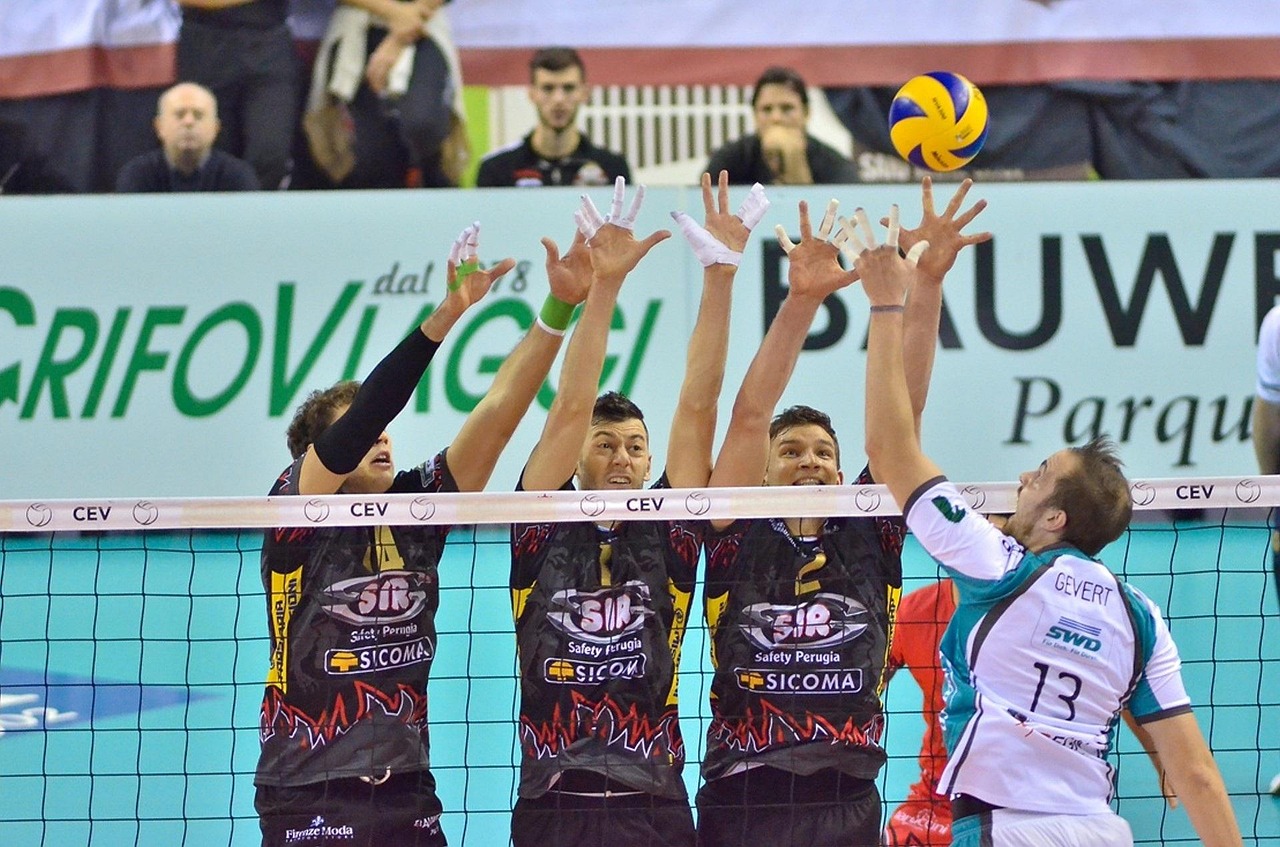
The best Czech clubs have to solve a difficult equation. They must develop domestic players, remain competitive at home, and occasionally test themselves against wealthier European opponents. In CEV competitions, Czech teams are often underdogs against the biggest clubs from Poland, Italy, Turkey, or Russia’s pre-ban era, but those matches are still valuable. They expose Czech players to higher tempo, heavier serving, more physical attackers, and deeper rosters.
The domestic league also shapes the national team. A strong Extraliga cannot guarantee international success, but a weak one makes success much harder. Czechia needs clubs that can give setters meaningful reps, liberos pressure in serve receive, young middles real blocking assignments, and outside hitters the responsibility to pass and score. The Extraliga gives the sport a competitive rhythm and keeps the national player pool active.
In women’s volleyball, the Extraliga plays the same role. It provides the bridge between youth volleyball and senior-level competition. Its leading clubs have helped define the modern Czech women’s game, while also giving younger players a place to grow before moving abroad or into national-team roles. The league’s value is not only measured by international trophies. It is measured by whether Czech volleyball continues to produce players who understand the game deeply enough to compete beyond their domestic environment.
Beach Volleyball Changed the Modern Czech Story
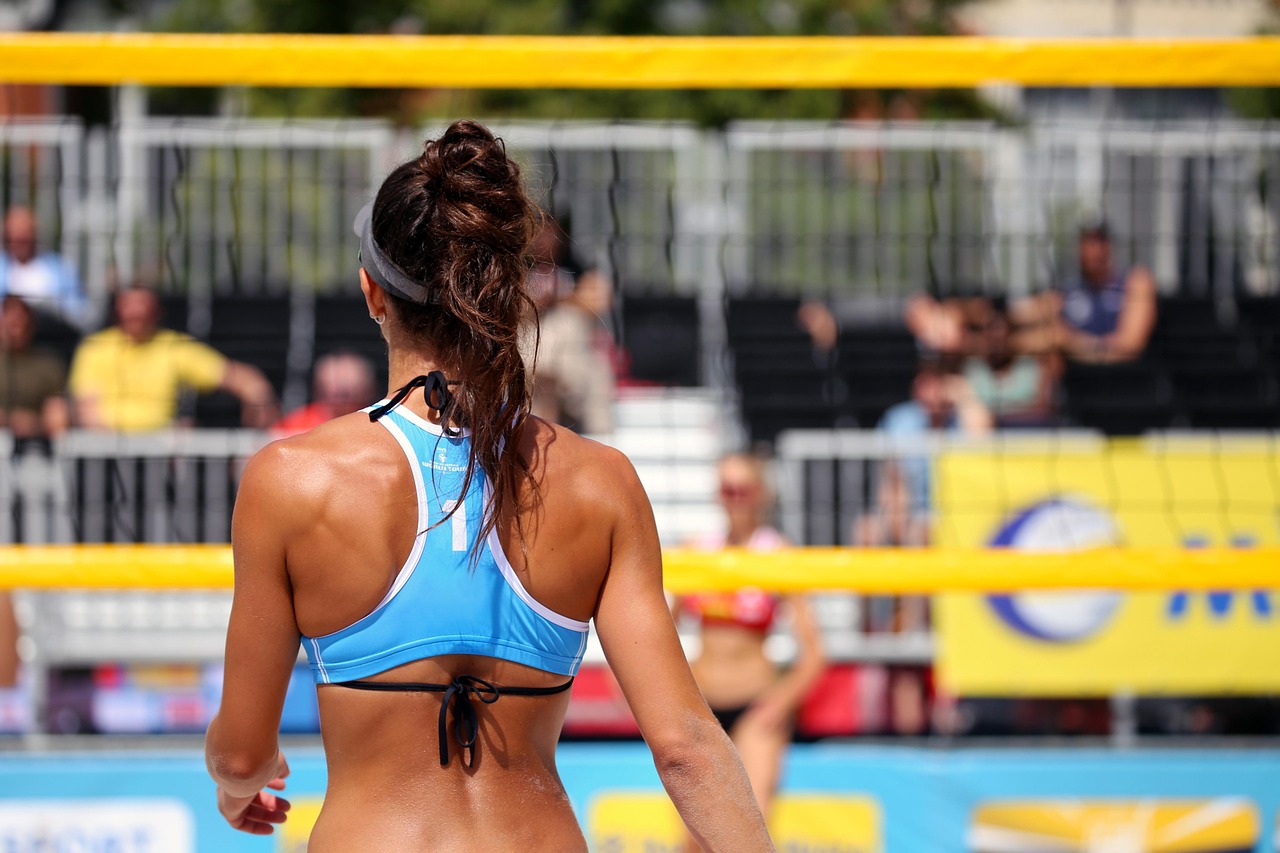
Czechia’s beach volleyball rise is one of the most distinctive parts of its modern volleyball identity. A country without a coastline becoming relevant in elite beach volleyball says something important about the depth of its volleyball culture. It also shows how indoor technical foundations can transfer to the sand when paired with specialized training, tactical chemistry, and international experience.
Ondřej Perušič and David Schweiner gave Czech beach volleyball its defining moment by winning the 2023 men’s Beach Volleyball World Championship. That title did more than add a medal to the national record. It changed the way Czech volleyball could present itself internationally. Czechia was no longer only a historic indoor country trying to rebuild. It was also home to a current world-champion beach pair.
Perušič and Schweiner’s success fits the Czech sporting profile in a very specific way. They are not simply a power pair built on overwhelming athleticism. Their game has been based on precision, patience, shot-making, reading, blocking decisions, and high-level tactical partnership. That aligns naturally with the Czech volleyball tradition. Their world title felt modern, but it did not feel disconnected from the country’s broader volleyball DNA.
Czech women’s beach volleyball also has an important international record. Markéta Sluková, Kristýna Kolocová, Barbora Hermannová, and later Czech women’s pairings helped build the country’s beach profile before the men’s world title. Sluková and Kolocová’s Olympic run in London, and Sluková’s later success with Hermannová, gave Czech beach volleyball visibility and credibility. Those performances helped establish the idea that Czechia could produce legitimate elite beach teams, not just occasional tournament surprises.
Beach volleyball in Czechia has therefore become more than a summer side branch of the indoor game. It is part of the country’s competitive identity. Indoor halls may still define most of the participation base, but the sand has given Czech volleyball some of its most visible recent international moments.
Player Development: Technical, Regional, and Club-Based
Czech volleyball development is shaped by clubs, schools, regional coaching, and the national federation structure. The country’s best volleyball players usually emerge through a layered system rather than a single dominant pathway. Young athletes begin in local clubs or school environments, move into stronger junior programs, and then progress toward senior club volleyball, national youth teams, or international opportunities.
The Czech system’s strength is technical formation. Players are generally expected to understand the game, not just execute isolated skills. Setters learn decision-making. Liberos and passers are trained to value first contact. Middles are developed around timing and blocking reads. Outside hitters are expected to handle both reception and attacking responsibility. That all fits the European club model, where players must become tactically reliable to survive.
The limitation is scale. Czechia is not as large as the biggest volleyball nations, and it does not have the same financial power as the elite European leagues. That means player development has to be efficient. The country cannot simply rely on a massive talent pool. It needs good coaching, good identification, and enough competitive matches to sharpen players before they reach senior international level.
This is where the regional structure of Czech volleyball helps. Prague matters, but it is not the whole story. Brno, Ostrava, Liberec, České Budějovice, Karlovy Vary, Olomouc, Prostějov, and other volleyball cities all contribute to the sport’s depth. That distribution gives Czech volleyball a national footprint and prevents the sport from becoming too dependent on one market.
The challenge for the next era is converting that base into more elite outcomes. Czechia has the tradition and the coaching culture. To move higher, it needs consistent physical development, stronger professional environments, more international match exposure, and a pipeline that keeps top athletes in volleyball rather than losing them to other sports.
Tournaments, Rivalries, and the Czech Volleyball Atmosphere
Czech volleyball culture is not built around massive stadium crowds every week. It is more intimate, regional, and club-centered. The atmosphere is strongest in league matches, playoff series, national-team events, youth tournaments, and beach volleyball competitions where the volleyball community gathers around teams and players it knows well.
That gives Czech volleyball a different texture from the biggest spectator markets. A match in České Budějovice, Liberec, Karlovy Vary, Brno, Prague, or Prostějov is not trying to imitate the scale of Poland’s PlusLiga or Italy’s SuperLega. It is built around local identity, club loyalty, and knowledgeable fans who understand the rhythm of the sport. Czech volleyball audiences know when a setter is controlling a match, when a libero is holding a passing pattern together, and when a serving run has changed the pressure of a set.
Rivalries in Czech volleyball often come from competitive cycles. When clubs such as Jihostroj České Budějovice, Dukla Liberec, Karlovarsko, and Lvi Praha meet deep in the men’s playoffs, the matches carry more than standings value. They become tests of which club is setting the domestic standard. On the women’s side, programs such as Prostějov, Královo Pole Brno, Olomouc, Olymp Praha, and Dukla Liberec have helped create similar layers of competition.
International events also matter because they connect Czech volleyball to its past. When the national team plays in European competition or returns to the world stage, the matches carry the memory of what Czech and Czechoslovak volleyball once represented. That is one of the sport’s defining tensions in Czechia: fans are watching the present, but the past is always in the room.
Czechia’s Place in European Volleyball
Czechia sits in an interesting part of the European volleyball map. It is not currently one of the top powers, but it is not a peripheral country. It has too much history, too much club structure, and too many credible players to be treated as an outsider. The more accurate description is that Czechia is a historic volleyball nation working to strengthen its modern ceiling.
That position makes the country important in European volleyball’s middle tier. Czech teams can be dangerous. They can produce strong individual players. They can compete in European leagues and tournaments. But the gap between dangerous and medal-contending is large. Modern European volleyball punishes inconsistency, and the strongest nations have deeper benches, more professionalized leagues, and greater international exposure.
For Czechia, the path forward is not about copying Poland or Italy. It is about maximizing its own strengths. The country has technical tradition, regional club depth, indoor history, and a beach volleyball breakthrough that can inspire younger players. If those pieces are connected well, Czech volleyball can continue to climb.
The men’s indoor program needs sustained international results. The women’s game needs continued investment in domestic development and stronger competitive pathways. Beach volleyball needs to turn world-title visibility into a broader pipeline. The Extraliga needs to remain a serious developmental league while giving top players enough reason to stay before moving abroad.
The Future of Volleyball in Czechia
The future of volleyball in Czechia depends on whether the country can turn memory into momentum. The sport’s history is powerful, but history alone does not win modern matches. Czechia’s best opportunity is to use its old reputation as a foundation while building a more athletic, professional, and internationally tested volleyball system.
The signs are encouraging. The men’s national team has shown renewed competitiveness. Czech beach volleyball has already reached the top of the world. The domestic leagues continue to provide structure. Women’s volleyball remains embedded in the club system. Youth development has enough national spread to keep the player pool alive beyond one city or region.
Czechia’s volleyball identity is therefore hybrid but coherent. It is a historic indoor nation, a serious Central European club country, and a surprisingly strong beach volleyball producer. Its story is not about discovering volleyball. It is about reclaiming and modernizing a place in the sport.
That makes Czechia one of Europe’s more compelling volleyball countries. The ceiling is not theoretical. The country has already been great before, and in beach volleyball, it has been great again recently. The next question is whether Czech volleyball can make that success feel less like a revival moment and more like a sustained era.