Oregon volleyball has a hybrid identity shaped by school gyms, university programs, junior club development, and a strong outdoor recreation culture. It is not a traditional beach volleyball state in the way California, Florida, or Hawaii are, but the sport fits naturally into Oregon’s athletic personality: competitive, skill-oriented, community-driven, and comfortable moving between indoor courts, summer grass tournaments, and recreational outdoor play. The state’s volleyball story is strongest at the school and college level, where the University of Oregon has given the state a visible national profile, while high school and club volleyball have built a steady pipeline of players across Portland, Eugene, Salem, Bend, Medford, and smaller communities throughout the Willamette Valley and beyond.
Oregon’s place in the volleyball landscape begins with the indoor game. The state has enough population density to support strong junior clubs and high school competition, but it also has enough geographic spread that volleyball remains deeply tied to local schools and regional travel. Portland-area players may grow up in a dense club environment with tournament schedules, recruiting exposure, and year-round training, while players from Central Oregon, Southern Oregon, or the coast often experience volleyball through high school programs, community clubs, and regional competition that requires more travel and planning. That mix gives Oregon volleyball a different texture from larger markets. It is competitive, but it is not purely industrial. The sport still carries a local feel, especially outside the state’s largest metro areas.
The University of Oregon has done more than any other program to shape the state’s modern volleyball reputation. Oregon’s women’s volleyball program has become a serious national name, known for athletic pins, aggressive serving, fast offensive rhythm, and the kind of Pac-12-tested competition that prepared the Ducks for the highest levels of NCAA volleyball. The program’s rise helped make Eugene more than a track, football, and basketball town in the volleyball conversation. Oregon volleyball fans have watched the Ducks become a program capable of attracting elite recruits, developing All-American caliber players, and competing deep into the national postseason. That visibility matters for the whole state because it gives young players a nearby example of what high-level college volleyball looks like.
Oregon State adds another layer to the state’s indoor identity. While Oregon has carried the brighter national spotlight in recent years, the presence of multiple Division I programs gives the state a broader college volleyball ecosystem. Oregon State represents Corvallis, the Willamette Valley, and the state’s public university athletic culture in a different way than Oregon does. The rivalry between Oregon and Oregon State gives volleyball a place within the state’s broader sports structure, and it helps keep the sport attached to the same regional loyalties that define football, basketball, baseball, and other college sports in Oregon.
Portland also plays a central role in the state’s volleyball development. The metro area is the state’s largest population center, and that density matters for club volleyball. Junior players in and around Portland have access to stronger competition, more coaching options, larger tournament environments, and more consistent exposure to college recruiting pathways. The city’s volleyball culture is not defined by a single famous beach or one professional club. It is defined by school gyms, club facilities, weekend tournaments, and a large base of families and athletes who treat volleyball as a serious year-round sport. For many Oregon players, the club season is where technical skills sharpen: serve receive, defensive reading, setting tempo, blocking footwork, transition offense, and out-of-system decision-making.
High school volleyball remains one of Oregon’s most important engines. Across the state, the fall season gives volleyball a prominent place in school sports culture. Programs in the Portland suburbs, Eugene-Springfield area, Salem-Keizer, Bend, Medford, and other competitive pockets create the backbone of the player pool. Oregon high school volleyball can vary widely by region, but the best programs are capable of producing players with strong fundamentals and legitimate college potential. Smaller schools also matter because volleyball is often one of the most visible girls’ sports in those communities. In many towns, the high school team is not just a roster; it is the main volleyball institution.
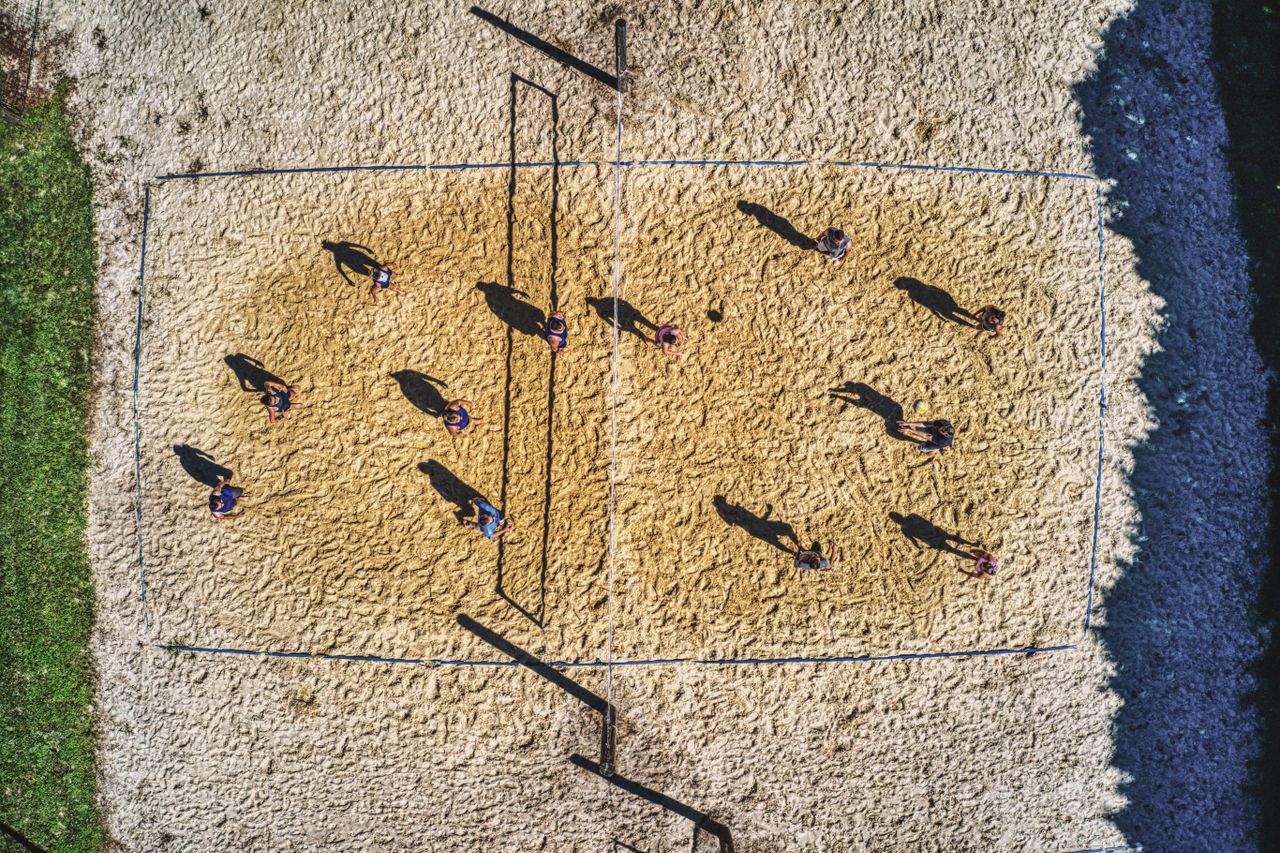
The state’s geography shapes the way players develop. Oregon does not have the endless outdoor beach calendar of Southern California, but it does have a strong outdoor culture. Grass volleyball, park volleyball, summer doubles, and recreational sand courts fit the state’s rhythm, especially during the warmer months. Outdoor play in Oregon is often less about producing Olympic-style beach specialists and more about developing all-around players. Doubles and grass volleyball force athletes to serve aggressively, read attackers, manage wind and space, pass under pressure, and become comfortable touching the ball in every phase of the game. For indoor players, that outdoor experience can build range and creativity.
Beach volleyball in Oregon exists, but it is more selective than central. The Oregon coast is beautiful, but its weather, wind, and seasonal conditions make it different from a year-round beach volleyball training environment. Portland and other cities have sand courts and recreational beach leagues, but the state’s core volleyball identity remains indoor-first. Still, outdoor volleyball has an important role in the culture. It gives adult players, college athletes, and juniors a way to keep competing outside the school and club calendar. It also fits Oregon’s broader recreational personality, where running, cycling, hiking, paddling, and outdoor sports often sit alongside traditional team athletics.
Oregon’s volleyball culture is also shaped by the Pacific Northwest. The state sits near strong volleyball markets in Washington, Idaho, Northern California, and British Columbia. Regional tournaments expose Oregon players to different styles of play and deepen the competitive pool. Portland-area clubs often look north and south for stronger competition, while college recruiting connects Oregon athletes to programs throughout the West Coast, Mountain West, Big Sky, and Northwest conferences. Oregon players who want to reach the next level usually have to be comfortable traveling, competing across state lines, and proving themselves against larger volleyball markets.
At the college level beyond the state’s flagship programs, Oregon has a range of smaller universities and colleges that help keep the sport visible. These programs matter because not every strong player follows a Power Four path. Smaller college volleyball gives Oregon athletes opportunities to continue competing while staying closer to home or finding a better academic and athletic fit. Those programs also support the coaching ecosystem. Former college players often move into club coaching, high school coaching, private training, and local volleyball administration, creating a feedback loop that strengthens the sport over time.
The state has also benefited from the national rise of women’s volleyball. As NCAA volleyball has gained more attention, better broadcasts, stronger attendance, and broader social media visibility, Oregon has had a chance to showcase its own place in the sport. The Ducks’ success has helped, but so has the wider growth of volleyball as a spectator sport. Young players in Oregon now have more access to elite volleyball than previous generations did. They can watch national semifinals, follow college players online, study international matches, and see how the modern game is played at the highest level.
The future of volleyball in Oregon looks strongest where college visibility, junior club depth, and school participation overlap. Portland will continue to drive much of the club scene. Eugene will remain important because of the University of Oregon’s national platform. Bend and Central Oregon have room to grow as the region’s population and youth sports infrastructure expand. Southern Oregon and the coast will continue to rely on committed school programs, local coaching, and regional travel to stay connected to the broader volleyball map.
Oregon is not a one-note volleyball state. It is not only a college volleyball market, not only a club market, and not only an outdoor recreation state. Its identity comes from the combination. The best version of Oregon volleyball is technical, athletic, and regionally connected, with a strong indoor foundation and an outdoor culture that gives the sport a looser, more adaptable edge. From the Ducks’ national presence to high school gyms in smaller towns, Oregon has built a volleyball scene that reflects the state itself: competitive, active, locally rooted, and increasingly visible beyond the Pacific Northwest.