The Maldives has one of the most natural beach-volleyball profiles in Asia. Its geography, island culture, resort economy, and outdoor playing environment make volleyball a logical fit, especially on sand. But Maldivian volleyball is not only a casual beach activity. The country has been working to build a more serious volleyball structure through the Volleyball Association of Maldives, national competitions, beach development, and organized resort volleyball.
That gives the Maldives a distinct identity: it is a small island volleyball country where beach volleyball has unusually strong strategic value. Indoor volleyball still matters, but the country’s clearest international growth lane is on sand.
Beach Volleyball as the National Opportunity
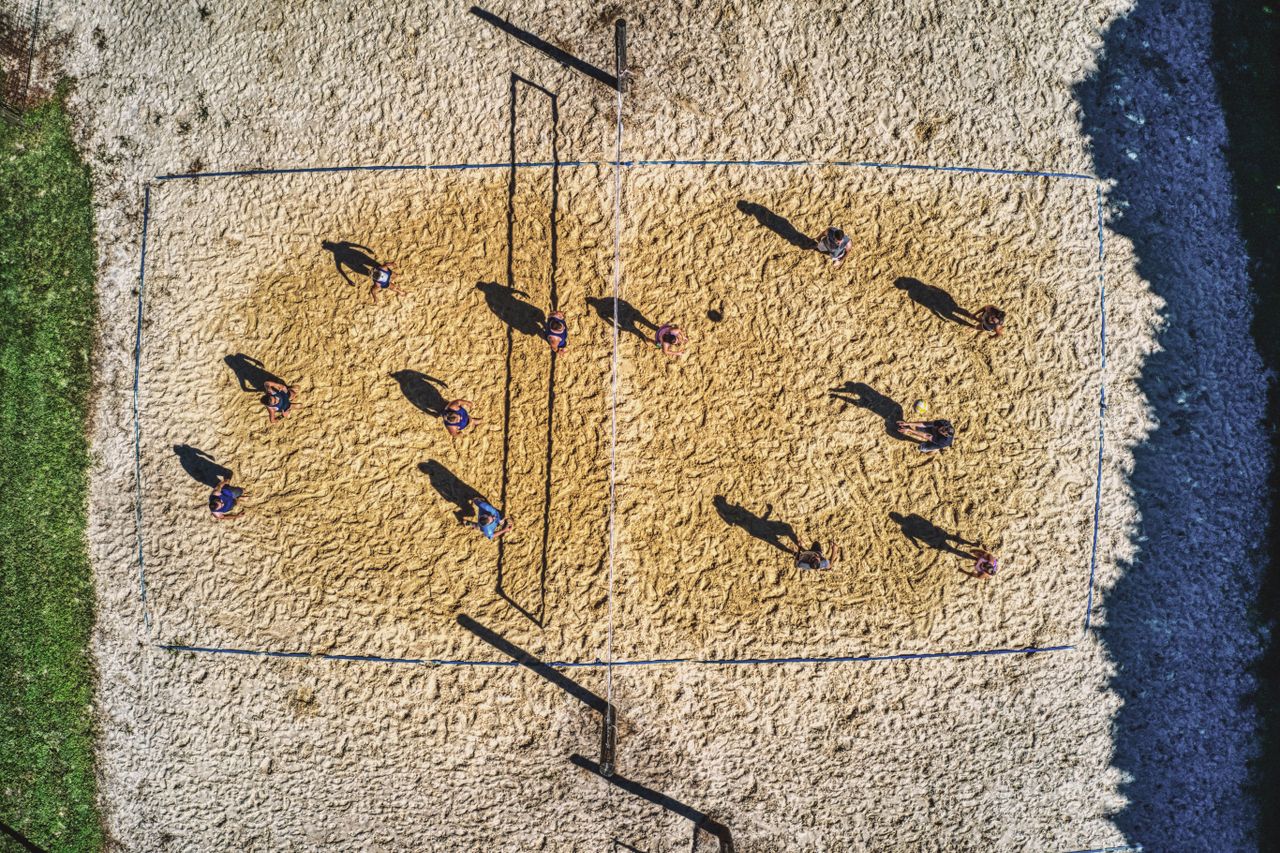
Beach volleyball suits the Maldives because the sport matches the country’s physical environment. It requires fewer players than indoor volleyball, can be staged on existing coastal spaces, and connects naturally to islands, resorts, and tourism settings. For a small country, that matters. A nation does not need hundreds of elite indoor players to become competitive in beach volleyball; it needs well-trained pairs, strong coaching, regular tournaments, and international exposure.
FIVB has directly identified beach volleyball development in the Maldives as a priority, approving a two-year Volleyball Empowerment coach-support programme to help the sport reach its potential in the country. That kind of support is especially valuable for beach volleyball, where technical coaching, defensive systems, serving strategy, and pair chemistry can raise the level quickly.
The Maldives has also invested in outdoor volleyball infrastructure. FIVB reported that the country opened 12 new outdoor volleyball courts, with additional infrastructure projects planned across the islands. For a distributed island nation, spreading courts across communities is not a minor detail. It is the difference between volleyball being centered in a few locations and volleyball becoming a sport that more islands can actually develop.
Resort Volleyball and the Domestic Scene
One of the Maldives’ most distinctive volleyball features is the connection between the sport and resort life. Resort volleyball gives the country a domestic competition model that fits its economy and geography. It can bring together workers, communities, and resort teams while keeping the sport visible in places where sand courts and outdoor recreation already exist.
The proposed Resort Volley League 2026, announced by the Volleyball Academy of Maldives, reflects that domestic identity. The league structure was planned around regional leagues leading toward a Resort Volley Championship, giving the country another organized competition layer.
That kind of competition matters because it gives players matches, not just training. Volleyball development depends on rhythm: serve under pressure, receive against better opponents, adjust to weather and wind on sand, and learn how to close sets. A resort league cannot replace national-team competition, but it can help create more volleyball habits across the country.
International Representation and Player Pathways
The Maldives’ international pathway is most promising in beach volleyball. The country has sent multiple beach pairs into Asian multi-sport competition, including men’s and women’s teams listed for Asian Beach Games participation. Those events are important because Maldivian players need exposure to stronger Asian beach programs to raise their standard.
For indoor volleyball, the pathway is more challenging. Indoor success requires deeper squads, taller and more specialized players, and more full-court training environments. Setters, middles, liberos, and outside hitters all need structured development over several years. The Maldives can still build indoor volleyball, but beach volleyball offers a more realistic international identity.
The Direction of Volleyball in the Maldives
The Maldives is one of the clearer examples of a country where volleyball strategy should follow geography. Beach volleyball should remain the country’s leading growth lane, with indoor volleyball continuing as a school, community, and domestic competition sport.
If the Maldives keeps building courts, training coaches, supporting beach pairs, and organizing domestic events, it can become a more visible Asian beach-volleyball nation. Its future is not about copying larger indoor volleyball countries. It is about using sand, islands, resorts, and compact player pathways to build a volleyball culture that fits the country.