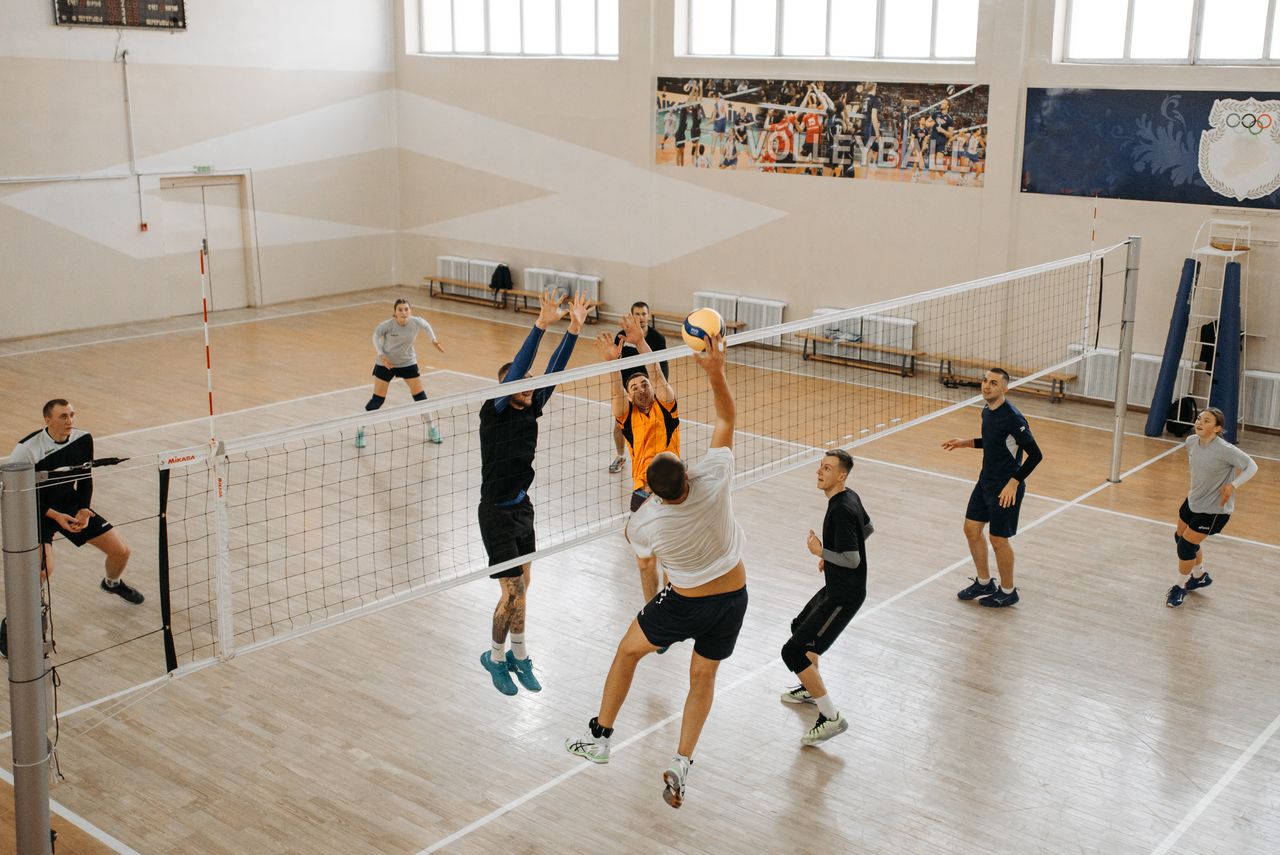
Missouri volleyball sits at the intersection of Midwestern school culture, college athletics, and a strong club pipeline anchored by the state’s largest population centers. It is not defined by one single volleyball identity. Missouri has the structure of a serious high school and college volleyball market, the participation base of a club-heavy state, and the geographic advantage of sitting between several major volleyball regions. Kansas City and St. Louis give the state urban depth, while Columbia, Springfield, Cape Girardeau, and other college towns add another layer of competition and visibility. The result is a volleyball scene that feels broad rather than narrow: girls’ high school volleyball, junior club tournaments, NCAA programs, adult indoor leagues, and pockets of beach or grass volleyball all have a place.
Missouri’s volleyball profile is strongest indoors. The sport is built around gyms, school seasons, club training, and college programs rather than a dominant beach identity. That makes it different from coastal markets, where outdoor volleyball often shapes the first impression of the sport. In Missouri, volleyball is more commonly associated with polished high school programs, club tryouts, tournament weekends, college recruiting, and packed fall schedules. The state’s best players often develop through a layered calendar: school competition in the fall, club competition through winter and spring, camps and clinics in the summer, and recruiting exposure throughout the process.
A State Built Around School Gyms and Club Competition
High school volleyball gives Missouri much of its volleyball rhythm. Across the state, the sport has a strong presence in suburban districts, private schools, smaller towns, and competitive regional programs. In metro areas, the depth of athletes and coaching creates demanding schedules and meaningful rivalries. In smaller communities, volleyball often carries the intensity of a central school sport, especially in places where gyms become the heart of local competition during the fall.
The St. Louis and Kansas City areas are especially important to Missouri’s volleyball identity. Both markets support deep junior club ecosystems, strong high school programs, and regular exposure to regional competition. These cities also connect Missouri players to neighboring volleyball states, including Illinois, Kansas, Iowa, Nebraska, Arkansas, Oklahoma, and Tennessee. That border-state geography matters. Missouri players are not isolated within one state circuit; they are often part of a broader Midwest and central U.S. volleyball network.
Club volleyball has become one of the key engines of player development in Missouri. The state’s more ambitious players typically train beyond the school season, learning more specialized systems, faster offenses, positional discipline, and tournament-style consistency. The club environment is where many athletes refine serve receive, blocking footwork, transition patterns, setter-hitter timing, and back-row defense. It is also where recruiting visibility becomes more serious, particularly for players trying to reach NCAA or NAIA programs.
College Volleyball and the State’s Competitive Ceiling
College volleyball gives Missouri a larger stage. The University of Missouri, Missouri State, Saint Louis University, Southeast Missouri State, Kansas City, Lindenwood, and a range of smaller NCAA, NAIA, and junior college programs help create a real collegiate pathway inside the state. These programs matter not only because they compete, but because they give local athletes something visible to chase. Young players can watch the speed, size, and structure of college volleyball without leaving the state.
Missouri’s college volleyball identity is also shaped by conference diversity. Programs in the state compete across different leagues and competitive levels, which gives the volleyball landscape a wider range of styles. At the highest levels, the game becomes faster and more physical, with sharper blocking schemes, deeper serving pressure, and more demanding defensive systems. At smaller colleges, the sport often retains a strong regional feel, with local recruiting relationships and familiar high school or club pipelines feeding the roster.
This college layer helps prevent Missouri volleyball from being only a youth participation story. The state has a legitimate competitive ladder. A player can begin in a school gym, sharpen through club volleyball, compete in major regional events, and continue into college without needing to relocate across the country. That does not make Missouri a national volleyball superpower in the way Nebraska, Texas, California, or Wisconsin might be discussed, but it does make the state a serious developmental market.
Style of Play and Regional Personality
Missouri volleyball tends to reflect the broader Midwest indoor game: disciplined, physical enough to compete, and built around systems more than flash. The best teams are usually organized in serve receive, intentional with setter distribution, and prepared to win long rallies. Because club volleyball is such an important part of the state’s structure, advanced players are often introduced early to rotation discipline, defensive responsibilities, and the difference between simply keeping the ball alive and creating a controlled transition chance.
Outside hitters remain central to the state’s competitive identity, as they do in most indoor volleyball markets, but Missouri programs also value complete players. The ability to pass, serve aggressively, defend, and handle out-of-system swings often separates strong athletes from reliable volleyball players. Liberos and defensive specialists carry real importance in a state where longer rallies and ball control can decide matches. Middle blockers who can close blocks and threaten quick tempo are especially valuable at the higher club and college levels.
Missouri’s geography also gives the game a layered personality. St. Louis volleyball often connects eastward into Illinois and the Great Lakes region. Kansas City volleyball connects naturally into Kansas and the Great Plains. Southwest Missouri has its own identity, tied more closely to Springfield, regional colleges, and the Ozarks. Those different pockets keep the state from feeling like a single volleyball market. Missouri is better understood as several volleyball corridors connected by school competition, club tournaments, and college recruiting.
Outdoor Volleyball as a Secondary Identity
Beach and outdoor volleyball exist in Missouri, but they do not define the state in the same way indoor volleyball does. The state has summer sand courts, park leagues, grass tournaments, and recreational outdoor play, especially around the larger metro areas. These formats matter because they keep volleyball active outside the school and club calendar. They also help players develop different instincts: reading the game, managing wind and sun, covering more court, and playing with fewer contacts of help.
Still, Missouri’s outdoor volleyball culture is more supplemental than central. It is valuable as a summer training outlet, a recreational scene, and a way for adult players to stay connected to the sport. But the state’s competitive reputation is built in indoor facilities, not on the sand. For most serious Missouri athletes, beach or grass volleyball adds versatility rather than replacing the school-club-college pathway.
The Future of Volleyball in Missouri
Missouri volleyball is positioned for steady growth because it already has the pieces that matter: participation, population centers, club infrastructure, school support, college programs, and access to regional competition. The state’s challenge is not introducing volleyball from scratch. It is continuing to raise the top end of the sport while keeping participation accessible across different communities.
The growth of boys’ volleyball could become an important part of that future. Like many states with strong girls’ volleyball infrastructure, Missouri has the gyms, coaches, and volleyball knowledge to support more boys’ participation if school sponsorship, club opportunities, and visibility continue expanding. On the girls’ side, the state already has a strong foundation, especially in areas where high school and club volleyball reinforce each other.
Missouri’s volleyball identity is ultimately one of depth and connection. It is a state where volleyball belongs in school gyms, club tournaments, college arenas, and summer parks. Its best scenes are competitive without being limited to one city or one level of play. For players, coaches, and fans, Missouri offers a volleyball culture that is serious enough to develop talent and broad enough to sustain the sport across the state.