Grenada’s volleyball identity is shaped by the Eastern Caribbean: compact, community-driven, beach-friendly, and tied to regional competition more than a large professional structure. The country does not have the scale of the Dominican Republic, Cuba, Puerto Rico, Canada, or the United States within the NORCECA region, but it has a meaningful volleyball profile because small-island volleyball rewards organization, commitment, and regional match experience. Grenada’s scene is best understood as a hybrid of indoor participation and beach volleyball opportunity, with the beach game giving the country one of its clearest competitive lanes.
Grenada sits within the Eastern Caribbean Volleyball Association structure under NORCECA. FIVB’s NORCECA listing places Grenada in the ECVA zone alongside countries and territories such as Antigua and Barbuda, Dominica, Bermuda, St. Lucia, Montserrat, St. Kitts and Nevis, and St. Vincent and the Grenadines. That regional setting is central to Grenadian volleyball because ECVA competition gives the country realistic opponents, repeated tournament exposure, and a pathway into wider NORCECA events.
The indoor game in Grenada is built less around professional volleyball and more around school participation, community clubs, national selection, and regional tournaments. Indoor volleyball requires facilities, coaching continuity, and a deep enough player pool to support position specialization. For Grenada, the challenge is not simply producing athletic players; it is developing enough setters, liberos, middle blockers, and six-rotation outside hitters to make the national-team level more stable. In smaller volleyball countries, one strong class of players can change results quickly, but long-term progress depends on keeping junior players active after school and giving the best athletes regular match play.
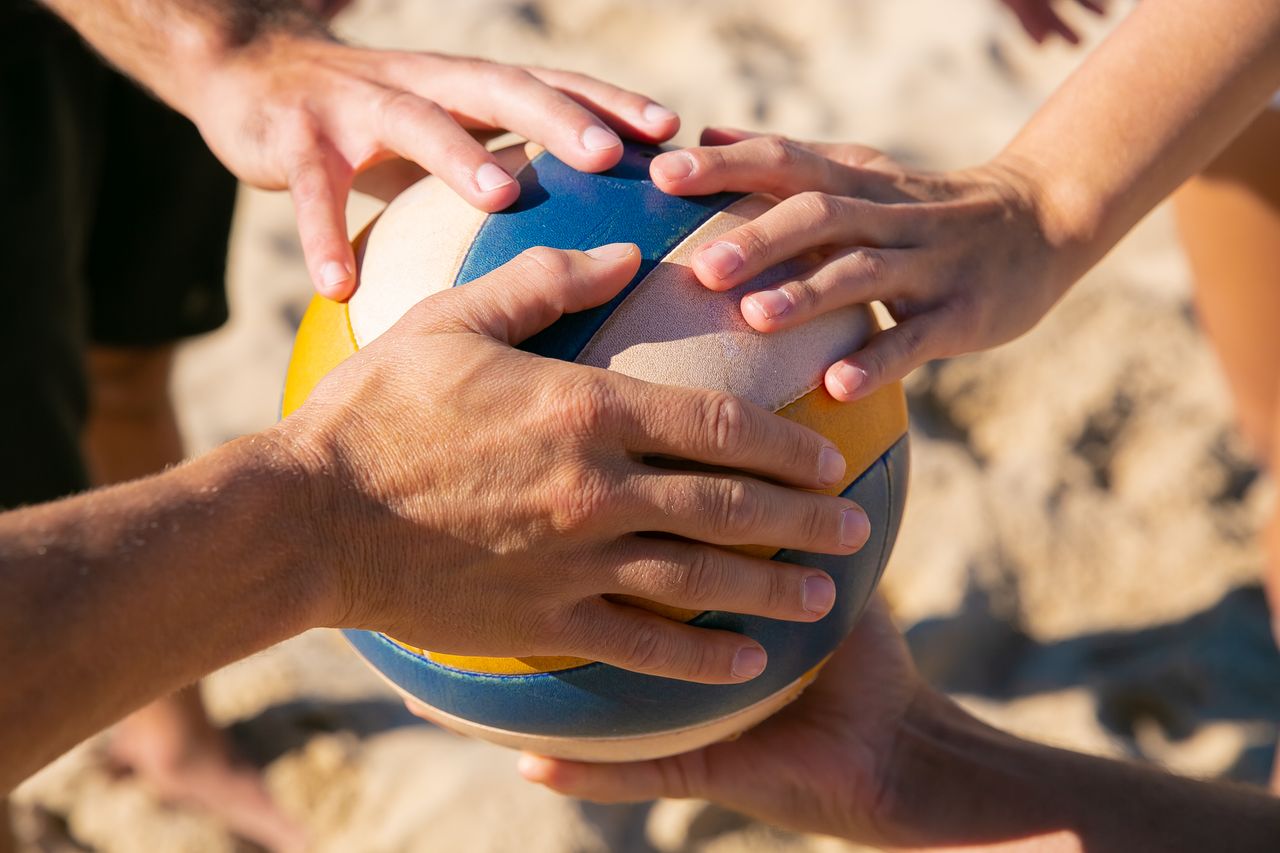
Beach volleyball gives Grenada a stronger identity marker. The country’s climate, coastline, and island sports culture make the two-player game a natural fit, and recent ECVA beach results show that Grenada can compete regionally in that format. NORCECA reported that Grenada won gold at the 2026 ECVA Senior Women’s Beach Volleyball Championship in Saint Lucia, a result that gives the country a concrete achievement in a discipline where small nations can sometimes close the gap more quickly than they can indoors.
That beach success matters because beach volleyball compresses the development problem. Indoor teams need a full roster, positional depth, reliable substitutions, and repeated six-on-six training. Beach teams need elite conditioning, ball control, serving pressure, defensive range, and partnership chemistry. For a country with a smaller athlete base, a strong beach pair can become internationally relevant faster than a full indoor program. Grenada’s best path may be to treat beach volleyball not as a side activity, but as a serious competitive discipline that can raise the country’s visibility.
The development system in Grenada depends heavily on continuity. School volleyball can introduce the sport, but clubs and national programs have to keep players in the game long enough for real technical growth. The key skills are not only jumping and attacking. Grenadian volleyball needs stable serve receive, setters who can run an offense under pressure, blockers who understand timing and spacing, and defenders who can read attackers rather than simply react. On the beach side, the priorities are even more direct: first contact, hand setting, transition swings, serving zones, and communication between partners.
Grenada’s volleyball culture has the advantage of scale. A smaller community can create quicker recognition for good players, stronger local rivalries, and a clearer connection between school competitions, clubs, and national representation. The limitation is depth. Injuries, migration, academic commitments, and inconsistent training access can affect a national pool more sharply than they would in a larger country.
The future of volleyball in Grenada is strongest if indoor and beach development reinforce each other. Indoor volleyball can broaden participation and build team culture. Beach volleyball can sharpen all-around skills and deliver regional results. Within ECVA, Grenada has a realistic competitive environment where improvement can be measured year to year. The country’s volleyball story is not about size; it is about using a focused player pool, a beach-friendly setting, and regional competition to create a distinct Eastern Caribbean volleyball identity.