Mongolia’s volleyball identity is indoor-first, historically deeper than many people might assume, and still searching for a consistent modern place in Asian competition. The country is not one of Asia’s current volleyball powers, but it has a meaningful international past and a visible national-team presence. Mongolia’s volleyball profile is shaped by gym sport, national-team cycles, Ulaanbaatar-centered development, and the challenge of competing in a confederation that includes some of the strongest and fastest-rising volleyball nations in the world.
The historical foundation matters. Mongolia’s men’s national volleyball team appeared in the FIVB World Championship in the 1960s and early 1970s, with records listing appearances in 1962, 1966, and 1970, including a best finish of 16th in 1970. That gives Mongolia a more substantial volleyball heritage than a purely emerging label would suggest. The country had a period where its men’s program was present on the world stage, even if modern qualification has become much harder as Asian and global volleyball have professionalized.
Modern Mongolian volleyball is more regional and developmental. The men’s program has appeared in Asian-level competition, including Asian Games and Asian Challenge Cup records, while the women’s side has also been part of recent AVC competition structures. The 2025 AVC Women’s Nations Cup draw placed Mongolia in Pool B with Kazakhstan, the Philippines, Iran, Indonesia, and New Zealand, showing the kind of demanding regional schedule Mongolian teams face. Those matches are difficult, but they are also essential. Mongolia’s players need exposure to faster offenses, taller blocks, stronger servers, and more organized defensive systems.
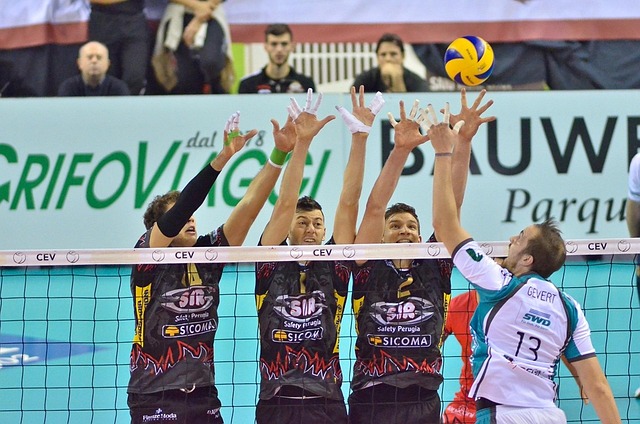
Mongolia’s indoor volleyball development depends heavily on building a stronger player pathway from schools and clubs into national-team readiness. The sport rewards height, explosiveness, timing, and coordination, but international volleyball also demands repeated high-level match experience. Setters have to run tempo under pressure. Liberos must handle aggressive serving. Middles have to close blocks quickly against faster attacks. Outside hitters need to pass and score, not just swing. For Mongolia, the challenge is turning athletic potential into a larger pool of players who are comfortable with modern Asian volleyball speed.
The women’s national-team environment is especially important because Asian women’s volleyball has become increasingly deep. Countries such as Japan, China, Thailand, Vietnam, Kazakhstan, and the Philippines all bring different styles and levels of investment. Mongolia’s participation in events such as the AVC Women’s Nations Cup gives its players a direct look at that standard. In the 2025 event, AVC reporting noted Mongolia facing strong opposition in pool play, including matches against the Philippines, Indonesia, and Iran. The results may be challenging, but those tournaments are where programs learn what must improve.
Beach volleyball is secondary in Mongolia’s volleyball identity. The country’s climate and geography do not naturally push it toward a beach-first culture, so indoor volleyball remains the more logical competitive base. Outdoor and sand volleyball can still support technical development during warmer months, especially for ball control and conditioning, but Mongolia’s serious volleyball future is likely tied to gyms, schools, clubs, and national indoor programs.
The next step for Mongolia is consistency. The country has enough history to treat volleyball seriously and enough current regional participation to build from, but it needs deeper domestic competition, stronger youth coaching, and more international match rhythm. Mongolia’s volleyball ceiling will rise if its best athletes get better technical training earlier, if clubs create more demanding competition, and if national teams continue to enter events where the speed of the game forces adaptation. The country’s volleyball story is not new; the task now is to make it more continuous.