Saudi Arabia’s volleyball identity is different from many countries in the region because the sport has both an older men’s club tradition and a newer development story tied to broader changes in Saudi sport. Indoor volleyball has been formally organized in the kingdom for decades, with a federation, domestic league, cup competitions, and established clubs. Beach volleyball and women’s volleyball, meanwhile, represent newer growth areas connected to youth development, public sports participation, and Saudi Arabia’s expanding investment in athletic infrastructure.
That combination makes Saudi volleyball a hybrid scene. It is not a global indoor powerhouse, and it does not yet have the beach volleyball reputation of a country with a long coastline culture fully built around the sand game. But it does have institutions, clubs, national teams, and a sports economy capable of pushing volleyball forward. The question is not whether volleyball exists in Saudi Arabia. It does. The more important question is whether the sport can move from organized domestic competition into stronger international relevance.
A Long-Running Indoor Volleyball Base
Saudi Arabia’s formal volleyball structure dates back to the 1960s, giving the country one of the more established administrative bases in the Gulf. The Saudi Volleyball Federation governs the sport nationally and is connected to the broader international and Asian volleyball systems. That federation structure matters because volleyball development requires more than casual participation. It needs referees, competitions, coaching standards, national teams, club calendars, youth programs, and a clear relationship between domestic play and international selection.
The men’s indoor game has historically been the center of Saudi volleyball. The Saudi league system gives the country a competitive framework, and major multi-sport clubs have helped keep volleyball visible within the domestic sports landscape. Clubs such as Al Hilal, Al Ahli, Al Ittihad, Al Nassr, and others are better known internationally for football, but in Saudi sport, multi-sport club identity matters. Volleyball benefits when major clubs support indoor teams, provide facilities, attract athletes, and create rivalries that give the league more texture.
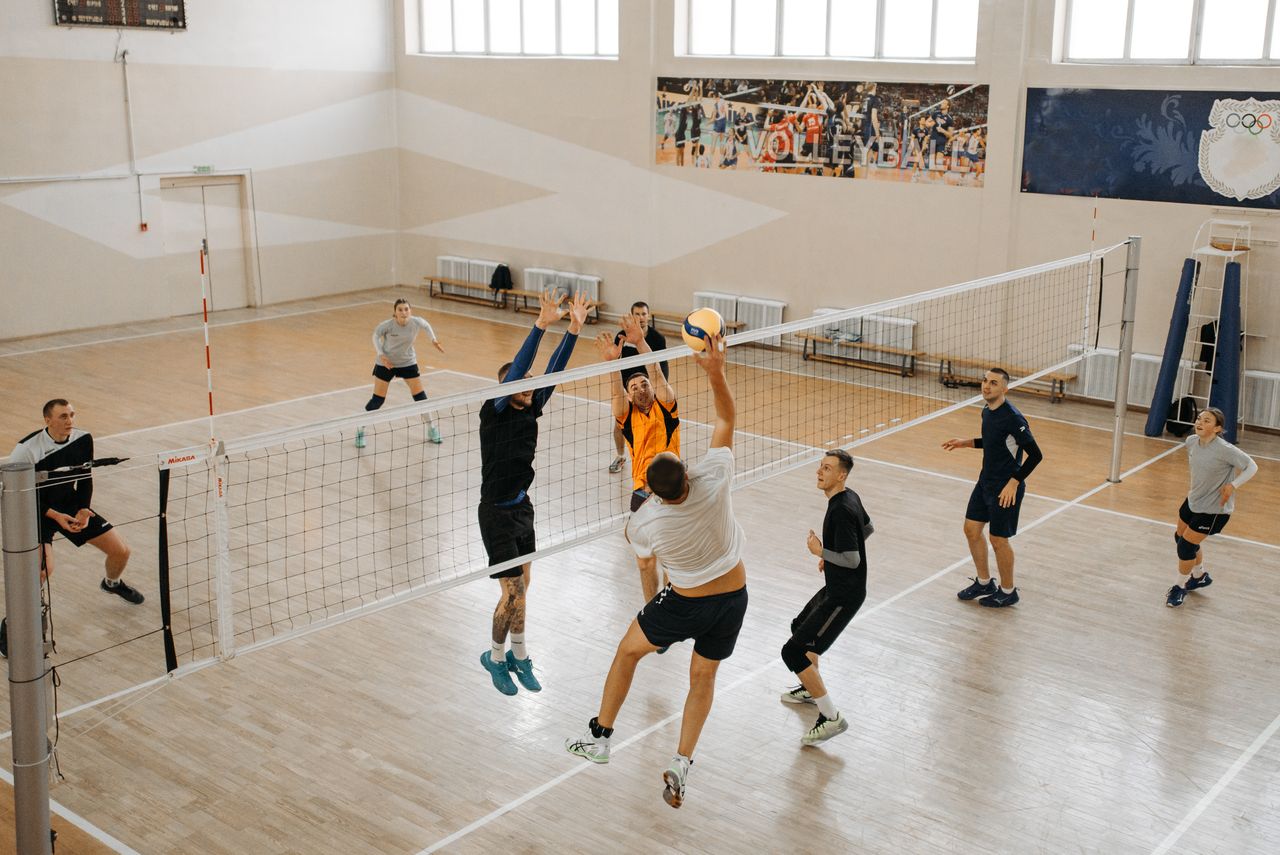
The domestic indoor game is built around the standard demands of modern volleyball: serve pressure, blocking size, setter distribution, outside-hitter efficiency, and defensive organization. For Saudi clubs to raise their regional and Asian standing, they need more than strong athletes. They need technical stability. Serve receive must hold up against stronger opponents. Middle blockers need timing and lateral speed. Setters need tempo control. Liberos need to handle heavy serving and transition defense. Those details separate a functioning domestic league from a league that can consistently produce international-level teams.
Club Volleyball and the Saudi Sports Model
Saudi volleyball’s club structure is one of its main advantages. In countries where volleyball relies only on schools or amateur associations, senior competition can be fragile. Saudi Arabia has a more durable model because volleyball sits within a larger club sports ecosystem. That does not automatically make the country elite, but it gives the sport a platform: recognizable clubs, institutional funding, facilities, and competitive calendars.
The challenge is visibility. Football dominates the Saudi sports conversation, and the kingdom’s recent international sports investment has heavily emphasized football, motorsport, boxing, golf, tennis, and major-event hosting. Volleyball must find its place inside that crowded market. The sport’s advantage is that it is relatively affordable to play, works well indoors in a hot climate, and can grow through schools, clubs, universities, and community programs. It also has strong regional relevance, with competitive opportunities in Gulf, Arab, Asian, and Islamic sports settings.
Saudi Arabia’s indoor volleyball reputation is therefore best understood as organized but still developing. It has a real league culture and established clubs, but it is not yet a country that regularly defines Asian volleyball. Nations such as Japan, Iran, China, and South Korea have deeper international reputations on the men’s side, while Thailand, Japan, China, and South Korea have been major reference points in the women’s game. Saudi Arabia’s path is to strengthen the domestic base enough that its best players face faster, more physical, and more tactical volleyball more often.
Women’s Volleyball and a New Participation Era
One of the most important changes in Saudi volleyball is the growth of women’s participation. Women’s sport in Saudi Arabia has expanded significantly in recent years, and volleyball is part of that wider shift. The development of women’s tournaments, teams, and training opportunities changes the meaning of the sport in the kingdom. Volleyball is well suited to this stage of growth because it can be introduced through schools, universities, clubs, and indoor facilities without requiring the same equipment burden as some other sports.
For women’s volleyball, the early priorities are participation, coaching, competition frequency, and visibility. A country cannot build a strong women’s national team without a broad base of girls and women playing regularly. That means school programs, club teams, university competitions, and local tournaments all matter. The technical foundation is especially important. Players need to learn serve receive, setting systems, defensive positioning, blocking footwork, and attacking mechanics early enough to develop beyond recreational play.
This is where Saudi Arabia’s broader sports investment could matter. If volleyball receives sustained support, women’s volleyball can grow quickly from a low base. The first stage is getting more players onto courts. The second is building proper competition. The third is creating elite pathways so the best players can move into national-team and regional competition. Saudi Arabia is still early in that process, but the direction is significant because it expands the country’s volleyball identity beyond the older men’s club model.
Beach Volleyball and the Kingdom’s Outdoor Potential
Saudi Arabia has the geography to make beach volleyball relevant. The kingdom has Red Sea and Arabian Gulf coastlines, major development projects connected to tourism and recreation, and a climate that can support outdoor sport during parts of the year. Beach volleyball does not yet define Saudi volleyball the way it defines Brazil, California, or parts of Australia, but it is one of the country’s most logical growth lanes.
Beach volleyball also fits Saudi Arabia’s interest in event development. The sport is visually clear, compact, and adaptable to resort, coastal, and festival settings. It can be played recreationally, but it also has a serious elite structure through Asian and international competition. For Saudi athletes, beach volleyball offers a different kind of pathway than indoor volleyball. A pair can develop quickly with the right coaching, competition exposure, and physical preparation. Ball control, serving strategy, defensive range, and conditioning matter as much as height.
The emergence of Saudi beach volleyball players in youth and international settings suggests that the discipline may become more than a side activity. For young players, beach volleyball can sharpen all-around skills because athletes must pass, set, attack, block or defend, and read the entire court. That can also feed back into the indoor game. Countries with strong beach programs often produce players with excellent touch, adaptability, and serve-receive instincts.
National-Team Ambition and Regional Competition
Saudi Arabia’s national volleyball ambitions are tied to the Gulf, Arab, Asian, and Islamic sports environments. The kingdom does not need to jump immediately into the top tier of world volleyball to make progress. A more realistic competitive ladder begins with stronger showings in Gulf and Arab competitions, improved youth national teams, more competitive club performances regionally, and deeper participation in Asian events.
The men’s national team has the advantage of a longer domestic structure. The women’s national program has the advantage of being part of a newer expansion phase, where growth can be rapid if participation increases. Beach volleyball gives both men and women another international format to pursue. Together, those tracks give Saudi Arabia multiple ways to build volleyball credibility rather than relying on one national-team result.
The key issue is player development. Saudi Arabia has facilities, clubs, and a growing sports infrastructure, but volleyball success depends on specialized coaching and repeated high-level match play. Athletes need to face strong servers, disciplined blockers, fast offenses, and organized defensive systems. Domestic competition must create that pressure. International friendlies, regional tournaments, and youth events can then expose players to different styles and speeds.
The Future of Volleyball in Saudi Arabia
Saudi Arabia’s volleyball future is likely to be shaped by three forces: the established men’s indoor league, the growth of women’s volleyball, and the opportunity to build beach volleyball around coastal and event-based development. The country already has the administrative foundation. Its next step is competitive deepening.
That means better youth pathways, more coaching education, stronger domestic match environments, and clearer elite routes for both men and women. It also means giving volleyball enough visibility to stand inside a sports market increasingly filled with major international events. Volleyball may not be the kingdom’s headline sport, but it has practical advantages: it works indoors, suits schools and clubs, can be played by men and women, and offers both team and beach formats.
Saudi Arabia’s volleyball scene is therefore not a blank slate. It is a sport with history, clubs, and federation structure, now entering a broader development phase. The men’s game gives the country its foundation. Women’s volleyball gives it a major growth frontier. Beach volleyball gives it a discipline that connects naturally to youth development, coastal recreation, and international event culture. If those pieces continue to mature together, Saudi Arabia can become a more serious volleyball presence in the Gulf and a more visible participant in Asian volleyball over the next decade.