Gabon’s volleyball identity is that of a Central African program with formal continental membership, local competitive pockets, and a development challenge that is more about depth and continuity than national visibility. In a sports landscape dominated by football and framed by the country’s broader athletic culture, volleyball in Gabon occupies a smaller but legitimate space. It is not one of Africa’s headline volleyball nations, but it has enough structure to participate within the CAVB system and to maintain club-level activity.
Gabon sits in CAVB Zone IV, the Central African volleyball zone that includes the Central African Republic, Congo Brazzaville, Chad, Cameroon, Democratic Republic of Congo, Gabon, Equatorial Guinea, and São Tomé and Príncipe. That regional identity matters because Gabon’s volleyball development is best measured against nearby Central African systems rather than against the strongest volleyball countries in North Africa or East Africa.
Central African Volleyball Grounded in Clubs
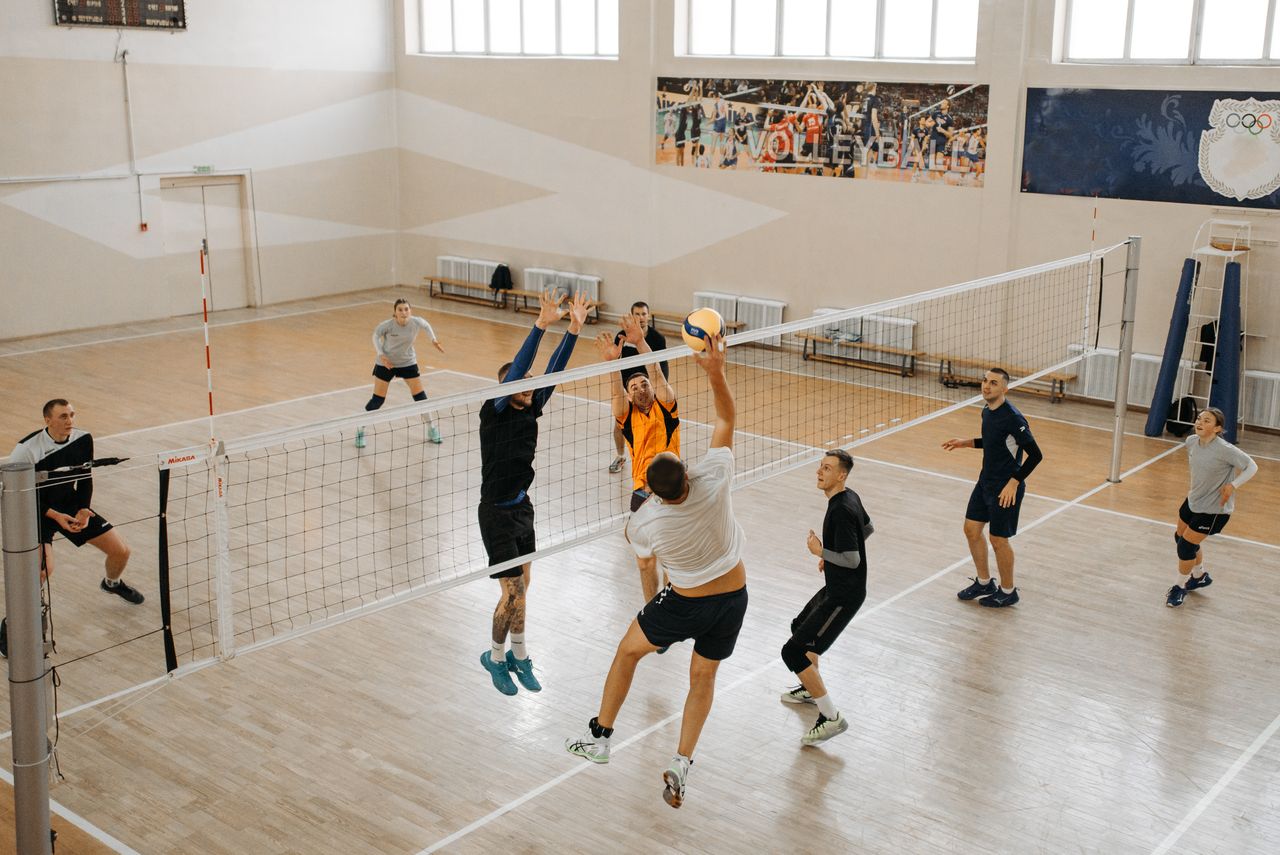
Gabon’s volleyball profile is primarily indoor. The country does not have the beach volleyball identity of an island nation or the dense school-and-club pipeline of a major volleyball market. Its volleyball story is built more around clubs, leagues, school participation, and regional competition. That makes local organization crucial. A country with a small volleyball footprint needs reliable clubs, active referees, coaches, and regular matches to keep players in the sport long enough to become technically useful.
Libreville and the Estuaire region are particularly important to Gabonese volleyball because this is where more of the country’s organized sports infrastructure is concentrated. Local volleyball coverage has pointed to Estuaire league activity, including women’s and men’s competitions and seasonal preparation around venues such as the Gymnase de la Cité des Ailes.
For Gabon, the central technical issue is not only participation. It is match quality. Players need enough repetitions under pressure to learn serve receive, transition defense, block timing, and attacking discipline. In countries where volleyball operates in smaller pockets, the best athletes may be present, but the competitive ecosystem often lacks the week-to-week intensity needed to develop high-level setters, liberos, and middle blockers.
Regional Competition as a Measuring Stick
Gabon’s path to stronger volleyball runs through Central African competition. CAVB Zone IV events give Gabonese clubs and national-team players the kind of external standard that domestic play alone cannot provide. When Gabonese clubs step into Zone IV club events, they face programs from countries with stronger or more active volleyball structures, especially Cameroon and the Democratic Republic of Congo.
That gap is visible in regional club competition. In the 2025 CAVB Zone Four Clubs Championship, Assom Gr of Gabon appeared in a field dominated by Cameroonian clubs, with Port Autonome de Douala and Litto Team of Cameroon winning the men’s and women’s titles. Assom Gr finished at the bottom of the men’s standings, but participation itself shows Gabon’s link to the regional club ladder.
This is the kind of competition that can expose what a program needs. Stronger regional opponents punish loose passing, slow offensive tempo, and undisciplined blocking. They also show younger players what the sport looks like when it is played with more structure. For Gabon, these matches are development tools as much as results.
The Future of Volleyball in Gabon
Gabonese volleyball’s next step is consolidation. The country does not need to pretend to be an African volleyball power before the base is ready. It needs more stable clubs, stronger local leagues, better coaching education, youth recruitment, and regular regional exposure. If those pieces improve, Gabon can become more competitive inside Zone IV and build a clearer national volleyball identity.
The country’s volleyball future will likely remain indoor-first, urban-centered, and club-driven. The key is whether the existing pockets of activity can become a stronger system. Gabon has the federation connection and the regional framework. The challenge is turning that framework into more players, more matches, and a higher standard of volleyball over time.