Virginia volleyball has a layered identity. It is not one single volleyball market. It is a state where indoor school volleyball, NCAA programs, junior clubs, beach volleyball, military-community recreation, and urban adult play all exist in different forms depending on the region. Northern Virginia, Richmond, Charlottesville, Blacksburg, Hampton Roads, Lynchburg, and the Shenandoah Valley each bring a different texture to the sport.
That makes Virginia a hybrid volleyball state. It has the college presence of an ACC and mid-major market, the high school structure of a competitive scholastic state, the club density of a major Mid-Atlantic recruiting corridor, and the outdoor identity of a state with a real coastline. The sport is not as culturally dominant as football or basketball, but volleyball has enough institutional support and geographic variety to sustain a serious year-round ecosystem.
In Virginia, volleyball can mean a Friday night high school match in a packed gym, a college match in Charlottesville or Blacksburg, a junior club tournament in Northern Virginia, a beach event at the Virginia Beach oceanfront, or an adult league in a Richmond or Hampton Roads facility. Few states have that exact mix. The result is a volleyball scene that is broad rather than singular, with different pathways for different kinds of players.
The Indoor Game and Virginia’s Competitive Spine
Indoor volleyball is the backbone of Virginia’s volleyball identity. The state’s high school programs create the first major competitive stage for many athletes, while junior clubs extend the development calendar and connect players to regional and national recruiting opportunities. The strongest indoor players often move through a familiar progression: school volleyball, club training, regional tournaments, college camps, recruiting showcases, and then NCAA or club-level college competition.
The state’s size matters. Northern Virginia benefits from population density, proximity to the Washington, D.C. area, and access to large club networks. Richmond has its own volleyball base, with school programs, club teams, and central-state tournament access. Hampton Roads adds a coastal and military-community dimension, with indoor and beach volleyball feeding into each other more naturally than in inland areas. Western Virginia, including college towns and smaller communities, gives the sport a different feel: more school-centered, more regional, and often tied to the identity of specific programs.
Virginia’s indoor volleyball style is shaped by the range of competition available. At the higher levels, the game is fast and physical enough to demand real specialization. Setters are expected to run tempo, not just deliver high balls to the pins. Liberos and defensive specialists need to handle pace from the service line and from outside hitters. Middles have to close blocks and become transition options. Outsides are often six-rotation players who carry both attacking and passing responsibility.
The depth of the state means that volleyball development is not limited to one city or one model. Some athletes come from large clubs with national schedules. Others develop through school programs and smaller regional clubs. Some players are polished early because they train year-round. Others emerge later because their athletic tools catch up with their technical skills. That range gives Virginia volleyball a healthy competitive spread.
College Volleyball Gives the State Visibility
Virginia’s college volleyball scene is one of the major reasons the state has a stronger volleyball profile than many comparable states. Programs at different NCAA levels give players visible goals and give the sport a consistent institutional presence. The University of Virginia and Virginia Tech connect the state to major-conference volleyball. Programs such as George Mason, VCU, Liberty, James Madison, Old Dominion, William & Mary, Norfolk State, Hampton, Radford, and others contribute to a wider college map across the Commonwealth.
The college layer matters even for athletes who never play Division I volleyball. It gives younger players something to watch, a standard to measure themselves against, and a reminder that volleyball can continue beyond high school. College matches also help normalize the tactical sophistication of the sport. A young setter watching a college offense sees how tempo, location, and deception matter. A libero sees the importance of reading hitters and controlling first contact. A middle sees how quickly blocking decisions have to be made.
Virginia’s colleges also reflect the state’s geography. Volleyball is not concentrated entirely in one corner. The college map runs from Northern Virginia to Hampton Roads, from Richmond to the mountains, from public universities to private institutions. That distribution reinforces volleyball’s statewide reach.
Men’s volleyball has a different but meaningful place in the Virginia picture. While women’s volleyball has the deeper scholastic and NCAA structure, men’s volleyball appears through club programs, college club competition, adult leagues, and pockets of high school or youth interest. In a state with major universities, military communities, and strong recreational sports participation, the men’s game has room to keep building, especially where facilities and organized competition already exist.
Virginia Beach and the Outdoor Dimension
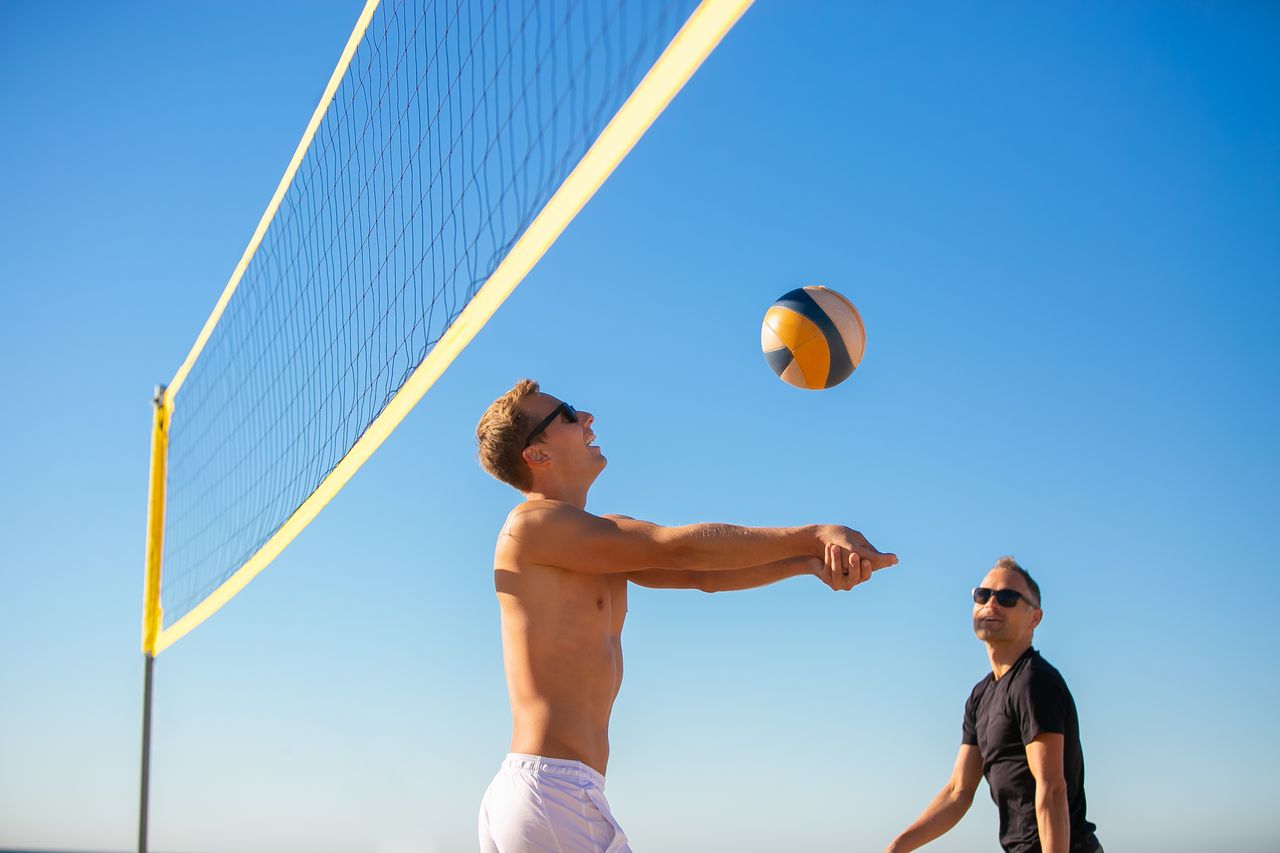
Virginia’s coastline gives the state a volleyball identity that many inland Mid-Atlantic states cannot match. Virginia Beach is the obvious anchor. The oceanfront, sand courts, summer tournament calendar, and broader Hampton Roads sports culture give beach volleyball a legitimate presence. It is not just a casual add-on to indoor volleyball. For many athletes and adult players, beach volleyball is a parallel version of the sport with its own skills, pace, and competitive atmosphere.
Beach volleyball changes the way players think. There are only two players to cover the court. Serve receive is more exposed. Shot selection matters. Conditioning matters. A player cannot hide in a rotation or rely on a larger system to cover every weakness. That makes the beach game valuable for indoor players as well. Athletes who spend time on sand often improve their ball control, reading ability, communication, and all-around confidence.
Hampton Roads is especially important because it blends indoor and beach volleyball more naturally than most of the state. The same athlete may play school volleyball in the fall, club volleyball in the winter and spring, and beach volleyball in the summer. Adult players may move between indoor leagues and sand formats depending on season and preference. This gives the region a full volleyball calendar and makes it one of Virginia’s most complete volleyball environments.
Northern Virginia and Richmond also have outdoor volleyball cultures, particularly through grass and sand events, but Virginia Beach gives the state its clearest beach identity. The presence of major beach events and oceanfront competition helps place Virginia within the national beach volleyball conversation, especially for juniors and adult players looking for serious sand competition without leaving the Mid-Atlantic.
Clubs, Recruiting, and the Mid-Atlantic Pipeline
Virginia’s club volleyball structure is central to its player development. The state sits in a competitive Mid-Atlantic corridor, which means athletes are not developing in isolation. Virginia players often compete against programs from Maryland, D.C., North Carolina, Pennsylvania, and beyond. That regional pressure raises expectations. A player trying to be recruited from Virginia has to handle not only local competition but also the broader club tournament environment.
Club volleyball gives Virginia athletes access to more specialized coaching and more consistent reps. It also introduces players to the recruiting realities of the sport. Height, athleticism, position, serve receive ability, blocking discipline, and court IQ all matter, but so does exposure. For many players, club tournaments become the bridge between school success and college opportunity.
The state’s geography creates different development profiles. Northern Virginia players may have more access to large clubs and dense competition. Richmond-area players often benefit from central location and strong regional connectivity. Hampton Roads players may combine indoor and beach experience. Western and smaller-market athletes may rely more heavily on school programs, select clubs, and standout performances when they get chances against larger competition.
That variety is a strength. Virginia does not produce only one type of volleyball player. It can produce the technically trained club athlete, the beach-influenced all-around player, the late-blooming multi-sport hitter, the defensive specialist sharpened by high school competition, and the setter who learns to manage different systems across school and club seasons.
The Direction of Volleyball in Virginia
Virginia volleyball is positioned for continued growth because it has the ingredients that matter: schools, clubs, colleges, beach access, population centers, and regional competition. The sport’s ceiling will depend on how well those pieces connect. When school programs, clubs, college camps, beach organizations, and adult volleyball communities reinforce each other, the state becomes more than a collection of separate volleyball pockets. It becomes a true volleyball ecosystem.
The women’s game is already the strongest part of that ecosystem, especially through high school, club, and college pathways. The next growth areas are likely continued beach development, more boys and men’s volleyball opportunities, stronger coaching education, and broader access outside the state’s densest markets. Virginia has enough volleyball infrastructure to serve elite athletes, but long-term growth also depends on making the sport accessible to new players in smaller communities.
Virginia’s volleyball identity is strongest when viewed as a complete map. Northern Virginia supplies scale and recruiting intensity. Richmond adds central-state depth. Charlottesville and Blacksburg connect the sport to major college athletics. Hampton Roads gives the state its beach personality. Smaller towns and school systems provide the local rivalries and community roots that keep volleyball grounded.
That combination makes Virginia one of the more interesting volleyball states in the region. It is not only an indoor state, not only a beach state, not only a college state, and not only a club state. It is all of those at once, with each region adding something different. The result is a volleyball culture with range: competitive enough for serious athletes, accessible enough for recreational players, and varied enough to keep building across every level of the sport.